
![[aggregator] downloaded image for imported item #77703](https://newsview.top/wp-content/uploads/2026/05/senior-woman-taking-pill-1024x576.jpg "Alzheimer’s drugs slammed as ‘ineffective’ in major review, but critics push back")
This post was originally published on this site.
A major Cochrane review recently cast doubt on the safety and effectiveness of amyloid-targeting Alzheimer’s drugs, although some experts and drugmakers have disputed the researchers’ conclusions.
These types of monoclonal antibodies are designed to reduce or remove amyloid-beta, a naturally occurring protein that can accumulate into sticky plaques in the brains of people withAlzheimer’s disease.
In the review, researchers analyzed results from 17 clinical trials involving 20,342 participants who hadmild cognitive impairmentor early-stage Alzheimer’s dementia, according to a press release.
ALZHEIMER’S PILL COULD REDUCE BRAIN DECLINE IN SOME HIGH-RISK PATIENTS, TRIAL SUGGESTS
While previous studies have suggested that amyloid-targeting drugs can helpslow diseaseprogression, the Cochrane review found that their impact on memory decline and dementia severity was “either nonexistent or extremely small.”

A major Cochrane review recently cast doubt on the safety and effectiveness of amyloid-targeting Alzheimer’s drugs.(iStock)
“Unfortunately, the evidence suggests that these drugs make no meaningful difference to patients,” said lead author Francesco Nonino, neurologist and epidemiologist at the IRCCS Institute of Neurological Sciences of Bologna, Italy, in the release.
ALZHEIMER’S-RELATED DEMENTIA COULD BE PREVENTED BY EXPERIMENTAL DRUG, RESEARCHERS SAY
“There is now a convincing body of evidence converging on the conclusion that there is no clinically meaningful effect,” he went on.“While early trials showed results that were statistically significant, it is important to distinguish between this and clinical relevance.It is common for trials to find statistically significant results that do not translate into a meaningful clinical difference for patients.”
The researchers also identified some potential safety concerns linked to theanti-amyloid drugs, including a higher likelihood of swelling and bleeding in the brain.

These types of monoclonal antibodies are designed to reduce or remove amyloid-beta, a naturally occurring protein that can accumulate into sticky plaques in the brains of people with Alzheimer’s disease.(iStock)
In many cases, these changes were detectable only onbrain scansand did not cause clear symptoms, they stated.However, the long-term effects are unknown, as symptom reporting was inconsistent across studies.
Based on these findings, the researchers concluded that lowering amyloid-beta alone is unlikely to produce meaningful clinical gains.While these drugs effectively reduce amyloid levels in the brain, this change does not appear to result in improved outcomes for patients, they said.
“Real-world data, along with clinical trial results, should guide decision-making.”
The team recommended that future research should explore other “biological pathways” involved inAlzheimer’s disease.
ALZHEIMER’S PREVENTION BREAKTHROUGH FOUND IN DECADES-OLD SEIZURE DRUG
“I see Alzheimer’s patients in my clinic every week and I wish I had an effective treatment to offer them,” said senior author Edo Richard, professor of neurology at Radboud University Medical Centre, in the release.“Existing approved drugs offer some benefit for some patients, but there remains a high unmet need for more effective treatments.”
ALZHEIMER’S SCIENTISTS FIND KEY TO HALTING BRAIN DECLINE BEFORE SYMPTOMS
“Given the absence of correlation between amyloid removal and clinical benefit, we need toexplore other pathwaysto help address this devastating disease.”
The Alzheimer’s Association has requested that Cochrane withdraw the analysis, calling it “scientifically flawed” and warning that it could lead to “misguided and potentially harmful conclusions.” The Cochrane analysis is lacking patients’ perspectives, according to the association.

The researchers also identified some potential safety concerns linked to the anti-amyloid drugs, including a higher likelihood of swelling and bleeding in the brain.(Saul Loeb/AFP/Getty Images)
“Many people living with mild cognitive impairment and mild dementia due to Alzheimer’s disease who are using these treatments are taking trips they weren’t sure they’d take, spending joyful time withfriends and family, making plans for next month, doing things they love, and staying present in their lives and the lives of the people they care about,�
DEMENTIA RISK FOR PEOPLE 55 AND OLDER HAS DOUBLED, NEW STUDY FINDS
The association also pointed to real-world clinical settings where amyloid-targeting monoclonal antibodies have shown efficacy and safety very similar to what was reported in the phase 3 clinical trials — “clinically meaningful slowing of disease progression/cognitive decline with modest side effects.”
“Real-world data, along withclinical trial results, should guide decision-making,” the group added.
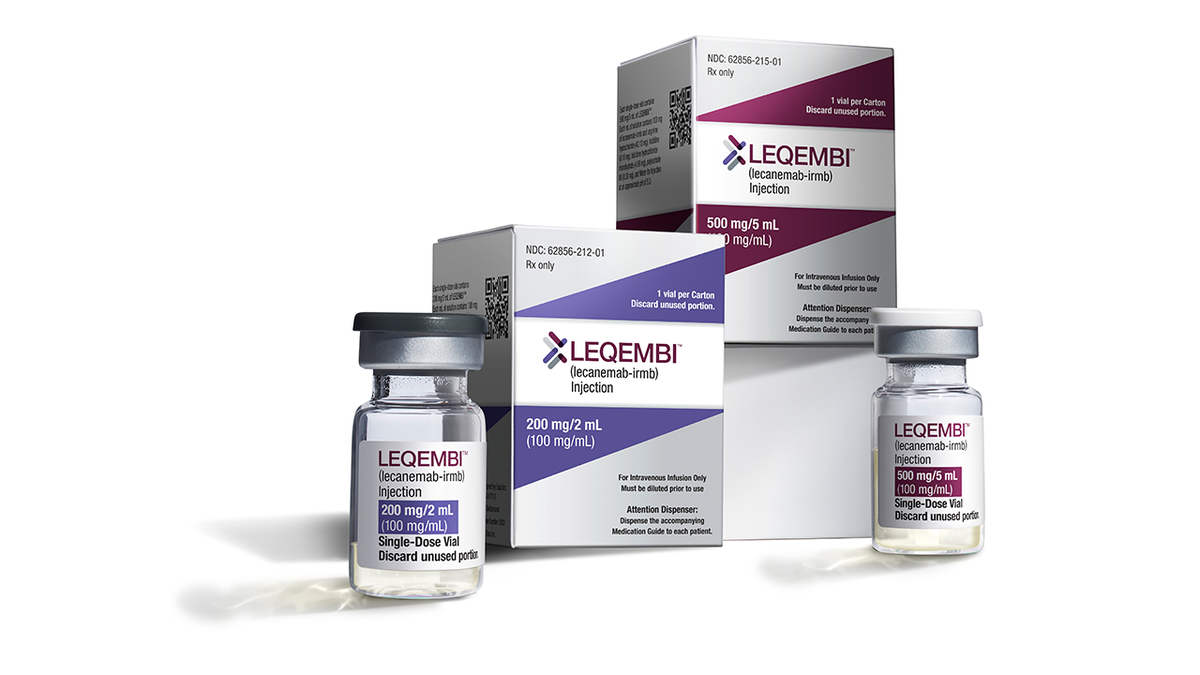
Leqembi, the first drug to show that it slows Alzheimer’s, was approved by the U.S.Food and Drug Administration in early January 2023.“The FDA has stated that lecanemab is part of a newer generation of anti-amyloid therapies targeting aggregated amyloid and has learned from previous failures,” a spokesperson for Eisai, the company�(AP Photo)
“Combining data on unsuccessful molecules withapproved medicinesartificially dilutes the observed benefit and produces class-level conclusions that do not reflect the evidence for any individual approved therapy.”
“We need to explore other pathways to help address this devastating disease.”
“The U.S.Food and Drug Administration has stated that lecanemab is part of a newer generation of anti-amyloid therapies targeting aggregated amyloid and has learned from previous failures,�

“Extensive long-term clinical data out to four years and real-world experience with tens of thousands of patients globally show that patients who receive lecanemab continue to benefit from treatment,” the drugmaker said.(iStock)
“Extensive long-term clinical data out to four years and real-world experience with tens of thousands of patients globally show that patients whoreceive lecanemabcontinue to benefit from treatment.”
TEST YOURSELF WITH OUR LATEST LIFESTYLE QUIZ
The researchers acknowledged limitations of the study, including thatclinical benefitsmay differ among subgroups and individual drugs.For some of the studies, follow-up periods may have been too short to detect long-term outcomes, they noted.
onelink.me/xLDS?pid=AppArticleLink&af_web_dp=https%3A%2F%2Fwww.
There was also variability between trials in terms of dosing and outcomes.Additionally, most of the trials focused on early-stage Alzheimer’s disease, which may not always apply to those with advanced disease.
![[aggregator] downloaded image for imported item #61781](https://newsview.top/wp-content/uploads/2026/04/prisoner-holding-piece-of-paper-1024x576.jpg "Drug-soaked paper is killing inmates amid reports of prison smuggling trends")
![[aggregator] downloaded image for imported item #62068](https://newsview.top/wp-content/uploads/2026/04/woman-spray-cleaning-counter-1024x576.jpg "Antibacterial products may contribute to dangerous superbug crisis, study suggests")
![[aggregator] downloaded image for imported item #62349](https://newsview.top/wp-content/uploads/2026/04/man-eating-vegetables-fruits-salt-1024x576.jpeg "Simple dinner table habit linked to poor diet and higher health risks in adults over 60")
![[aggregator] downloaded image for imported item #62341](https://newsview.top/wp-content/uploads/2026/04/crohns-disease-1024x576.jpg "Deadly bacterial disease could be stopped with common pantry staple, study suggests")