
![[aggregator] downloaded image for imported item #94367](https://newsview.top/wp-content/uploads/2026/06/iceman-mummy-split-1024x576.jpg "Scientists find 'signs of life' inside 5,300-year-old mummy in remarkable discovery")
This post was originally published on this site.
Researchers have uncovered traces ofancient microbes inside a mummy— unexpected “signs of life” that may have persisted for more than 5,300 years.
The study, recently published in the journal Microbiome, centers on Ötzi the Iceman, a mummy found by a tourist inside a glacier in the Alps in 1991, news agency SWNS reported.
Ötzi’s remainsdate back to 3300 B.C., before Stonehenge and the Egyptian pyramids were built.He was between 25 and 35 years old when he died, and stood roughly 5 feet 2 inches tall.
ANCIENT PALACE DISCOVERY CHALLENGES THE MYTH BEHIND SPARTA’S RISE TO POWER
Researchers originally believed he succumbed to exposure or exhaustion while crossing the Alps, though later examinations found that an arrowhead was lodged in his left shoulder — suggesting he likely bled to death.
Experts at Eurac Research found that Ötzi’s remains still contain a complex community of ancient and modern microorganisms — offering a rare glimpse into themicrobial past of early humans.
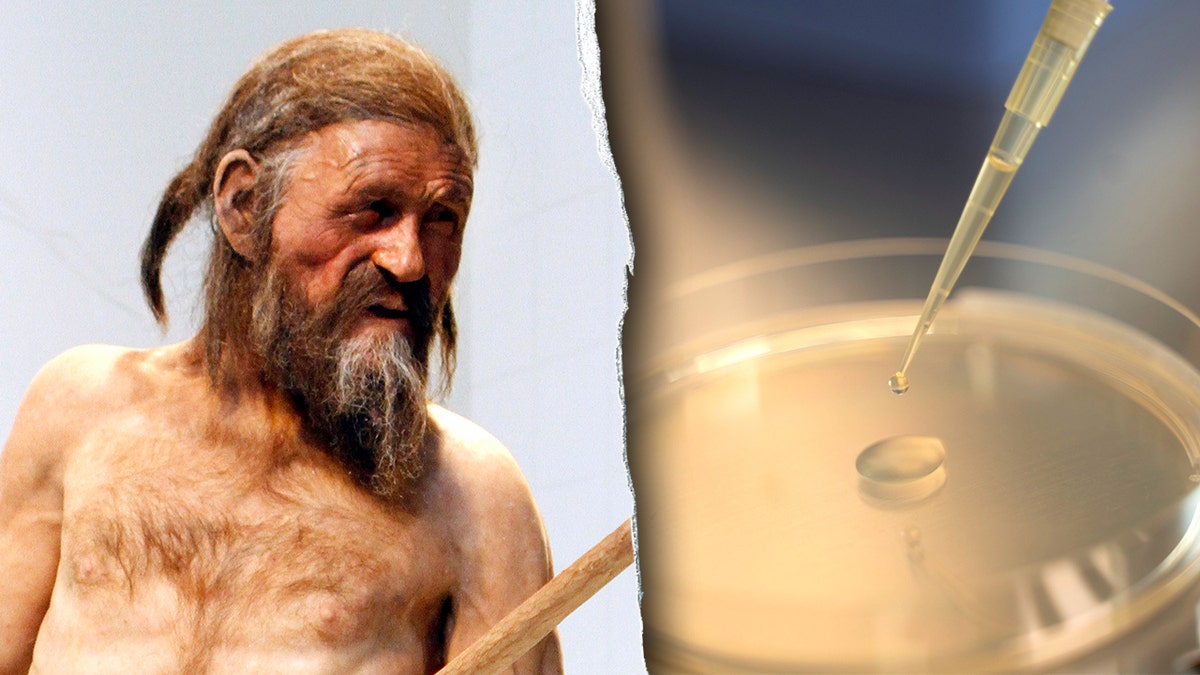
Researchers studying Ötzi the Iceman, reconstruction seen left, found traces of ancient and modern microorganisms preserved within the 5,300-year-old mummy.(Andrea Solero/AFP via Getty Images;Eurac Research via SWNS)
While studying the mummy at theSouth Tyrol Museum of Archaeologyin Bolzano, Italy, researchers found cold-adapted yeasts and genetic traces of bacteria from Ötzi’s ancient gut microbiome.
They also differentiated between microorganisms that were present during Ötzi’s lifetime and those that colonized his body after his death, using tissue samples, swabs andgenetic analysis.
COULD NOAH’S ARK REMAINS BE BURIED IN TURKEY?NEW FINDINGS REVIVE AGE-OLD DEBATE
The team analyzed ice from the surface of Ötzi’s body, as well as meltwater inside the mummy.Researchers also drew on intestinal tissue and stomach-content data from previous studies.
A surprising discovery was the presence of cold-adapted yeast species, likely originating from the glacial environment, which have persisted on Ötzi’s body to the present day.
“Ötzi offers a rare glimpse into humanity’s microbial past.”
Ötzi’s microbiome is also unique in that it contains gut bacteria that aren’t typically found in the intestines of modern humans, researchers said.
“Ötzi therefore offers a rare glimpse into humanity’s microbial past,” Eurac Research noted in a statement.

Analyzing samples from Ötzi the Iceman, scientists uncovered evidence of a complex microbial community still linked to the ancient mummy.(Eurac Research via SWNS)
Some of the microbes may still exist in a dormant state more than 5,000 years after Ötzi’s death, as his body sits at the South Tyrol Museum, the experts said.
Elisabeth Vallazza, director of the South Tyrol Museum of Archaeology, described the mummy’s preservation condition as “very stable today.”
‘WELL-PRESERVED’ 5,000-YEAR-OLD DOG BURIED WITH BONE DAGGER UNEARTHED IN ANCIENT BOG
“Close microbiological monitoring ensures that the mummy suffers no damage,” said Vallazza in a statement.
“But further research and full conservation efforts are certainly needed to preserve it for many more generations.”
Despite the findings, there is still mystery surrounding how microorganisms survive and interact within Ötzi’s frozen remains.
The conditions “are not yet fully understood,” said conservation expert and co-author Marco Samadelli, as SWNS reported.
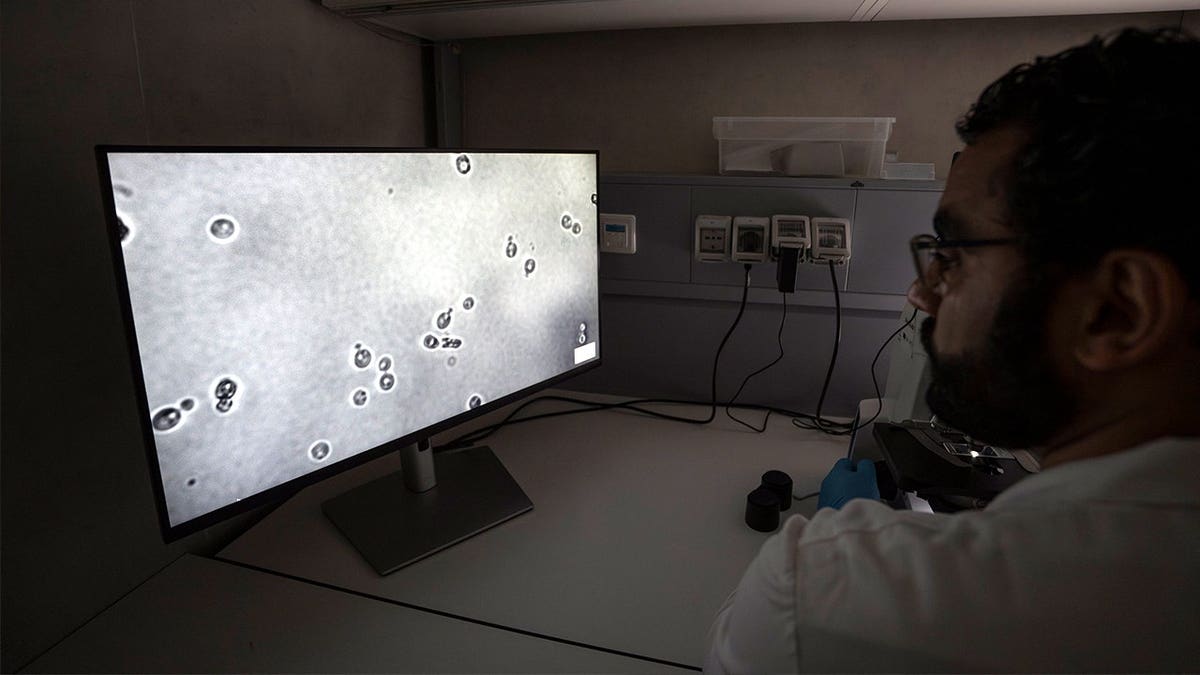
The mummy’s unusual preservation continues to provide scientists with opportunities for new discoveries decades after its recovery.(Eurac Research via SWNS)
“This study expands our knowledge in this area.”
Frank Maixner, director of the Institute for Mummy Studies at Eurac Research, said the discovery points to a continuous presence of certain microorganisms on the mummy throughoutits long history.
“These yeasts have accompanied Ötzi on his long journey through the millennia,” Maixner said in a statement.
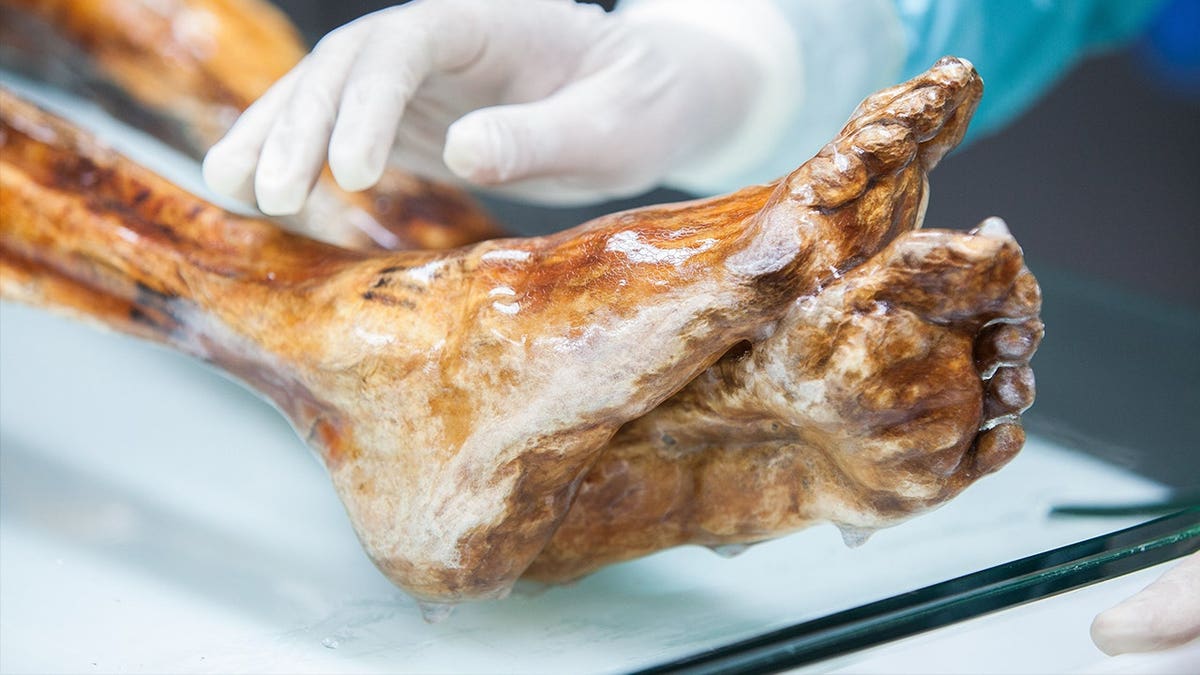
More than 5,000 years after his death, Ötzi the Iceman continues to provide new clues about ancient life and preservation.(Eurac Research via SWNS)
Ötzi is “not a static relic, but a dynamic biological system,” he added.
onelink.me/xLDS?pid=AppArticleLink&af_web_dp=https%3A%2F%2Fwww.
The latest findings add to a growing body of recent research onmummies and other ancient remains.
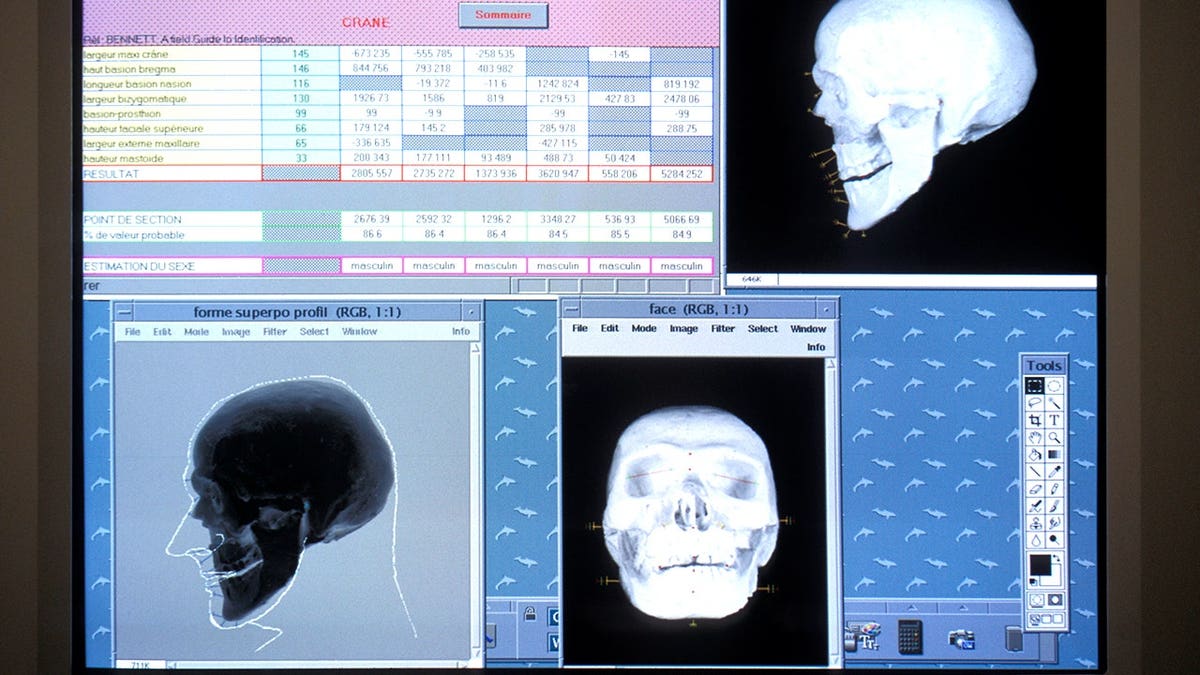
Scientists have studied Ötzi extensively since the discovery of him in 1991.(Patrick Landmann/Getty Images)
Earlier this spring, officials announced that researchers from the University of Barcelona discovered a copy of Homer’s “Iliad”placed on top of a mummyin Egypt.
TEST YOURSELF WITH OUR LATEST LIFESTYLE QUIZ
Last year, utility workers in Lima, Peru, uncovered amillennia-old mummywhile on the job.
![[aggregator] downloaded image for imported item #71224](https://newsview.top/wp-content/uploads/2026/04/delta-airlines-landing-miami-fox-news-001-1024x576.jpeg "Delta flight forced to divert after passenger goes into labor and delivers baby midair")
![[aggregator] downloaded image for imported item #71213](https://newsview.top/wp-content/uploads/2026/04/NYC-AIR-TAXIS-JFK-NEW-YORK-CITY-2-1024x576.jpeg "Air taxis cut hour-long commutes to minutes, riders may be shocked by the price")
![[aggregator] downloaded image for imported item #71630](https://newsview.top/wp-content/uploads/2026/04/EGYPT-PELUSIUM-NORTH-SINAI-BIBLICAL-SIN-OLD-TESTAMENT-ARCHAEOLOGY-HISTORY-DISCOVERY-2-1024x576.jpeg "Ancient ritual complex unearthed at site tied to biblical city in Ezekiel: 'Still holds many secrets'")
![[aggregator] downloaded image for imported item #71623](https://newsview.top/wp-content/uploads/2026/04/fire-field-station-dinosaur-fox-news-001-1024x576.jpeg "Lightning strike turns 100-foot dinosaur into raging fireball, stunning onlookers")