
![[aggregator] downloaded image for imported item #102586](https://newsview.top/wp-content/uploads/2026/07/lindsey-graham-death-1024x576.jpg "Heart condition tied to Lindsey Graham's death can strike without warning — what to know")
This post was originally published on this site.
New details surrounding Sen.Lindsey Graham’s sudden death have drawn attention to a cardiovascular emergency that can become fatal within minutes.
On Sunday, a statement released byGraham’s officecited preliminary findings from the District of Columbia’s Office of the Chief Medical Examiner, identifying the cause of death as an aortic dissection due to arteriosclerotic cardiovascular disease.
Authorities said Graham, 71, was transported to George Washington University Hospital, where he was pronounced dead at 10:23 p.m.Saturday.An autopsy was completed Sunday.
MEDICAL EXAMINER RELEASES PRELIMINARY FINDINGS IN LINDSEY GRAHAM’S DEATH AS DEATH CERTIFICATE REMAINS PENDING
“The death certificate will be PENDING until all the toxicological andmicroscopic testingare finalized, and at that point the death certificate will be updated to reflect the cause of death and appropriately classify the manner of death,” the statement said.
�s office requesting comment.

New details surrounding Sen.Lindsey Graham’s sudden death have drawn new attention to a cardiovascular emergency that can become fatal within minutes.(Getty Images)
What is an aortic dissection?
An aortic dissection is a life-threatening medical emergency in which a tear develops in the inner layer of the aorta — the body’s largest artery, according to Mayo Clinic.
Blood rushes through the tear and causes the layers of the aortic wall to separate, which can disruptblood flowto vital organs or lead to a fatal rupture if not treated immediately.
YOUR RESTING HEART RATE COULD REVEAL MORE ABOUT YOUR HEALTH THAN YOU THINK, DOCTORS SAY
“It occurs when the layers of the aorta come apart and the inner one tears,�
“It can come on in minutes or days and may be hard to recognize,” he added, noting that while dissections can evolve over time, symptoms often appear suddenly.

A spontaneous coronary artery dissection is a rare, sometimes fatal traumatic condition that can disrupt blood flow to vital organs or lead to a fatal rupture if not treated immediately.(iStock)
Dr.Kenneth Perry, anemergency physicianbased in South Carolina, said the best way to visualize the condition is to think of the aorta as a hose.
“The wall of the hose has multiple layers to it, and if the layers separate, the water can no longer pass down the regular opening in the tube,” Perry, who also was not involved in Graham�“Often, this starts as a very small tear that keeps progressing because of the water pressure.”
DIABETES DRUG COULD SLASH RISK OF FATAL HEART CONDITION IN ONE GROUP, SCIENTISTS REVEAL
“The same thing is happening in the aorta,” he went on.“The small tear in the wall of the aorta continues to progress, usually from severely elevatedblood pressure.”
As the tear continues past the smaller arteries coming from the aorta, blood can no longer flow from the heart to the other organs.

Sen.Lindsey Graham talks with reporters in the U.S.Capitol during votes on Tuesday, March 10, 2026.Authorities said Graham, 71, was transported to George Washington University Hospital, where he was pronounced dead at 10:23 p.m.Saturday.(Tom Williams/CQ-Roll Call, Inc via Getty Images)
“This causes the organs that need that blood to die from lack of oxygen,” Perry said.“The only way to survive such a diagnosis is very early identification and strict blood pressure control with emergent operative management.”
Aortic dissectionis relatively rare, affecting an estimated three to four people per 100,000 each year, according to Cleveland Clinic.
What causes an aortic dissection?
In Graham’s case, the preliminary findings cited arteriosclerotic cardiovascular disease.This condition is most commonly associated with atherosclerosis, in which plaque builds up inside the arteries, causing them to harden and narrow.
Over time, this process can weaken the wall of the aorta, increasing the risk of an aortic dissection.
“It can come on in minutes or days and may be hard to recognize.”
High-risk groups
Arteriosclerotic cardiovascular disease can develop over time and is driven by several factors, according to the American Heart Association and Mayo Clinic.Some of the groups at highest risk include the following.
- People withuncontrolled high blood pressure(hypertension), which places constant stress on the aortic wall
- Older adults, particularly those in their60s and 70s
- Men, who are diagnosed more often than women
- People with atherosclerosis (hardening of the arteries) or other cardiovascular disease
- Those with an aortic aneurysm, which weakens the wall of the aorta
- People born with certain heart defects, such as a bicuspid aortic valve
- Those with inherited connective tissue disorders, including Marfan syndrome, Loeys-Dietz syndrome and vascular Ehlers-Danlos syndrome
- Smokers and people withlongstanding high cholesterol, both of which contribute to artery damage
- People with diabetes and obesity
- Those who are physically inactive and/or eat an unhealthy diet

U.S.Sen.Lindsey Graham (R-SC) speaks during an executive business meeting of the Senate Judiciary Committee on Nov.9, 2023, in Washington, D.C.Graham’s fatal condition was linked to arteriosclerotic cardiovascular disease.(Alex Wong/Getty Images)
Warning signs you should never ignore
Symptoms of an aortic dissection can come on suddenly and often mimic those of aheart attack or stroke, experts say.
Anyone experiencing any of the below warning signs should call 911 for immediate emergency medical care, according to Siegel and other health experts.
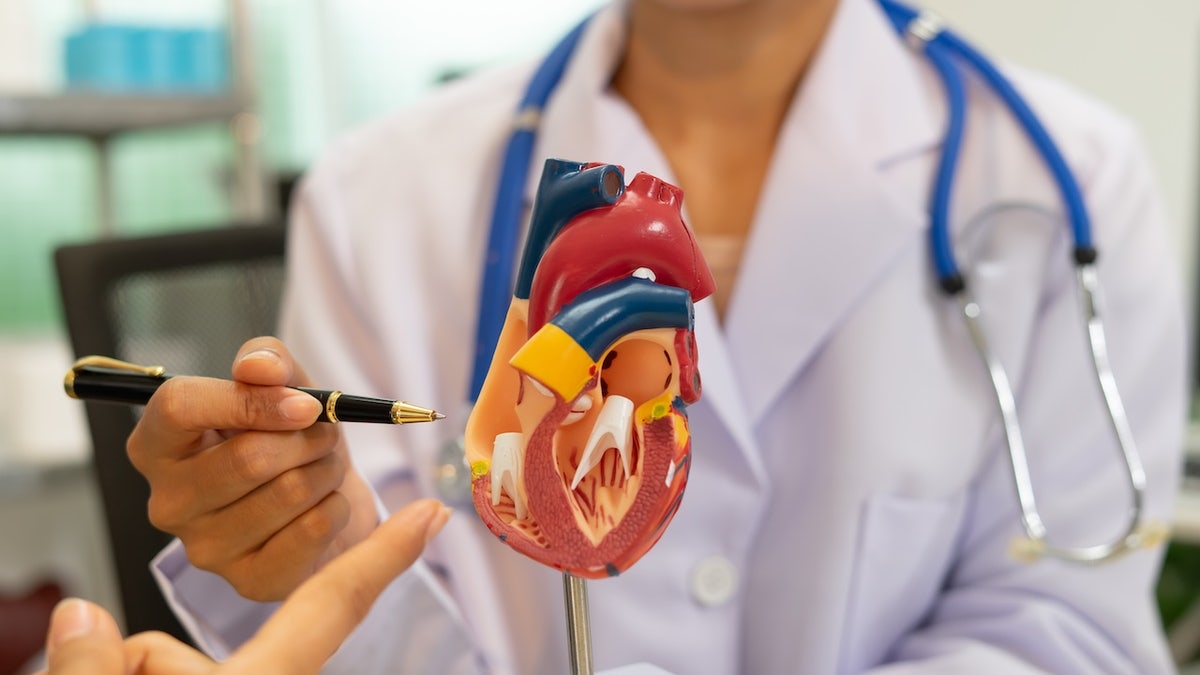
Arteriosclerotic cardiovascular disease can develop over time and is driven by several factors, according to the American Heart Association and Mayo Clinic. (iStock)
“Aortic dissection is one of the diseases that emergency physicians think of often when someone presents withchest pain— specifically pain described as a tearing sensation, with elevated blood pressure,�
“We often describe the aortic dissection patient as appearing to have a ‘kidney stone of the chest,’ — meaning they have severe pain and cannot get comfortable, similar to kidney stone patients.”
Diagnosis and treatment
Early diagnosis and treatment greatly improve the chances of survival for those who have suffered an aortic dissection.
Doctors typically diagnose an aortic dissection using imaging tests, including a CT scan, transesophageal echocardiogram (ultrasound), magnetic resonance angiography (MRI-based scan) and chest X-ray, per Mayo Clinic.
The condition requires immediatemedical treatment, which will depend on which part of the aorta is affected.
Type A dissections involve the ascending (upper) aorta near the heart, which typicallyrequire emergency surgery.
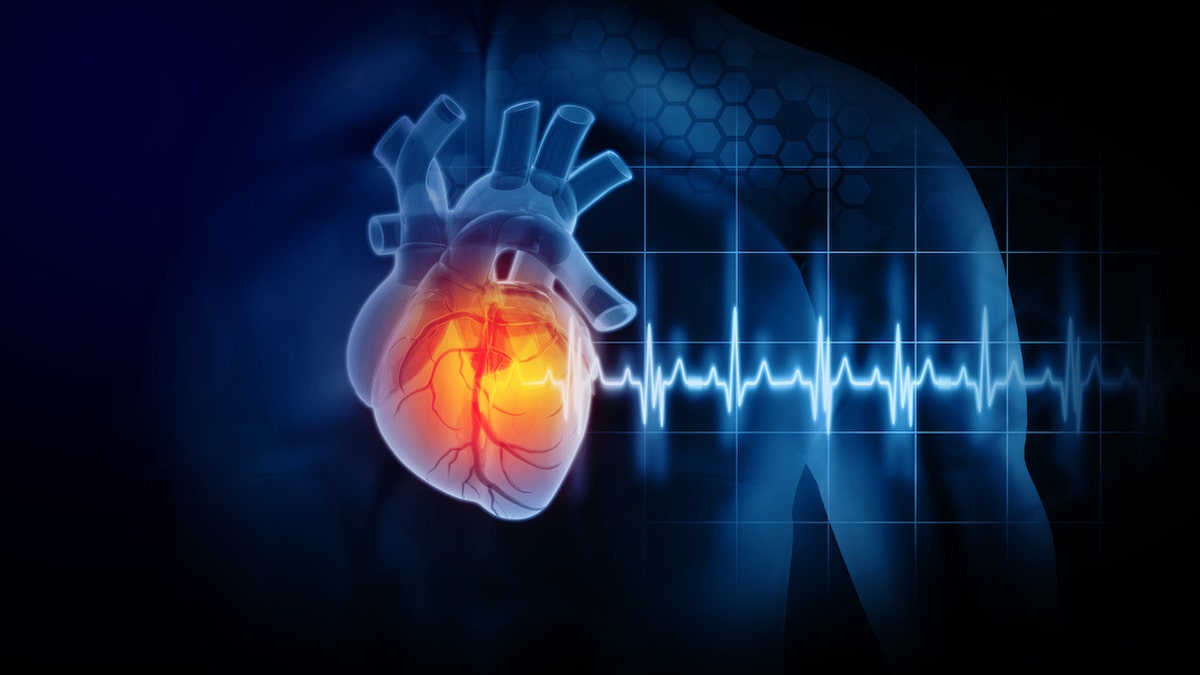
According to the American Heart Association, an untreated acute aortic dissection is one of the deadliest cardiovascular emergencies.(iStock)
Type B dissections affect the descending (lower) aorta farther from the heart, according to Mayo Clinic.These may be treated with medications to lower blood pressure and heart rate, although some may also require surgery or a stent.
Those who survive the event will generally need lifelong blood pressure management and regular imaging to monitor the aorta, per the above source.
TEST YOURSELF WITH OUR LATEST LIFESTYLE QUIZ
“This condition has a highmortality rate,” Siegel said.
According to the American Heart Association, an untreated acute aortic dissection is one of the deadliest cardiovascular emergencies.
“We often describe the aortic dissection patient as appearing to have a ‘kidney stone of the chest.'”
For untreated dissections involving the ascending aorta, the risk of death increases by approximately 1% to 2% for every hour treatment is delayed after symptoms begin, according to the American College of Cardiology and the American Heart Association.
Without treatment, more than half of people with a Type A aortic dissection die within one month.About 20% of Type A patients will die in the hospital, compared to 10% for treated Type B dissections.
Can it be prevented?
While not all aortic dissections can be prevented, people can reduce their risk by controlling certainlifestyle factors.
“You need to make sure your blood pressure is well-controlled, your cholesterol is low and that you are seen regularly by a doctor,” Siegel advised.
Smokers should kick the habit, he said, as they are at a highly increased risk.
onelink.me/xLDS?pid=AppArticleLink&af_web_dp=https%3A%2F%2Fwww.
Maintaining ahealthy weightand following treatment plans for underlying heart or vascular conditions can also reduce the risk, according to Mayo Clinic.
People with a family history of aortic disease or inherited connective tissue disorders should discuss screening with their healthcare provider, doctors advise.
![[aggregator] downloaded image for imported item #102282](https://newsview.top/wp-content/uploads/2026/07/martha_lillard_iron_lung-1024x576.jpg "Last American to use an iron lung dies at 78 years old after childhood polio diagnosis")
![[aggregator] downloaded image for imported item #102428](https://newsview.top/wp-content/uploads/2026/07/tatyana-zlotsky-ceo-of-a-place-for-mom-1024x576.png "The best time to talk to your parents about senior care — before it's too late")
![[aggregator] downloaded image for imported item #102421](https://newsview.top/wp-content/uploads/2026/07/dean-perryman-new-friends-bar-1024x576.jpg "Man turns tragic loss of best friend to suicide into urgent outreach to lonely strangers")
![[aggregator] downloaded image for imported item #102414](https://newsview.top/wp-content/uploads/2026/07/woman-teaching-class-new-language-1024x576.jpg "Learning another language may keep your brain younger, study suggests")