
![[aggregator] downloaded image for imported item #82002](https://newsview.top/wp-content/uploads/2026/05/feeding-our-future-fraud-minnesota-1-1024x576.jpeg "Fox News Poll: Voters see welfare fraud as common, still mostly favor protecting benefits over crackdowns")
This post was originally published on this site.
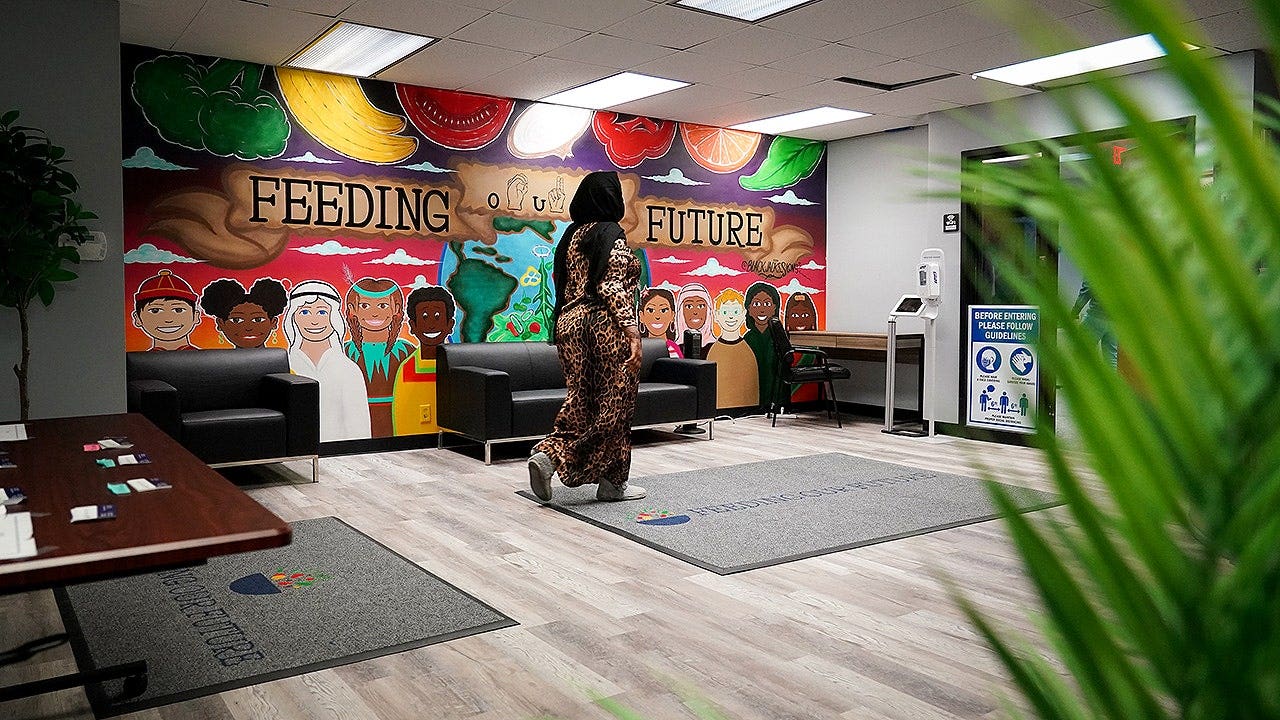
The survey was conducted before the Department of Justice announced charges against 15 defendants on Thursday in the ongoingMinnesota welfare fraud investigations, one of multiple inquiries into welfare abuse across the country.
A majority of registered voters, 71%, believe fraud in government welfare and social service programs is extremely or very common, and nearly half, 45%, think it has increased over the past two years.Just 19% say decreased and 35% believe it has stayed the same.
Yet when weighing enforcement against access, voters prioritize eligible recipients: 56% say ensuring benefits for eligible people should be the higher priority, even if some fraud occurs, while 43% prioritize fraud prevention, even if some eligible people lose benefits.
“The data demonstrates what populist candidates understand intuitively,�“Voters think corruption and incompetence are rampant in government, and stories of program fraud from Minneapolis and California reinforce this notion.And articulating this belief plays well with the public.The policy implications are trickier: do you risk restricting aid to the truly vulnerable to ensure taxpayers aren’t being ripped off?”
Voters are split on who bears more responsibility for fraud: individuals misrepresenting eligibility or organizations and contractors misrepresenting costs (50% each).
There is notable bipartisan consensus on the existence of welfare fraud.To varying degrees, Democrats, Republicans, and independents agree fraud is common, and it has increased in recent years. But beyond that, partisan divisions become much sharper.
Majorities of Democrats are more likely to blame organizations and contractors for fraud and to prioritize ensuring eligible people receive benefits.By contrast, Republicans are more likely to blame individuals who misrepresent eligibility and favor stronger fraud prevention measures.
Confidence instate governmentscuts across party lines, with majorities of Democrats (65%), independents (59%), and Republicans (56%) trusting their state to prevent fraud.
Views of the federal government are more polarized.Nearly two-thirds of Republicans (63%) express confidence in the federal government’s ability to combat fraud, compared to 42% of Democrats and 47% of independents.
Congressional Approval
Only 3 in 10 voters approve of the job Congressional Democrats (30%) and Republicans (31%) are doing.
Approval forCongressional Democratsis up 1 point since February (29%, a record low approval).Support for Congressional Republicans has fallen 5 points (36%), and much of that comes from a 10-point drop among Republican voters themselves.
Still, more Republicans approve of their lawmakers (67%) than Democrats do theirs (58%).
“Voters’ unfavorable views of Democratic lawmakers is one of the most fascinating and important factors affecting the midterms,” says Shaw.“Negative assessments of the Republicans are expected;they hold power at a time when the public mood is sour.But to capitalize on this, the Democrats must convince voters they might actually do better.”
Redistricting
Six in 10 voters are extremely or very concerned about redistricting ahead of the 2026 midterms.
More Democrats than Republicans are concerned (71% vs.51%) and more than twice as many Democrats say they are extremely concerned (39% D vs.15% R).Independents are split, with 50% concerned and 49% not concerned, including 22% extremely concerned.
pdf" target="_blank" rel="noopener noreferrer">CROSSTABSANDTOPLINE
The Supreme Court
Voters were also asked how they feel about increasing the number of justices on theU.S.Supreme Courtand 45% favor the idea while 55% oppose it.Support is unchanged from 2022 and up from a 35% low in 2021.Overall, voters have generally opposed packing the court.
More than half of Democrats (55%) favor expanding the high court, while majorities of independents (56%) and Republicans oppose it (64%).
Conducted May 15-18, 2026, under the direction of Beacon Research (D) and Shaw &Respondents spoke with live interviewers on landlines (109) and cellphones (635) or completed the survey online after receiving a text (258).Results based on the full sample have a margin of sampling error of ±3 percentage points.Sampling error for results among subgroups is higher.In addition to sampling error, question wording and order can influence results.Weights are generally applied to age, race, education, and area variables to ensure the demographics are representative of the registered voter population.
![[aggregator] downloaded image for imported item #80517](https://newsview.top/wp-content/uploads/2026/05/lewis-george-navy-yard-brawl-1024x576.png "Mamdani-style DC mayoral hopeful dragged over 'exactly backwards' response to violent teen mobs")
![[aggregator] downloaded image for imported item #80510](https://newsview.top/wp-content/uploads/2026/05/Blanche-Van-Hollen-1024x576.jpeg "WATCH: Dem senator snaps after Acting AG Blanche accuses him of 'obviously lying' in heated exchange")
![[aggregator] downloaded image for imported item #80503](https://newsview.top/wp-content/uploads/2026/05/vladimir_putin-1024x576.jpg "Putin using Africa as ‘purse’ for Ukraine war while US faces ‘intelligence black hole’: commander")
![[aggregator] downloaded image for imported item #80498](https://newsview.top/wp-content/uploads/2026/05/jd-vance-fraud-fox-news-1024x576.jpeg "JD Vance says Trump is 'locked and loaded' to restart military campaign against Iran if nuclear talks fail")