
![[aggregator] downloaded image for imported item #118249](https://newsview.top/wp-content/uploads/2026/08/birmingham-courthouse-1024x576.jpg "Battle over federal courthouses erupts as GSA warns against giving judiciary more control")
This post was originally published on this site.
EXCLUSIVE:The agency overseeing U.S.courthouses is pushing back against a new bill that would give the judicial branch more property control, arguing that the judiciary has a history of mismanaging its buildings at a cost of tens of millions of dollars to American taxpayers.
The General Services Administration (GSA), which serves as the real estate manager for most federal courthouse space, said the bill would allow the judiciary to assume real property authority over buildings in up to 10 federal judicial districts from the GSA, including responsibility forrepairing and maintaining facilities.
The bill, the Judicial Space and Facilities Management Effectiveness Act, was introduced July 30 by U.S.senators Dick Durbin, D-Ill.;Kevin Cramer, R-N.D.;and John Boozman, R-Ark.Proponents of the bill argue that U.S.courts will be better at maintaining their own judicial facilities.
However, pointing to a 1988 pilot program that placed three courthouses under judiciary oversight, the GSA said two of the three participating courthouses ended their participation after unforeseen repair costs exceeded typical daily maintenance budgets.
VIDEO EXPOSES DISREPAIR LURKING BENEATH TRUMP KENNEDY CENTER AS $257M RENOVATION LOOMS
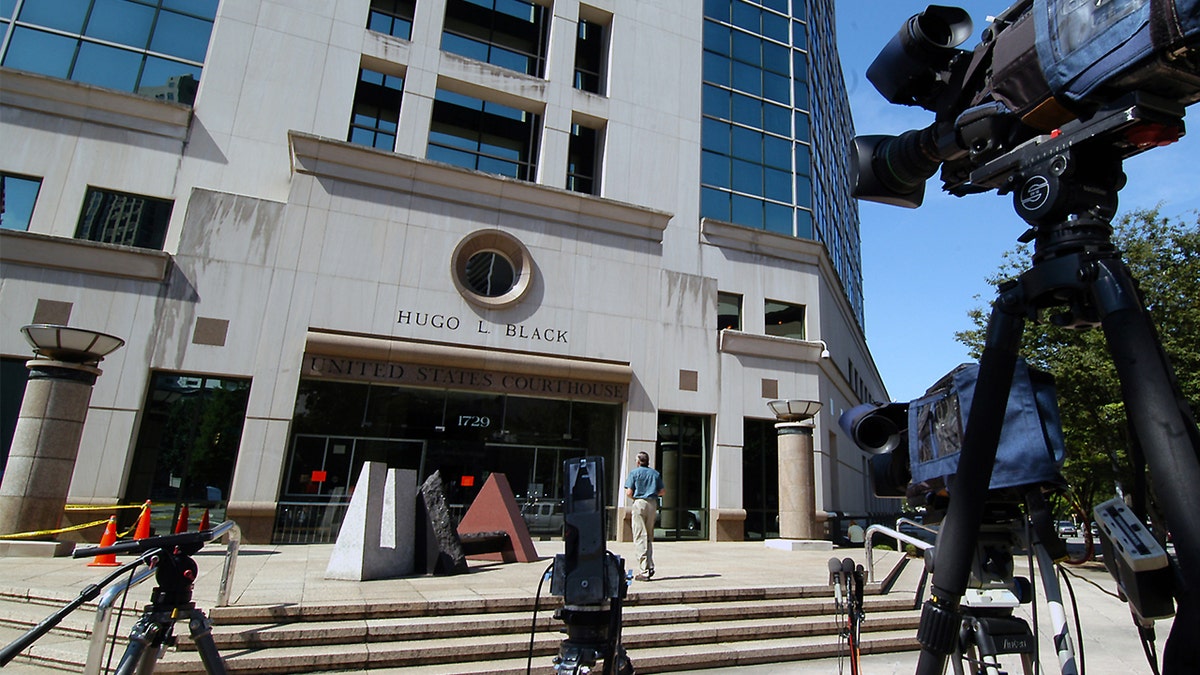
Cameras are in position outside the Hugo Black Federal Courthouse in Birmingham, Ala.(Dana Mixer/Bloomberg via Getty Images)
Only one courthouse, the Hugo Black Federal Courthouse inBirmingham, Alabama, remained under the judiciary, the agency said.
The building reportedly deteriorated significantly and accumulated $57.7 million in delinquent maintenance costs.An analysis revealed extensive safety hazards, including improper chemical storage, inoperable elevator emergency phones and poorly maintained fire protection systems, among other issues, according to the GSA.
According to a 2024 evaluation report of the Hugo Black building, the courthouse experienced significant systemic deterioration and required nearly $19 million in repairs and maintenance while under judicial oversight.Of those costs, almost 83% were categorized as top-priority repairs that needed to be addressed immediately or within one to two years.
“The facility’s unique repair needs reflect poor maintenance practices that have shortened the useful life of expensive, critical systems, including elevators, chiller plants, and boilers,” the agency said.
Despite holding autonomy over the courthouse, the judiciary repeatedly turned to the GSA for technical assistance with complex repairs, the agency added.For instance, the judiciary reportedly relied on GSA service contract templates to assist with its own contracting needs.
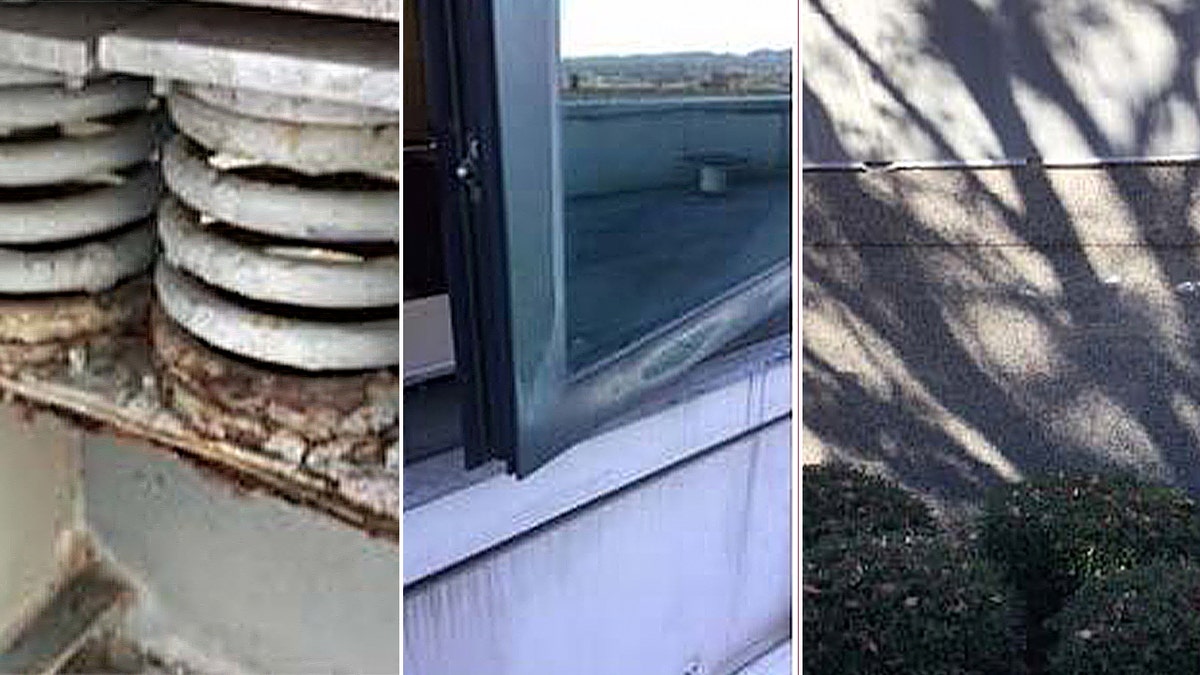
A Management Analysis and Review System analysis of the Hugo Black courthouse found corrosion, mechanical damage and shifting marble panels, causing hazardous conditions that require major maintenance needs.(General Services Administration)
During a 2013 budget hearing on the U.S.courthouses, Judge Julia S.Gibbons characterized the repair responsibilities as a “significant cost liability to the Judiciary’s budget” that “veers dramatically from our core mission to deliver justice,” the agency said.
Due to these financial and operational strains, the Judicial Conference reportedly endorsed ending the judiciary’s pilot program in September 2005 “as a cost-savings measure,” the GSA said.
Separately, the GSA said it successfully completed construction on the new U.S.courthouse in Huntsville, Alabama, in 2024.The project was completed $7 million under budget and features state-of-the-art security, energy efficiency and operations technology.
KENNEDY CENTER DISPUTES ALLEGATIONS ON CONTRACTOR BIDS DESPITE DEMOCRAT SENATOR’S CLAIMS

The GSA said the new U.S.Courthouse in Huntsville, Ala., was completed in 2024, $7 million under budget.(General Services Administration )
The GSA also pointed to its maintenance backlog, saying a “brokencongressional authorizationand appropriations process” has contributed to delays and funding shortfalls.The agency said GSA Administrator Edward Forst has already made unprecedented efforts to address the backlog.
“The fundamental issue at hand is outdated congressional funding and approval rules,” Forst said.“I’m leading an unprecedented effort to reimagine federal building management by raising the prospectus threshold and expanding access to the Federal Buildings Fund with support from 22 cabinet members and agency heads.Those changes — not Judiciary management — are what’s necessary to remediate and renew America’s federal facilities and courthouses.”
onelink.me/xLDS?pid=AppArticleLink&af_web_dp=https%3A%2F%2Fwww.
Forst further claimed the agency is “the most experienced and efficient building manager in the federal government.”
“Multiple Government Accountability Office (GAO) studies show that breaking our model apart would not make courthouse projects faster, cheaper or better-built.It would make them more fragmented, more expensive, less accountable and less safe,” Forst said.
GAO has separately found that congressional funding constraints have contributed to deferred maintenance in federal buildings and has cautioned that transferring real property authority to the Judiciary would not itself provide additional funding and would require sufficient real property expertise.
“Trials and audits have shown that the Judiciary struggles with basic upkeep and maintenance of their facilities, doesn’t effectively utilize its vast space, and is not equipped with the financial resources or expertise to manage their own buildings,” GSA added.
WHITE HOUSE SEIZES ON DELAYED OBAMA PRESIDENTIAL CENTER OPENING TO CROWN TRUMP ‘BUILDER-IN-CHIEF’

General Services Administration head Ed Forst arrives during a meeting at the White House April 2, 2026, in Washington, D.C. (Al Drago/Getty Images)
Defending the branch’s capability, an Administrative Office spokesperson argued that basic facilities’ upkeep is inherently tied to their work and that “the courts have a long history of managing complex business operations, such as budgets, finances, and information technology.
“Maintaining a safe, functional environment is essential to the administration of justice,” the spokesperson said.
“Starting with the proposed pilot program, the Judiciary has the capacity to make property management decisions that better serve the public and the courts.”
![[aggregator] downloaded image for imported item #117240](https://newsview.top/wp-content/uploads/2026/08/jared-kushner-board-peace-washington-fox-news-001-1024x576.jpeg "Kushner touts unprecedented Iran contacts as Tehran denies Trump backchannel")
![[aggregator] downloaded image for imported item #117433](https://newsview.top/wp-content/uploads/2026/08/produce_aisle-1024x576.jpg "Trump’s affordability plan faces conservative pushback as pocketbook issues loom over midterms")
![[aggregator] downloaded image for imported item #117428](https://newsview.top/wp-content/uploads/2026/08/walz-elmi-split-4-1024x576.jpg "Minnesota 'outstanding refugee' honoree accused in fraud scheme tied to sex trafficking: 'Can't make this up'")
![[aggregator] downloaded image for imported item #117421](https://newsview.top/wp-content/uploads/2026/08/thumbnail_62d4955d-73ac-4460-a2b2-86934c573b44djt-20240420eh_charlottenc-9974-1024x576.jpg "White House tears into Ossoff with brutal takedown after jab at key Trump aide: ‘Lightweight loser’")