
![[aggregator] downloaded image for imported item #114117](https://newsview.top/wp-content/uploads/2026/08/ISRAEL-DINESH-DSOUZA-BIBLICAL-ARCHAEOLOGY-ANCIENT-HISTORY-DISCOVERY-CHRISTIANITY-FAITH-3-1024x576.jpg "Author Dinesh D'Souza challenges Bible skeptics with 'startling' archaeological discoveries")
This post was originally published on this site.
— A trip to Israel by bestselling author and filmmaker Dinesh D’Souza sparked what would become a three-year deep dive intobiblical archaeology— a field he says offers striking support for the historical authenticity of the Bible.
�Souza said he became fascinated with biblical archaeology because it “stunningly supports the historicity of the Bible.”
“The Stones Cry Out,” his newest book, is the culmination of a multi-year effort that began in 2022 and is scheduled to hit shelves on Oct.13.
HOLY LAND DISCOVERY REVEALS ANCIENT CHARRED RELICS FROM ONE OF JERUSALEM’S DARKEST CHAPTERS
D’Souza explores archaeological discoveries tied to people, places and events described in theOld and New Testaments, examining what they reveal about the historical credibility of the Bible.
His book delves into dozens of such discoveries.The Texas-based expert said some of the most striking involve relatively minor biblical figures whose existence has been supported by archaeological findings.
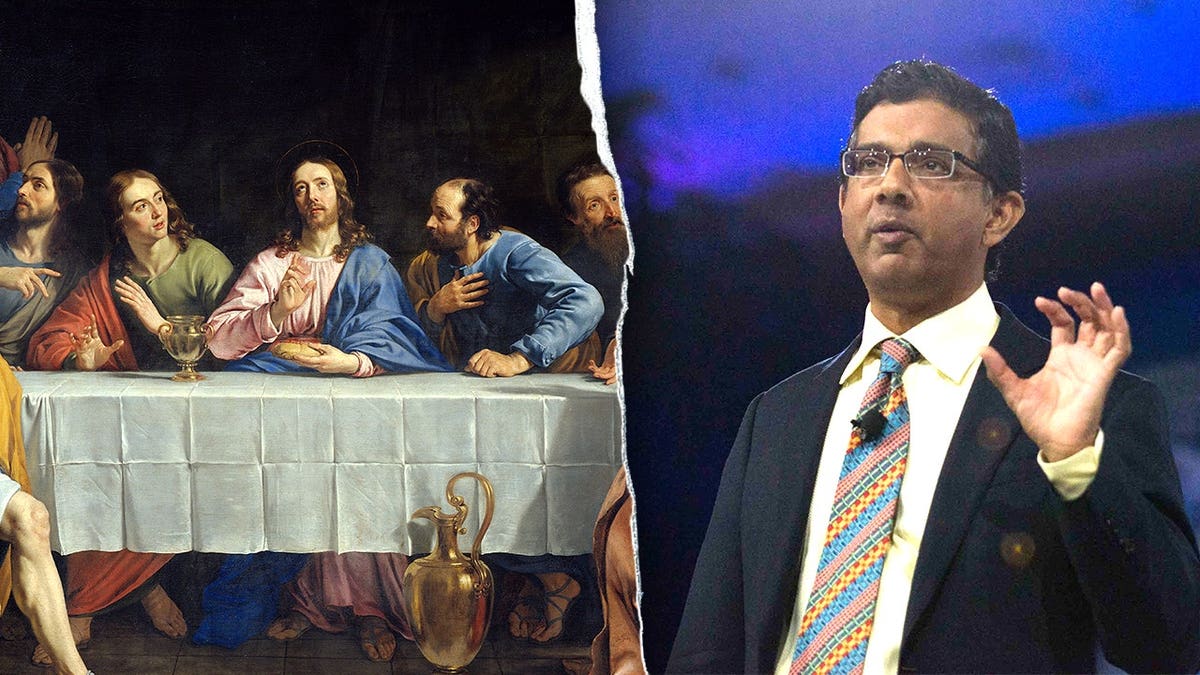
Dinesh D’Souza, pictured at right, explores archaeological discoveries connected to biblical people, places and events in a new book.(Leemage/Corbis via Getty Images;NurPhoto via Getty Images)
Not everyone, however, is convinced such discoveries corroborate the biblical record — a view D’Souza is unfazed by, he said.
“I think the skeptics generally are sort of armchair critics,” he said.
‘SIGNIFICANT’ EARLY CHRISTIAN CHURCH EMERGES BENEATH FORMER FISH MARKET IN ANCIENT CITY
“The problem for them is that archaeology is digging out of the ground artifacts that are a decisive refutation of the things that they say.”
Skeptics, D’Souza said, have also historically questioned accounts surrounding Pontius Pilate, theRoman governorwho ordered the crucifixion of Jesus.
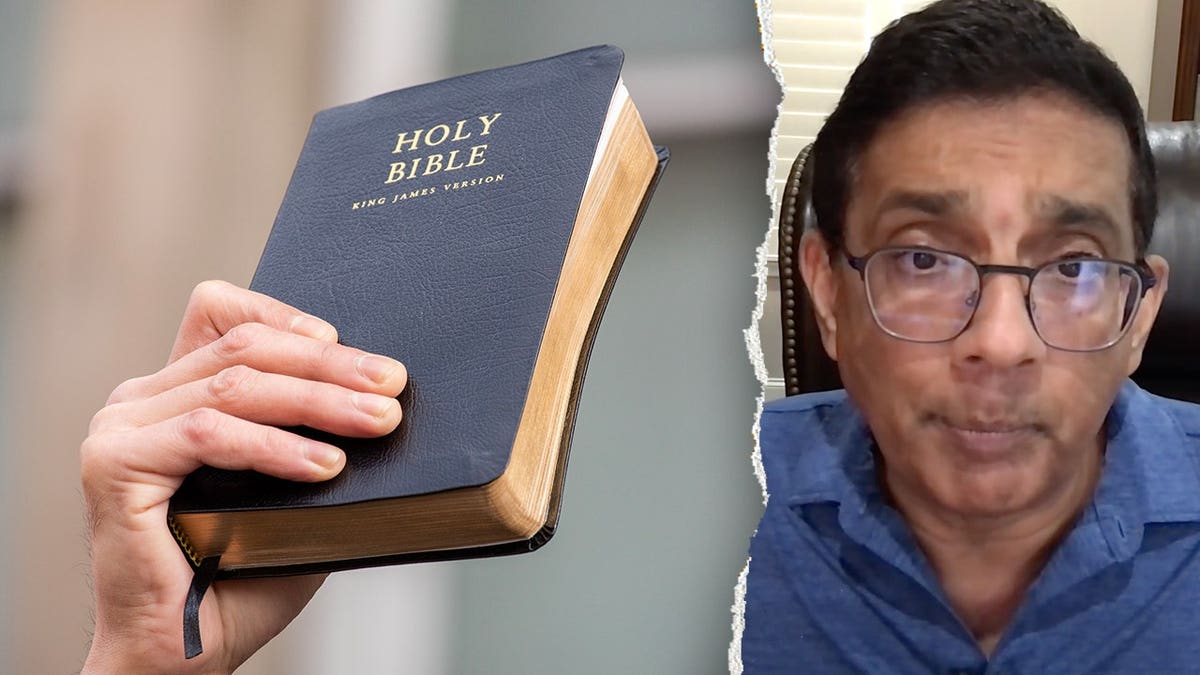
Biblical archaeology can connect ancient discoveries with people described in Scripture, according to author and commentator D’Souza.(Krisztian Elek/SOPA Images/LightRocket via Getty Images;
It wasn’t until 1961 that archaeologists discovered the Pilate Stone — archaeological evidence that bore Pontius Pilate’s name and identified him as “prefect of Judea.” (That stone is on permanent display at The Israel Museum in Jerusalem, according to the museum’s own website.)
“Boom.Not only does it confirm the existence of Pilate, but the Bible writers had his title exactly correct,” D’Souza said.
ANCIENT BOOK OF REVELATION CITY GIVES UP STUNNING SECRET BURIED FOR 1,500 YEARS
“Later, the title was evidently changed to procurator — butin Jesus’ own time, Pontius Pilate had the title that the Bible ascribes to him,” he added.
Another example involves anOld Testament story, in which Israelites traveled toward the Promised Land through Moabite territory, and the king of Moab called on Balaam, a diviner, to curse them, D’Souza said.
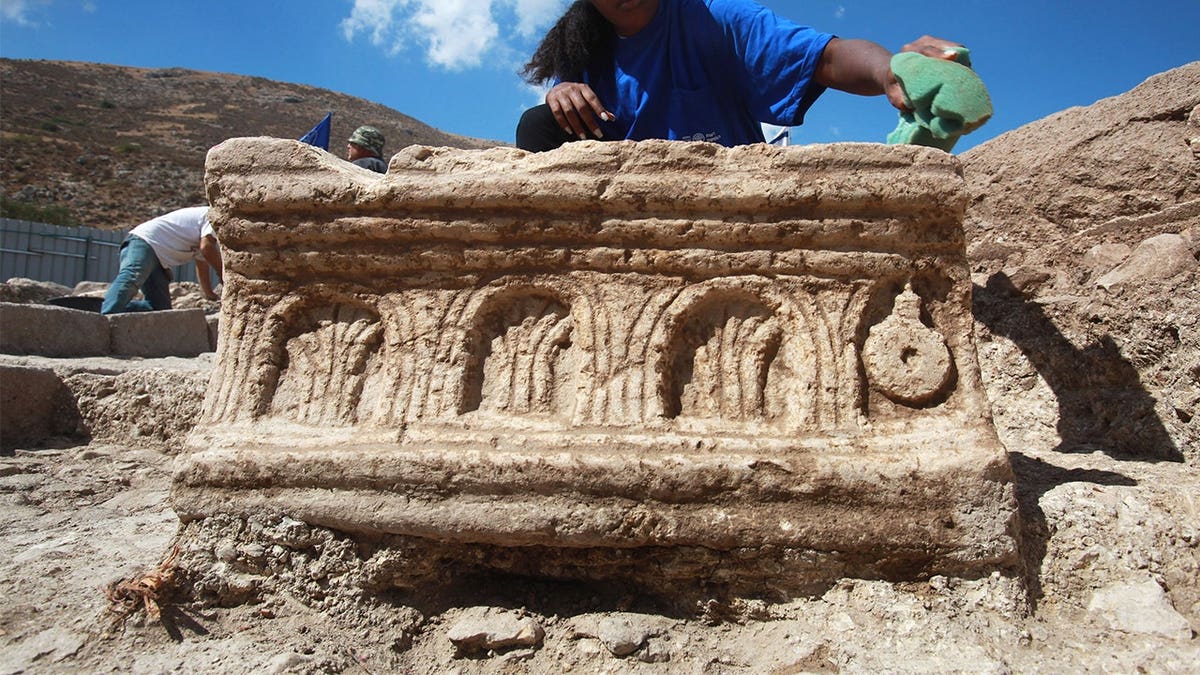
Archaeologists have long searched throughout Israel for evidence to back up stories in the Bible.(David Silverman/Getty Images)
In 1967, archaeologists excavating Deir ‘Alla in modern-day Jordan discovered an ancient plaster inscription referring to “Balaam, son of Beor,” a seer who shares the name and patronymic of the biblical figure.
“So skeptics, no surprise, go, ‘This stuff is clearly made up,’” D’Souza said.“Well, fast-forward.… This is a guy who has just a few sentences in the Bible, and yet, thanks to this plaster inscription found in Jordan, he jumps out of the pages of the Bible and into the pages of history via the pathway of archaeology.”
ARCHAEOLOGISTS UNEARTH ANCIENT TREASURE CACHE AT BIBLICAL CITY CONNECTED TO GENESIS
One of themost “startling” examplesof biblical archaeology, D’Souza said, involves a high priest named Caiaphas, described as “one of the villains of the Bible.”
“He presides over the trial of Jesus.He orchestrates the crucifixion,” he said.
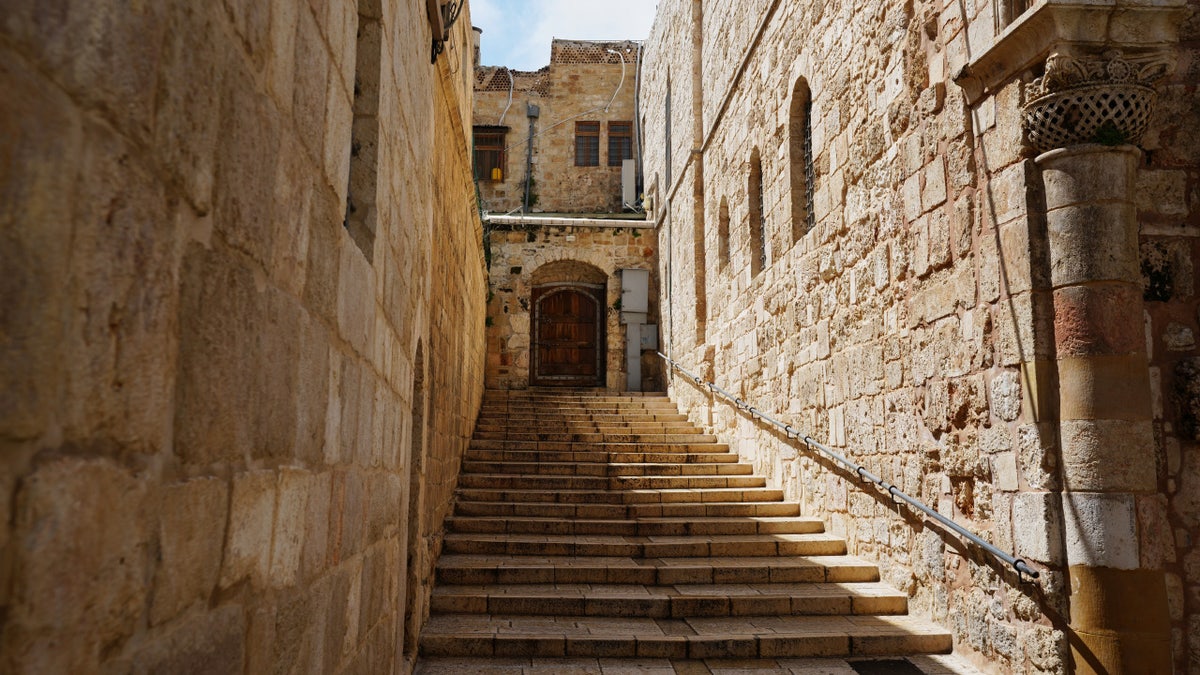
Tourists visiting Israel can explore biblical sites such as the Church of the Holy Sepulchre in Jerusalem.(AP Photo/Mahmoud Illean)
“Yet for many, many centuries, Caiaphas had a kind of shady existence.He was mainly in the Bible, but not really outside the Bible,” added D’Souza.
Archaeologists excavatingin Jerusalemlater discovered an ossuary, or bone box, bearing the name “Yehoseph bar Caiapha.”
LOST PAGES WITH ‘GHOST’ TEXT RECOVERED FROM ONE OF THE WORLD’S MOST IMPORTANT NEW TESTAMENT MANUSCRIPTS
“They look inside the box.It’s the bones of a 60-year-old man.They date it.It goes to the first century A.D.It’s Caiaphas,” D’Souza said.
“It’s a complex field, but it’s very rewarding.”
“And the amazing thing is, we not only have an inscription or reference to him, we have his actual bones.… Archaeology provides this kind ofstunning corroborationfor the people, the places and the events in the Bible.”
D’Souza described his book “The Stones Cry Out” as an “attempt to bridge the gap between the academic world and the public.”
“It’s a complex field, but it’s very rewarding,” he said.
TEST YOURSELF WITH OUR LATEST LIFESTYLE QUIZ
He also urged his fellow Christians tovisit Israel, he said, calling it “our spiritual homeland” — more so than other parts of the Levant.
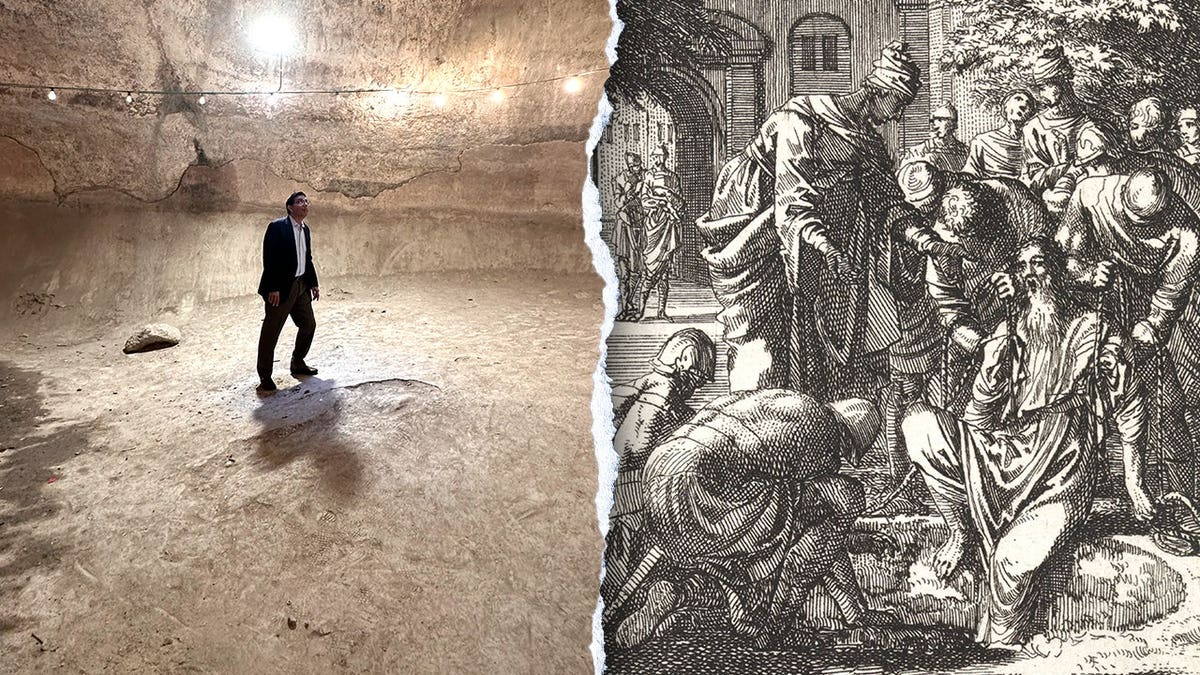
D’Souza, shown above left, visited the site traditionally associated with the pit into which the prophet Jeremiah was thrown during his imprisonment in Jerusalem, depicted on the right.(Debbie D’Souza;Sepia Times/Universal Images Group via Getty Images)
“All of the Old Testament and Jesus’ own ministry takes place in the [land] of Israel,” he said.“You get a much deeper understanding by being there.And also some of the terms and descriptions in the Bible take on a kind of new life.”
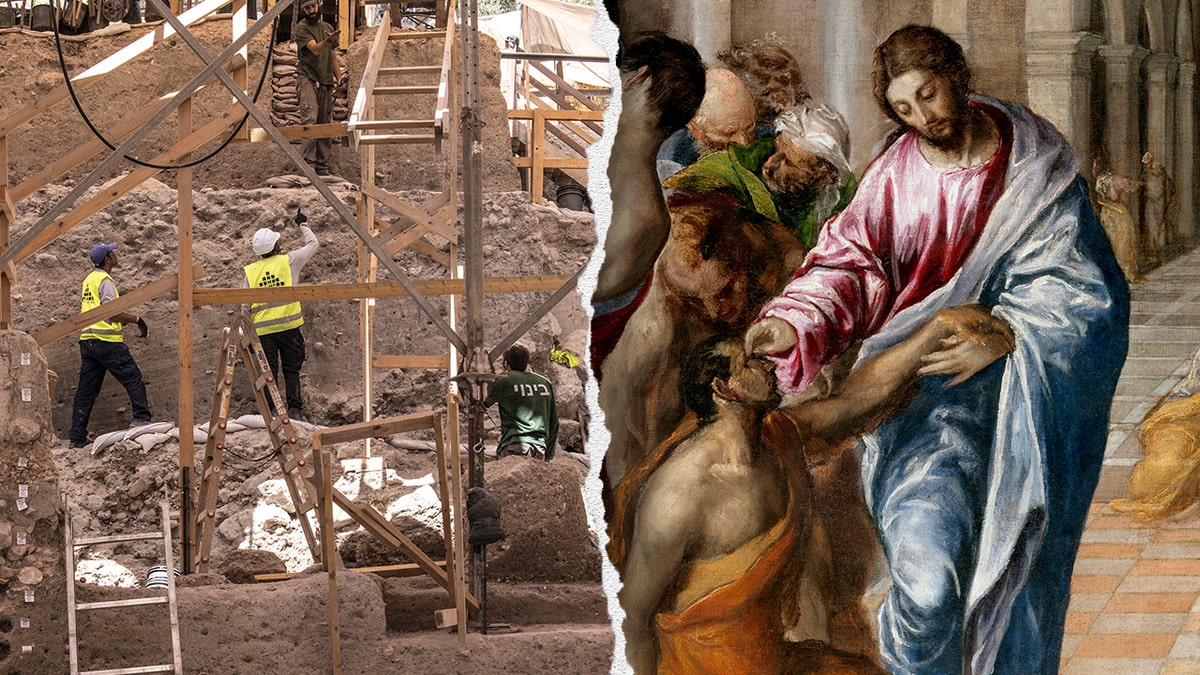
The Pool of Siloam is one of many biblical sites in Israel that archaeologists are continuing to excavate and study, as seen above left.(John Wessels/AFP via Getty Images;Heritage Art/Heritage Images/Getty Images)
“If you can’t make it, ‘The Stones Cry Out’ is the next best thing,” he said.
onelink.me/xLDS?pid=AppArticleLink&af_web_dp=https%3A%2F%2Fwww.
D’Souza’s book“The Stones Cry Out”is available for pre-order.
![[aggregator] downloaded image for imported item #99678](https://newsview.top/wp-content/uploads/2026/07/kelsey-pfendler-rowing-1024x576.jpg "Grand Canyon rafting guide becomes first American woman to row solo across Pacific in record-breaking fashion")
![[aggregator] downloaded image for imported item #99670](https://newsview.top/wp-content/uploads/2026/07/BATTLE_OF_THE_ALAMO_TX_DISCOVERY_HISTORY_ARCHAEOLOGY_1-1024x576.jpg "Rare cannonball emerges from ground at the Alamo, likely untouched for nearly 190 years")
![[aggregator] downloaded image for imported item #99663](https://newsview.top/wp-content/uploads/2026/07/people-driving-highway101-1024x576.jpg "Drivers urged to plan ahead as rest areas close along busy coastal corridor")
![[aggregator] downloaded image for imported item #99656](https://newsview.top/wp-content/uploads/2026/07/state-fair-dc-attendees-1024x576.jpg "Patriotic pride on display as America 250 guests share reflections: 'Awesome to be here'")