
This post was originally published on this site.
Many older adults turn to glucosamine to manage aging joints, but for individuals with mild cognitive impairment, the supplement could be linked to faster progression toAlzheimer’s disease.
To investigate how glucosamine affects dementia risk and mortality, University of Florida researchers analyzed medical records of patients with mild cognitive impairment, tracked laboratory mouse models and examined healthy versus Alzheimer’s-affectedhuman brains.
The study, which was published in Nature Metabolism, focused on glycosylation, a natural process where brain cells attach small chains of sugar to proteins.
7 NEW DEMENTIA RISK FACTORS REVEALED — INCLUDING ONE MILLIONS STRUGGLE WITH
“You can think of these sugar chains as the labels and fittings on a machine part — they help a protein fold correctly, get shipped to the right place in the cell and connect with its partners,” senior author Ramon Sun, Ph.D.“The right amount is essential.”

Many older adults turn to glucosamine to manage aging joints, but for individuals with mild cognitive impairment, the supplement could be linked to faster progression to Alzheimer’s disease.(iStock)
What is glucosamine?
“Glucosamine is a naturally occurring compound of sugar and an amino acid group that is a fundamental structural building block in the body,�
Glucosamine is concentrated in cartilage, the connective tissue that cushions joints, and is a component of larger molecules that help give cartilage its strength, elasticity and ability to retain water, he added.
“Support foraging jointsis the primary reason people take glucosamine as a dietary supplement,” Levin said.
ALZHEIMER’S BLOOD TESTS MAY PREDICT SYMPTOMS YEARS IN ADVANCE, BUT EXPERTS URGE CAUTION
The body uses an internal “checkpoint” that naturally regulates how many of these sugar chains it produces, according to Sun.
Supplemental glucosaminebypasses that “front gate” entirely — like a delivery truck pulling straight up to the loading dock, instantly boosting the supply of raw material used to make the sugar chains, the expert added.

Glucosamine is concentrated in cartilage, the connective tissue that cushions joints, and is a component of larger molecules that help give cartilage its strength, elasticity and ability to retain water.(iStock)
In the study, researchers analyzed thousands ofpatients with dementia, including Alzheimer’s disease, as well as those with mild cognitive impairment, and then narrowed the group to those who were taking glucosamine.
For those with mild cognitive impairment, taking the supplement didn’t change their risk of death, but it did make them 25% more likely to progress to dementia.However, among individuals who already had dementia, glucosamine users had a higher mortality compared to similar non-users.
POPULAR DRUGS FOR BONE HEALTH LINKED TO SIGNIFICANTLY LOWER ALZHEIMER’S RISK
The researchers also examined brain tissue to understand what might be driving the association.“We found an excess of sugar chains on proteins in the Alzheimer’s brain,” Sun said.
Many of those proteins help nerve cells communicate, but the excess sugar chains may interfere with how they function, Sun said.He compared the effect to coating a key in too much wax — it is still the same key, but no longer fits the lock properly.
“A brain affected by dementia and a healthy brain are different biological environments, and we shouldn’t assume a supplement behaves the same way in both.”
Glucosamine is one of the materials cells use to make these sugar chains, according to Sun.
Researchers also tracked how glucosamine was processed in mice, comparing its effects onhealthy brainswith those affected by Alzheimer’s-like disease.
“In our experiments, normal mice given glucosamine showed no increase in these sugar chains and no change in a memory test,” Sun said.
“But in mice with Alzheimer’s-like disease, where the production line was already running too hot, glucosamine increased the sugar chains further and worsened performance on a memory test.”
Study limitations
The researchers relied on medical records, which may not capture every supplement a patient was taking.
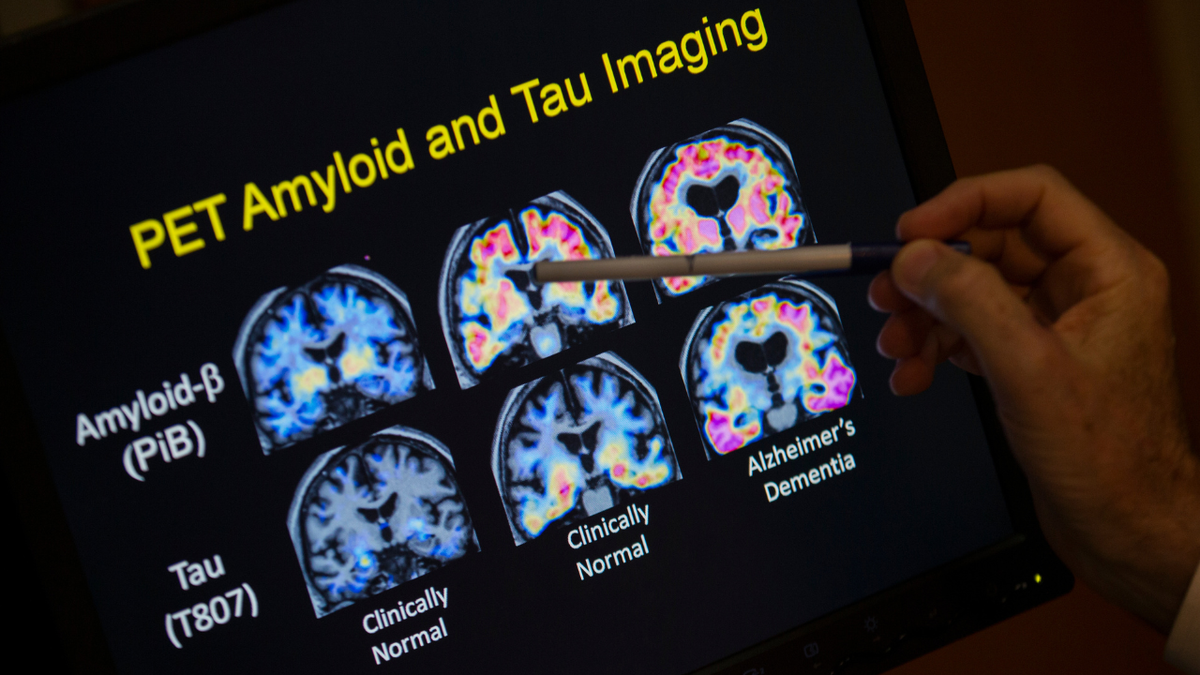
Researchers analyzed thousands of patients with dementia, including Alzheimer’s disease, as well as those with mild cognitive impairment, and then narrowed the group to those who were taking glucosamine.(AP Photo/Evan Vucci, File)
An observational study looking at past records can find a signal, but can’t prove one.
Glucosamine users may also differ in factors such asarthritis, pain, mobility, frailty and medication use, Levin noted.The records also did not establish the exact supplement, dose, duration or consistency of use.
“The finding should therefore be treated as a safety signal that warrants controlled human research, but it did not — could not — reach a conclusion that glucosamine causes Alzheimer’s disease,” Levin said.
The next step is a well-designed, double-blind clinical trial to evaluate the impact of glucosamine oncognitive declinein patients with dementia.
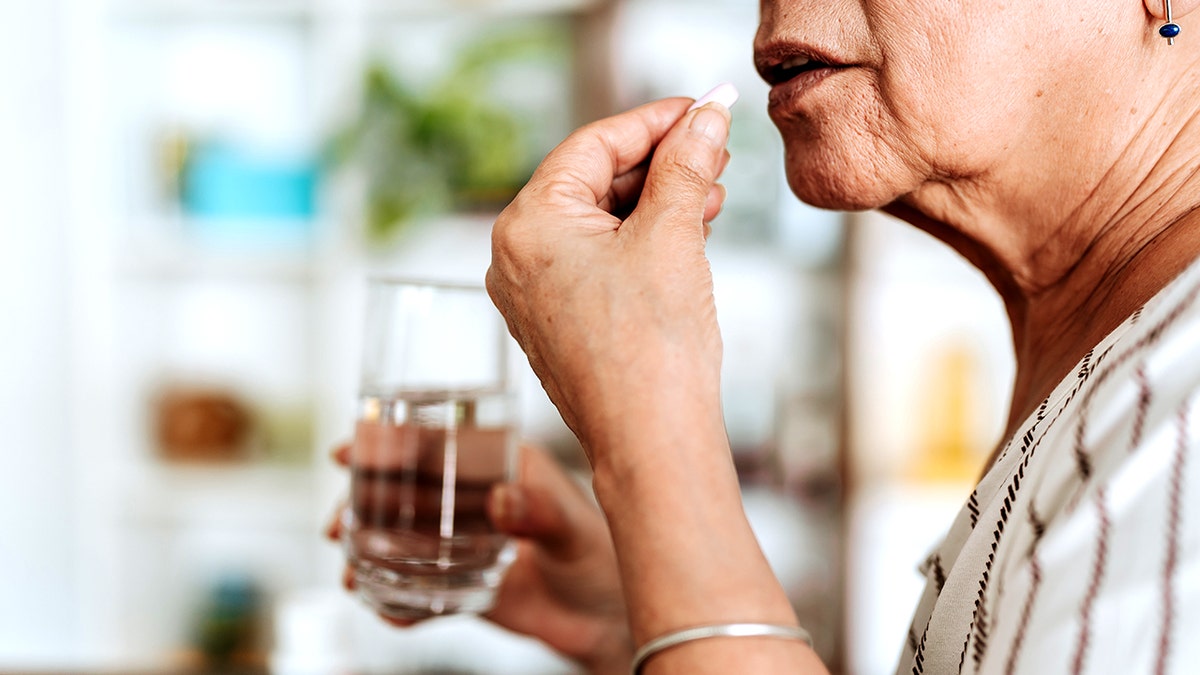
The study did not examine cognitively healthy people and does not suggest glucosamine poses a risk to those who take it for joint health.(iStock)
“For now, the evidence isn’t strong enough to recommend any supplement for slowing [Alzheimer’s] disease, which is why doing this research properly, including the clinical trial we’ve called for, matters,” Sun said.
The study did not examine cognitively healthy people and does not suggest that glucosamine poses a risk to those who take it for joint health.
TEST YOURSELF WITH OUR LATEST LIFESTYLE QUIZ
“A brain affected by dementia and a healthy brain are different biological environments, and we shouldn’t assume a supplement behaves the same way in both,” Sun said.
He emphasized the importance ofconsulting with a doctorbefore starting or stopping a supplement.
onelink.me/xLDS?pid=AppArticleLink&af_web_dp=https%3A%2F%2Fwww.
“If you or a family member has a diagnosis of cognitive impairment or dementia and takes glucosamine, it’s reasonable to bring it up at the next visit, as part of an ordinary conversation about what’s in the medicine cabinet,” the doctor advised.