
![[aggregator] downloaded image for imported item #1983](https://newsview.top/wp-content/uploads/2025/08/katie-thomas-and-her-dog-finch-train-to-detect-spotted-lanternflies-1024x576.jpg "Virginia Tech study shows dogs can detect invasive lanternfly")
This post was originally published on this site.
BLACKSBURG, Virgina –Researchers at Virginia Tech say man’s best friend may also be one of nature’s best defenses against an invasive pest.For the first time, a study shows that pet dogs could help stop the rapid spread of the spotted lanternfly.
Spotted lanternflies feed on different plantsand excrete a sugary substance called honeydew, which promotes mold growth.They are considered so destructive that some states have launched campaigns urging residents tostomp themon sight.Experts say the real solution is to wipe out their egg masses, but those can be hard to find because they often resemble dried mud and can blend in with their surroundings.
That’s where the dogs can come in to help with their strong sense of smell.
“Dogs have one dominant sense.It’s their nose.We use our eyes.Dogs use their nose like their eyes,” said study participant, Katie Thomas.
INVASIVE PESTS COULD STAGE DRAMATIC COMEBACK THIS SUMMER, EXPERTS WARN
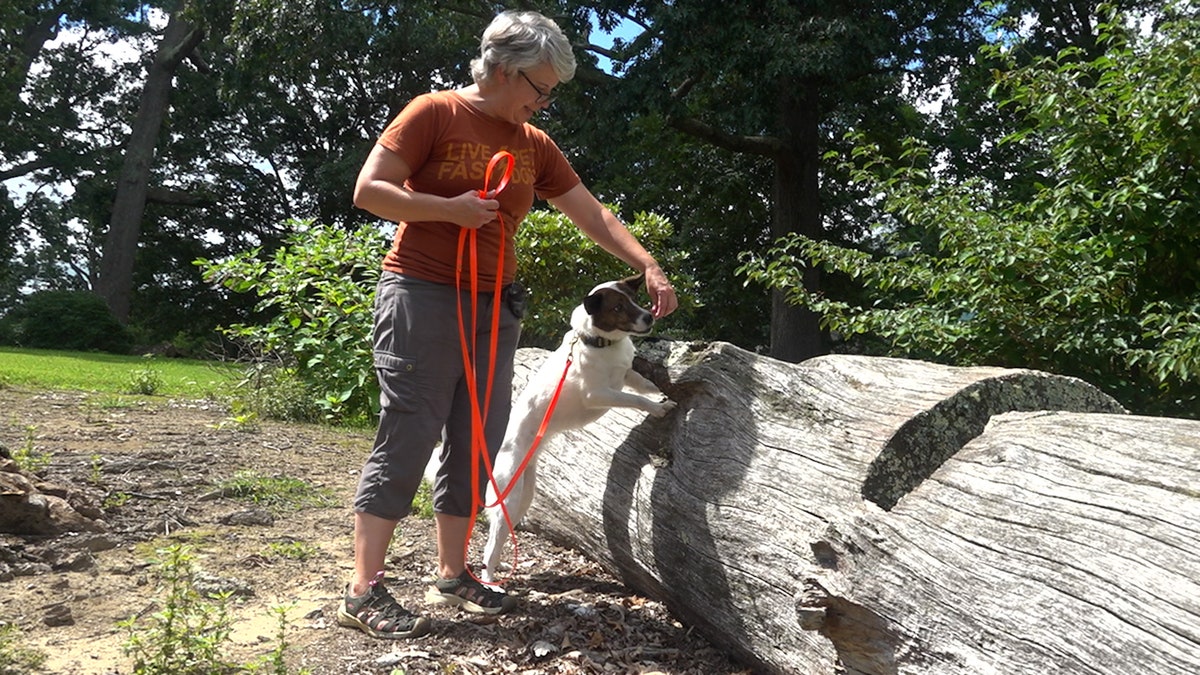
Katie Thomas rewards her dog, Finch, after locating a target scent(Kailey Schuyler)
Thomas and her nine-year-old pitbull mix, Finch, participated in the study, hoping to put their years of recreational scent work to good use.They went through indoor and outdoor tests, sniffing out egg masses, and receiving an award when Finch was right on the money.
SPOTTED LANTERNFLY: WHAT YOU NEED TO KNOW ABOUT THE INVASIVE INSECT
“To be able to do things that we already do, that we are having a lot of fun with… Train our dogs to sniff stuff, being able to apply that to something like a real problem that affects our community is really fulfilling,” said Thomas.
The spotted lanternfly is native to Asia and was first detected in the United States in Pennsylvania over ten years ago.Since then, it has spread to 19 states, according to the USDA.
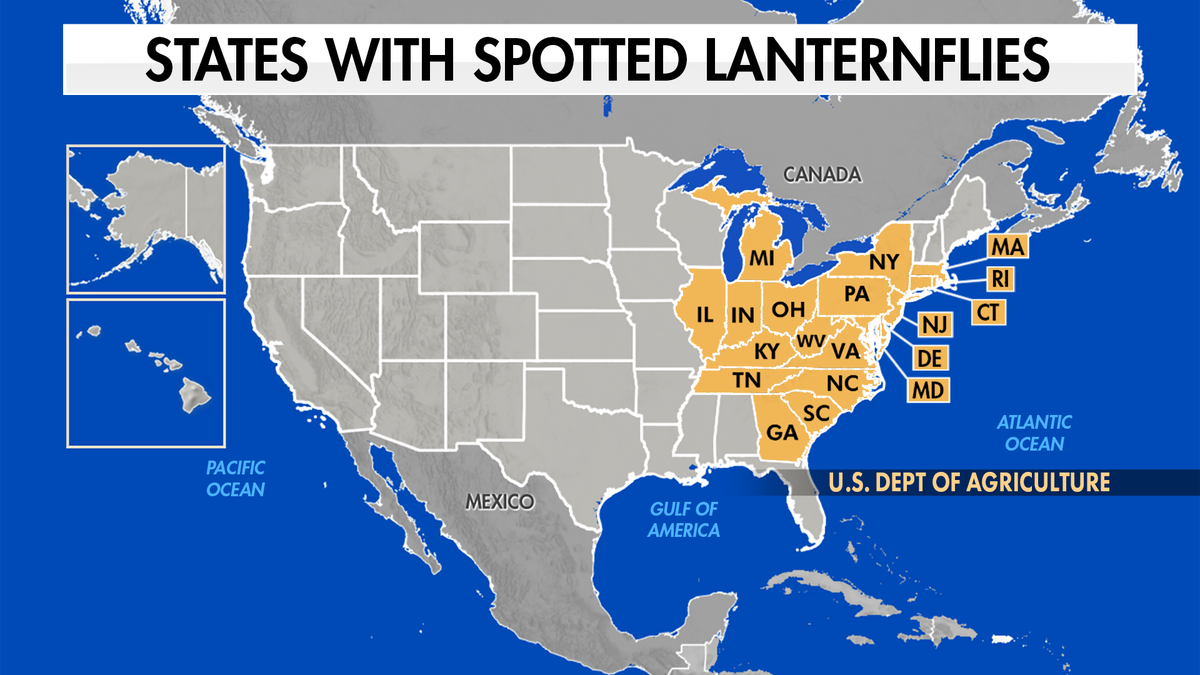
“They are everywhere, and we need to search out the eggs.The problem is it’s too late once we have the lanternfly,” said study participant, Carolyn Shelburne.
CALIFORNIA WINEGROWERS ON EDGE OVER PEST THAT COULD ‘DEVASTATE’ LUCRATIVE INDUSTRY
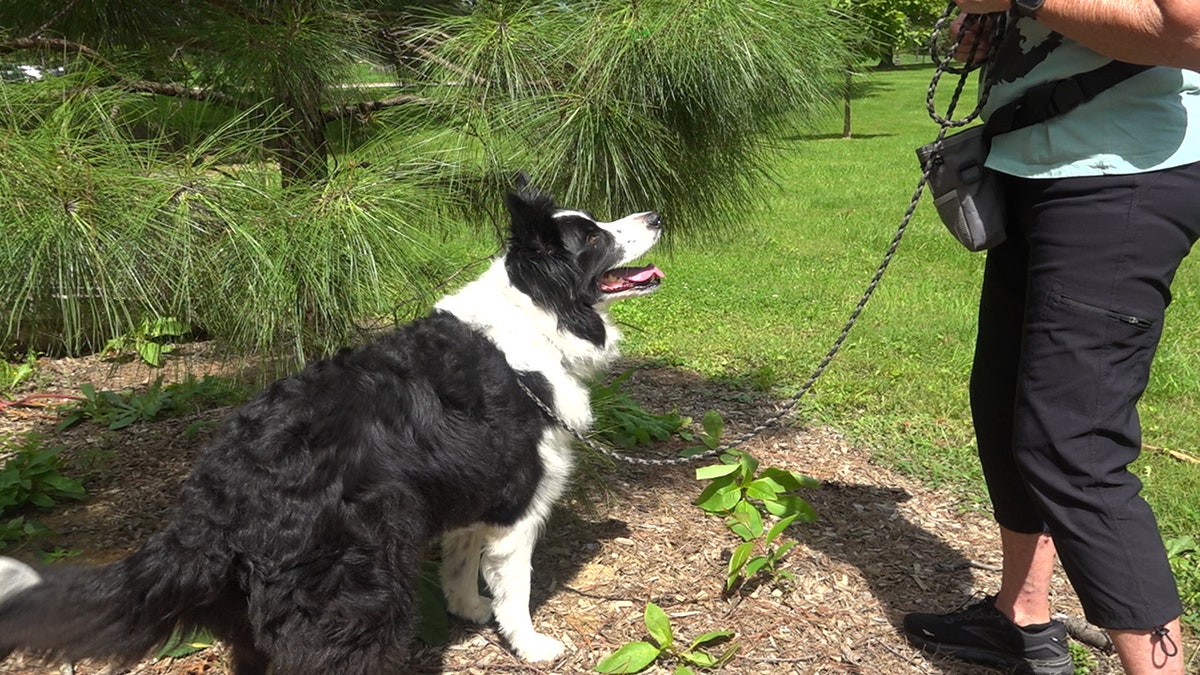
Carolyn Shelburne and her dog, Hermes, search for a target scent (Kailey Schuyler)
Carolyn and her 9-year-old border collie, Hermes, was one of the first five K9 and handler teams to pass their field tests.Ultimately, 182 volunteer teams across the U.S.took part in the study.
For indoor tests, dogs identified the lanternfly scent correctly more than 80% of the time.For more real-world outdoor tests, dogs identified the scent correctly more than 60% of the time.That’s still better than most human searches.
Read More → TikTok after the US sale: What changed and how to use it safely
“Hopefully, more people will see that you can train any dog to do this, and it gives you something fun to do with your dog,” said Shelburne.
Researchers are hoping this is just the beginning for dogs to protect local environments.Even in areas where spotted laternflies aren’t a problem, dogs could be trained to sniff out other invasive species.
![[aggregator] downloaded image for imported item #2149](https://newsview.top/wp-content/uploads/2024/11/moon-1024x576.png "Earth bids farewell to 'mini moon' asteroid set for return visit in 2055")
![[aggregator] downloaded image for imported item #2142](https://newsview.top/wp-content/uploads/2024/12/NASA-voyager1-1024x576.jpg "Interstellar Voyager 1 resumes operations after pause in communications with NASA")
![[aggregator] downloaded image for imported item #2135](https://newsview.top/wp-content/uploads/2024/12/mastodon-jaw-new-york-2-1024x576.jpg "Complete mastodon jaw found in New York homeowner's backyard: 'Remarkable discovery'")
![[aggregator] downloaded image for imported item #2127](https://newsview.top/wp-content/uploads/2024/12/starlab-rendering-13-1024x576.jpg "NASA finalizes strategy for human presence in space")