
![[aggregator] downloaded image for imported item #44135](https://newsview.top/wp-content/uploads/2026/02/superagers-cognitive-testing-1024x576.jpg "Some 80-year-olds still have razor-sharp brains — and now scientists know why")
This post was originally published on this site.
Older adults classified as “SuperAgers” generate at least twice as many neurons in the hippocampus than their typical aging peers, a new study has revealed.
These findings, released on Wednesday by the University of Illinois Chicago and Northwestern University, could help explain why SuperAgers have exceptional memory andcognitive resilienceeven well past 80 years old.
Northwestern has been studying SuperAgers for decades, defining them as “extraordinary individuals aged 80 and above whose memory performance rivals that of people three decades younger.” The researchers use special memory recall tests to make this determination.
In this study, they analyzed post-mortem brain tissue — nearly 356,000 individual cell nuclei — with a focus on the hippocampus, which is essential for forming new memories and supporting learning and spatial navigation.
They compared tissue from SuperAgers, typical older adults,older adultswith early dementia/Alzheimer’s and younger healthy adults.

SuperAger Ralph Rehbock sits with his wife in his home.New findings from the University of Illinois Chicago and Northwestern University could help explain why SuperAgers have exceptional memory and cognitive resilience well past 80 years old.(Shane Collins, Northwestern University)
The researchers found that SuperAgers produced at least twice as many new neurons compared to “cognitively normal” older adults and those withAlzheimer’s pathology.
They also found that changes in certain brain support cells (astrocytes) and key memory cells (CA1 neurons) are linked to preserved cognitive ability, helping to keep the brain sharp with age.
ALZHEIMER’S DECLINE COULD SLOW DRAMATICALLY WITH ONE SIMPLE DAILY HABIT, STUDY FINDS
The SuperAgers also had differentgenetic activity patternsin their brains compared to those in Alzheimer’s disease.
“SuperAgers have more immature neurons and neuroblasts in the hippocampus, which is an indication of stronger neurogenesis when compared with other groups,�
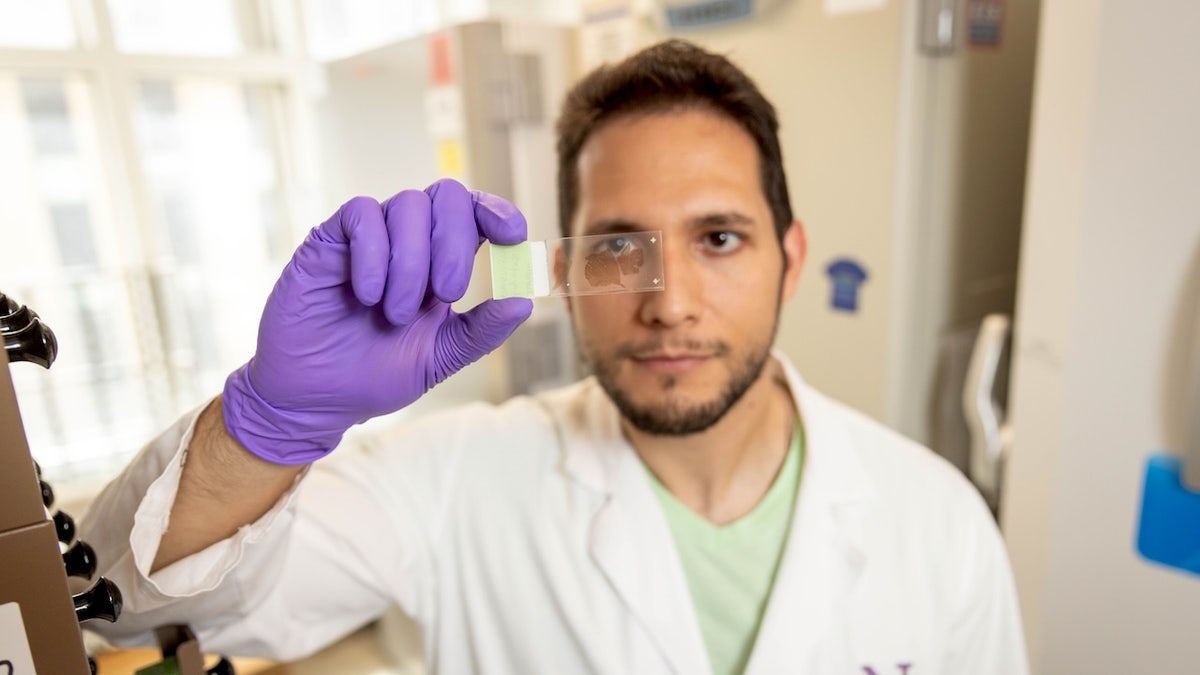
Northwestern University study co-author Ivan Ayala examines a SuperAger brain sample on a slide.(Shane Collins, Northwestern University)
“The study also showed that specific cells in the hippocampus show unique gene expression profiles that relate to neuronal function and transmission and are associated withsuperior cognitive function.”
The findings were published in the journal Nature.
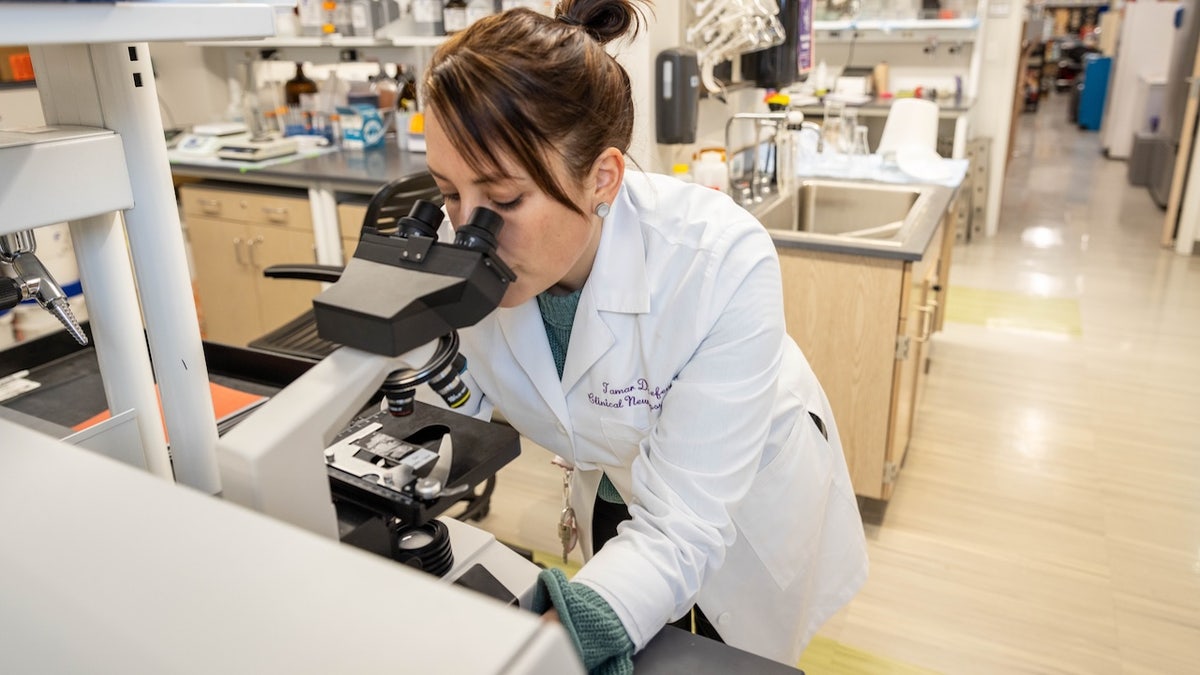
Dr.Tamar Gefen examines a slide of a SuperAger brain.(Shane Collins, Northwestern University)
Dr.
“It confirmed not only preservation of brain tissue in the hippocampus, which is crucial formemory and cognition, but also regeneration and increased development of brain cells in that area,�
important studybecause it may lead to certain cell gene treatments that could lead to more SuperAgers,” the doctor said.“It may also lead to more advanced testing to determine who will be a SuperAger and guide clinical treatment and management.”
onelink.me/xLDS?pid=AppArticleLink&af_web_dp=https%3A%2F%2Fwww.
The study did have some limitations, primarily that the research relied on tissue samples taken at one specific point, instead of tracking changes over time.
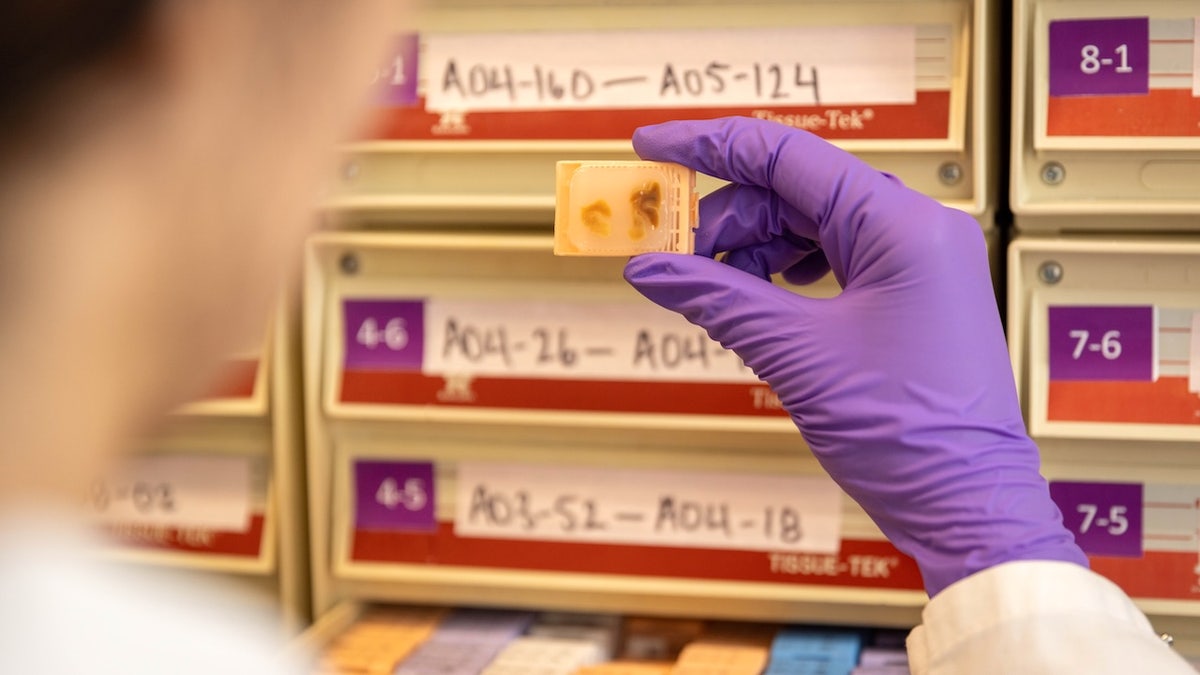
Brain samples are fixed in blocks of wax so they can be stored and examined.(Shane Collins, Northwestern University)
Geula noted that studies using human brain tissue typically involve fewer cases than animal research, which can be a limitation.However, he emphasized that each case in this study was analyzed thoroughly.
“While these findings are not directly translatable to changes in everyday life and activities, they suggest that cognitive resilience is associated with greater integrity of many brain systems,�“This implies that attending to brain health is crucial for maintaining cognitive function in old age.”
TEST YOURSELF WITH OUR LATEST LIFESTYLE QUIZ
“Thus, maintaining good overall health by keeping systemic diseases in check, maintaining ahealthy dietand exercise, and ensuring the elderly remain mentally active assume more importance.”
The study was funded by the National Institute on Aging, which is part of the National Institutes of Health.

![[aggregator] downloaded image for imported item #22232](https://newsview.top/wp-content/uploads/2026/01/wrigleys-chewing-gum-delivery-cart-1024x576.jpg "Study reveals why chewing gum might actually help with focus and stress relief")
![[aggregator] downloaded image for imported item #22404](https://newsview.top/wp-content/uploads/2026/01/man-struggles-sleeping-1024x576.jpg "Missing sleep may take a hidden toll on your brain and longevity, research reveals")