
![[aggregator] downloaded image for imported item #35042](https://newsview.top/wp-content/uploads/2026/02/greece-oldest-wooden-tool-found-neanderthal-prehistoric-discovery-archaeology-history-2-1024x576.jpg "Oldest handheld wooden tools ever? Ancient artifacts preserved in mud mystify archaeologists")
This post was originally published on this site.
Archaeologists uncovered what they believe are theoldest wooden toolsever discovered — dating back hundreds of thousands of years, according to a new study.
The tools were found in Greece’s Megalopolis basin, a low-lying valley insouthern Greece’sPeloponnese peninsula.
Published in the journal Proceedings of the National Academy of Sciences in late January, the study estimates the tools could be around 430,000 years old, though the exact age is unknown.
SCIENTISTS SHATTER TIMELINE OF HUMAN FIRE-MAKING WITH 400,000-YEAR-OLD DISCOVERY IN ENGLAND
The tools “represent the earliest handheld wooden tools, and include a new tool type,�
The finds “demonstrate the importance of systematic investigation of early wood remains,” the abstract also says.

Archaeologists say wooden tools found in Greece’s Megalopolis basin may date back roughly 430,000 years, making them potentially the oldest of their kind.(Katerina Harvati, Dimitris Michailidis via AP;Prisma/UIG/Getty Images)
The area where the tools were found was covered by wetlands and lakes hundreds of thousands of years ago.
One of them — a stick — measures around 2.5 feet long.It was likely used for digging in mud, while the other is a small handheld chunk of wood that may have been used to shape stone tools.
TEST YOURSELF WITH OUR LATEST LIFESTYLE QUIZ
Because wood rots very quickly, few ancient tools of this type survive.
The recently found tools were covered in sediment and preserved by the surrounding wet environment.

Researchers believe a smaller handheld piece of wood may have been used to help shape stone tools thousands of centuries ago.(Katerina Harvati, Dimitris Michailidis via AP)
Modern humans didn’t exist back then — leading scientists to believe the tools may have been used by Neanderthals or other early human ancestors.
Annemieke Milks, an archaeologist at the University of Reading and author of the study, said she was “thrilled to be able to touch these objects.”
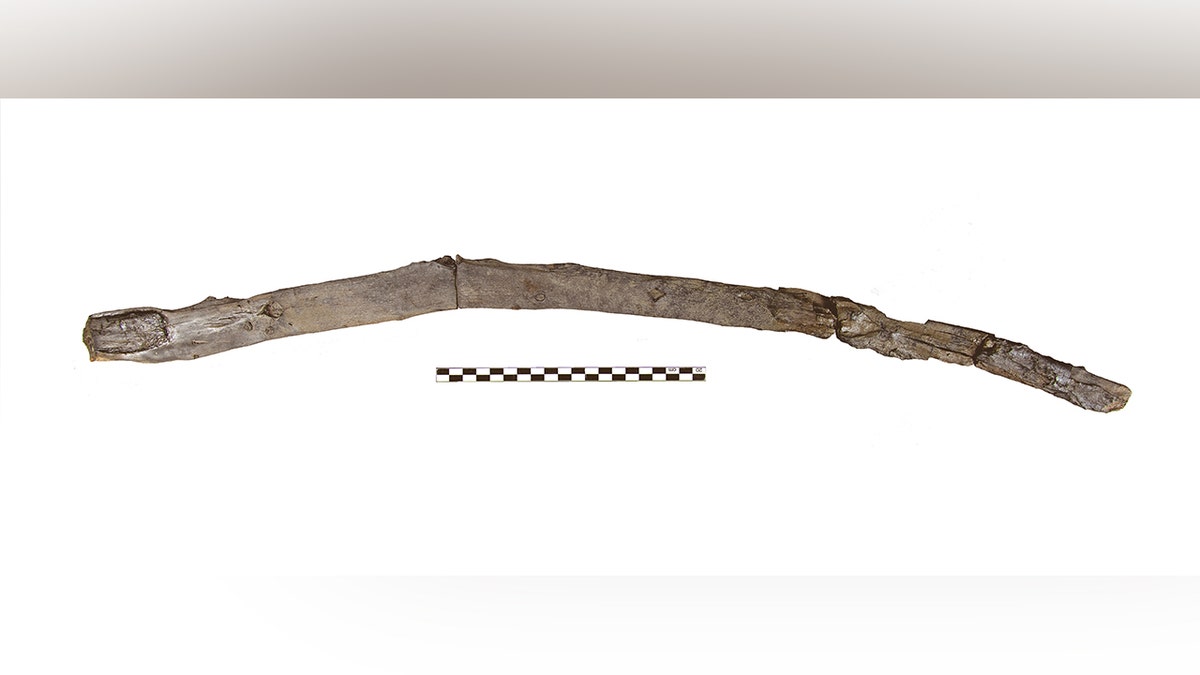
Archaeologists say one wooden tool, measuring about 2.5 feet long, was likely used for digging in muddy, wet ground.(Katerina Harvati, Dimitris Michailidis via AP)
Jarod Hutson, of theSmithsonian National Museum of Natural History, told The Associated Press the tools’ purposes remain unclear.
“It’s difficult to get excited about these because they don’t strike you immediately as wooden tools,” cautioned Hutson, who was not involved in the study.

Scientists suggest the tools may have been used by Neanderthals or other early human ancestors before modern humans existed.(Universal History Archive/Universal Images Group via Getty Images)
Last month, archaeologists announced thediscovery of cave artdating back about 68,000 years, found in a cave on a tropical island in central Indonesia.
onelink.me/xLDS?pid=AppArticleLink&af_web_dp=https%3A%2F%2Fwww.
Researchers also recently identified the oldest-knownpoisoned arrowheads,estimating that they are roughly 60,000 years old.
The Associated Press contributed reporting.
![[aggregator] downloaded image for imported item #22632](https://newsview.top/wp-content/uploads/2026/01/mollie-finlon-and-husband-on-cruise-1024x576.jpg "Cruise ship insider reveals simple booking trick for scoring a better cabin")
![[aggregator] downloaded image for imported item #22754](https://newsview.top/wp-content/uploads/2026/01/bulgaria-man-survives-lion-attack-ancient-archaeology-history-discovery-1-1024x576.jpg "Ancient man survived brutal lion attack, suffered lifelong damage: 'Extremely rare'")
![[aggregator] downloaded image for imported item #23050](https://newsview.top/wp-content/uploads/2026/01/4961a4b7-3-1024x576.jpg "CDC reports first cruise norovirus outbreak this year, as nearly 90 people are infected")
![[aggregator] downloaded image for imported item #23045](https://newsview.top/wp-content/uploads/2026/01/grenada-travel-advisory-violent-crime-fox-news-1-1024x576.jpg "Vacation destination slapped with increased travel advisory due to 'violent crime'")