
![[aggregator] downloaded image for imported item #4560](https://newsview.top/wp-content/uploads/2025/11/parkinsons-possible-cause-link-1024x576.jpg "Common sleep problem tied to serious neurological disorder in major new study")
This post was originally published on this site.
A major new study has found a notable connection betweenuntreated sleep apneaand an increased risk of Parkinson’s disease.
A team of researchers from Oregon Health and Science University (OHSU) studied more than 11 million veterans aged 40 and older who did not already have Parkinson’s disease.
Some of them had been diagnosed with obstructive sleep apnea, a condition in which breathing repeatedly stops and starts during sleep.The researchers then tracked who went on todevelop Parkinson’sover an average of nearly five years.
‘SOCIAL SLEEP APNEA’ COULD BE RUINING YOUR WEEKEND REST, STUDY SUGGESTS
They also examined veterans who began continuous positive airway pressure (CPAP) therapy within two years of their sleep apnea diagnosis, searching for any difference in Parkinson’s outcomes compared with those who delayed or never started CPAP.
Dr.Greg Scott, an Oregon-based pathologist and co-author of the study, called the findings “surprising” in a press release.
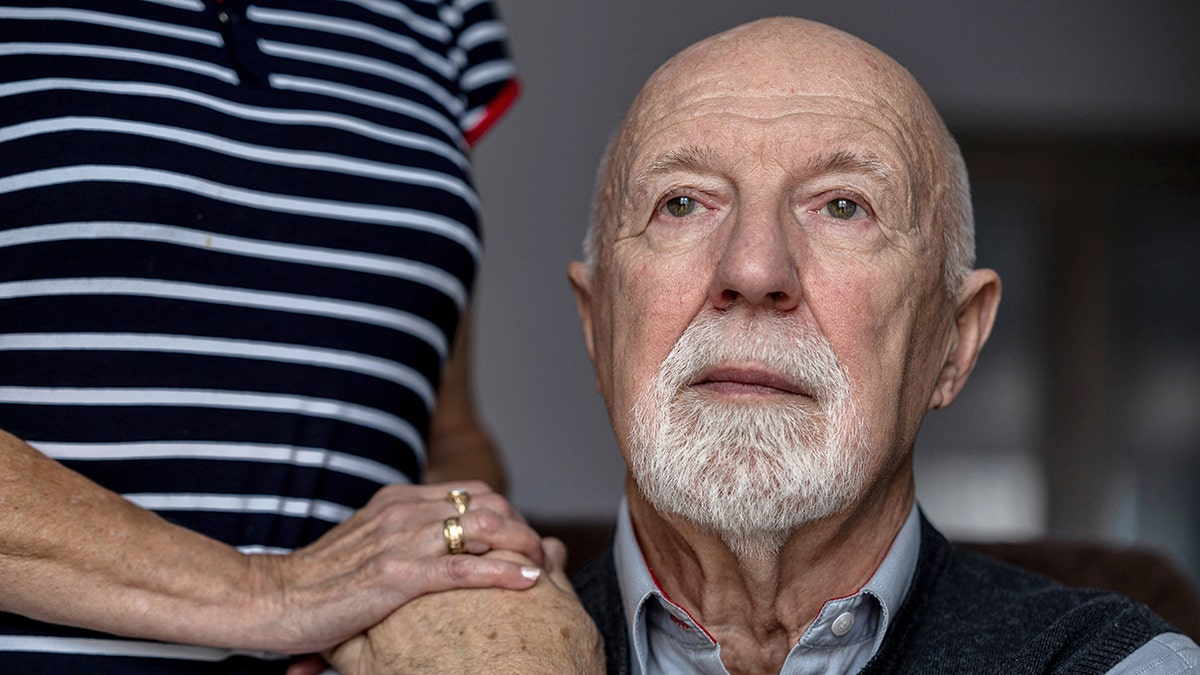
The study analyzed over 11 million U.S.veterans aged 40 and older, with an average follow-up of about five years.(iStock)
“People who still got Parkinson’s but had been on CPAP had fewer fractures, fewer falls and lower mortality.We tested this rigorously and the result kept happening,” he said.
The research, published in JAMA Neurology, draws on records from U.S.veterans who were treated through the Department of Veterans Affairs between 1999 and 2022.Data were adjusted for age, sex, race, smoking and otherhealth factors.
‘HARMLESS’ VIRUS FOUND LURKING IN PARKINSON’S PATIENTS’ BRAINS, NEW STUDY SHOWS
Veterans with untreated sleep apnea were almost twice as likely to develop Parkinson’s as those without apnea, the study found.Over about five years, this translated into roughly one to two additional Parkinson’s cases per 1,000 people.
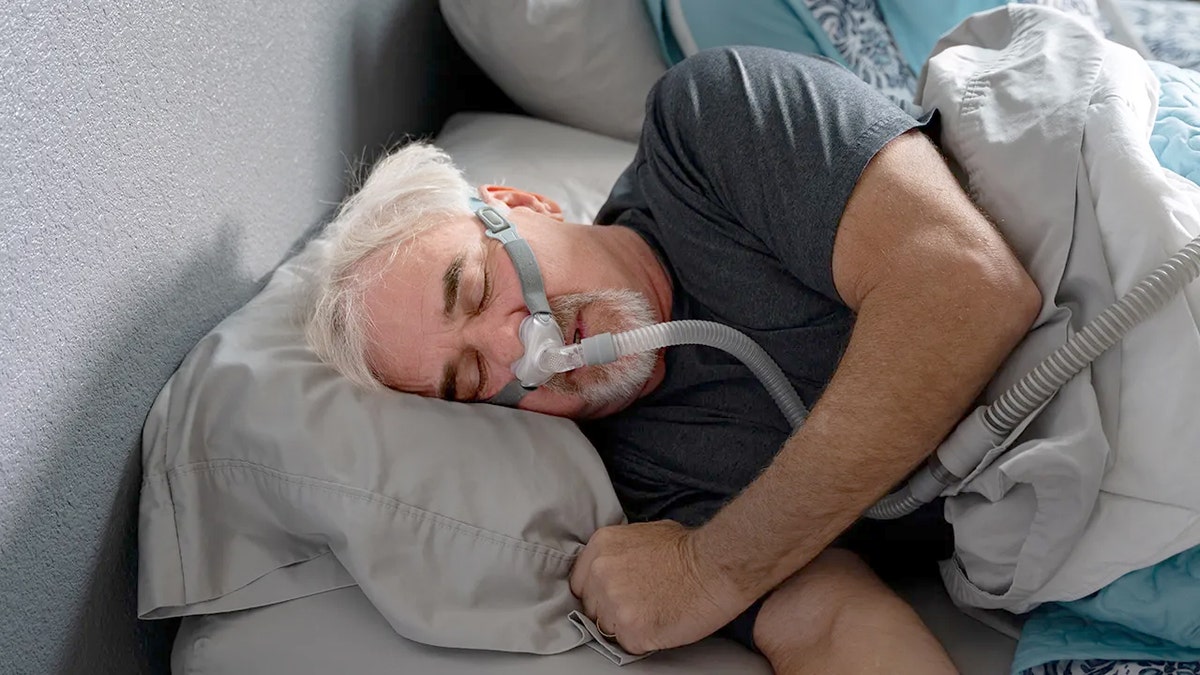
Early CPAP use was linked to 2.3 fewer Parkinson’s cases per 1,000 people — about one case prevented for every 439 treated over five years.(iStock)
Among veterans who began CPAP therapy early, the risk was about 30% lower.
That reduction amounted to approximately 2.3 fewerParkinson’s casesper 1,000 people, meaning that early CPAP treatment could prevent one case for every 439 individuals treated over five years.
AIR POLLUTION MAY PLAY A BIGGER ROLE IN COGNITIVE DECLINE THAN ANYONE REALIZED
“The best strategy for a neurodegenerative disease is prevention and catching risk factors early, before the damage is done,” said Scott.

The researchers suggest that low oxygen, inflammation and disrupted brain-clearing processes may explain the link between sleep apnea and neurodegeneration.(iStock)
The researchers propose several potential reasons for this link.Repeated drops in oxygen during sleep candamage neurons, increase inflammation and and interfere with the brain’s ability to clear out waste, allowing toxic proteins to accumulate.
onelink.me/xLDS?pid=AppArticleLink&af_web_dp=https%3A%2F%2Fwww.
“If you stop breathing several times an hour and your oxygen levels are dropping … you’re essentially stunning those brain cells every time that is happening,” said Dr.Lee Neilson, OHSU neurologist and lead author of the study, in the same press release.
Because the study was observational, it shows correlation, not proof of causation.(iStock)
The study’s authors emphasized, however, that their findings only show an association between the sleep disorder andneurological disease.
TEST YOURSELF WITH OUR LATEST LIFESTYLE QUIZ
Because this was an observational analysis, it cannot definitively prove that sleep apnea causes Parkinson’s.
The team also lacked detailed data on how consistently participants used their CPAP devices.Also, most veterans in the study wereolder men, which means the results may not be generalized to other populations.
![[aggregator] downloaded image for imported item #2218](https://newsview.top/wp-content/uploads/2025/11/older-woman-cancer-patient-nutrition-1024x576.jpg "Why ‘starving cancer’ could be key to slowing disease growth, according to doctors")
![[aggregator] downloaded image for imported item #2212](https://newsview.top/wp-content/uploads/2025/11/cholesterol-arteries-1024x576.jpg "Daily pill slashes 'bad' cholesterol levels by 60% in yearlong trial")
![[aggregator] downloaded image for imported item #2206](https://newsview.top/wp-content/uploads/2025/11/woman-taking-saffron-supplement-1024x576.jpg "Fox News Health Newsletter: Common spice could boost happiness and sexual health")
![[aggregator] downloaded image for imported item #2199](https://newsview.top/wp-content/uploads/2025/11/man-hearing-loss-1024x576.jpg "Hearing loss could be reversed with popular erectile dysfunction drug")