
![[aggregator] downloaded image for imported item #46861](https://newsview.top/wp-content/uploads/2026/03/happy-senior-man-scaled-1-1024x576.jpg "Aging process could accelerate due to 'forever chemicals' exposure, study finds")
This post was originally published on this site.
A new study suggests thatmiddle-aged menmay be more vulnerable to faster biological aging, potentially linked to exposure to “forever chemicals.”
The research, published in the journal Frontiers in Aging, examined how perfluoroalkyl and polyfluoroalkyl substances, more commonly known as PFAS, couldimpact agingat the cellular level.
PFAS are synthetic chemicals commonly used in nonstick cookware, food packaging, water-resistant fabrics and other consumer products, the study noted.
Their chemical structure makes them highly resistant to breaking down, allowing them to accumulate in water, soil and the human body.
Chinese researchers analyzed blood samples from 326 adults enrolled in the U.S.National Health and Nutrition Examination Survey between 1999 and 2000.

A new study suggests that middle-aged men could face accelerated biological aging at the cellular level due to exposure to PFAS.(iStock)
The researchers measured levels of 11 PFAS compounds in participants’ blood and used DNA-based “epigenetic clocks” — tools that analyze chemical changes to DNA to estimatebiological age— to determine how quickly their bodies were aging at the cellular level, the study stated.
onelink.me/xLDS?pid=AppArticleLink&af_web_dp=https%3A%2F%2Fwww.
Two compounds, perfluorononanoic acid (PFNA) and perfluorooctanesulfonamide (PFOSA), were detected in 95% of participants.
Higher concentrations of those chemicals were associated with faster biological aging in men of certain age groups, but not in women.
“People should not panic.”
The compounds most strongly linked to accelerated aging were not the PFAS chemicals that typically receive the most public attention, the researchers noted.
onelink.me/xLDS?pid=AppArticleLink&af_web_dp=https%3A%2F%2Fwww.
“The associations were strongest in adults aged 50 to 64, particularly in men,” Dr.Xiangwei Li, professor at Shanghai Jiao Tong University School of Medicine and the study�
“While this does not establish that PFAS cause aging, it suggests that these widely present ‘forever chemicals’ may be linked to molecular changes related tolong-term healthand aging.”
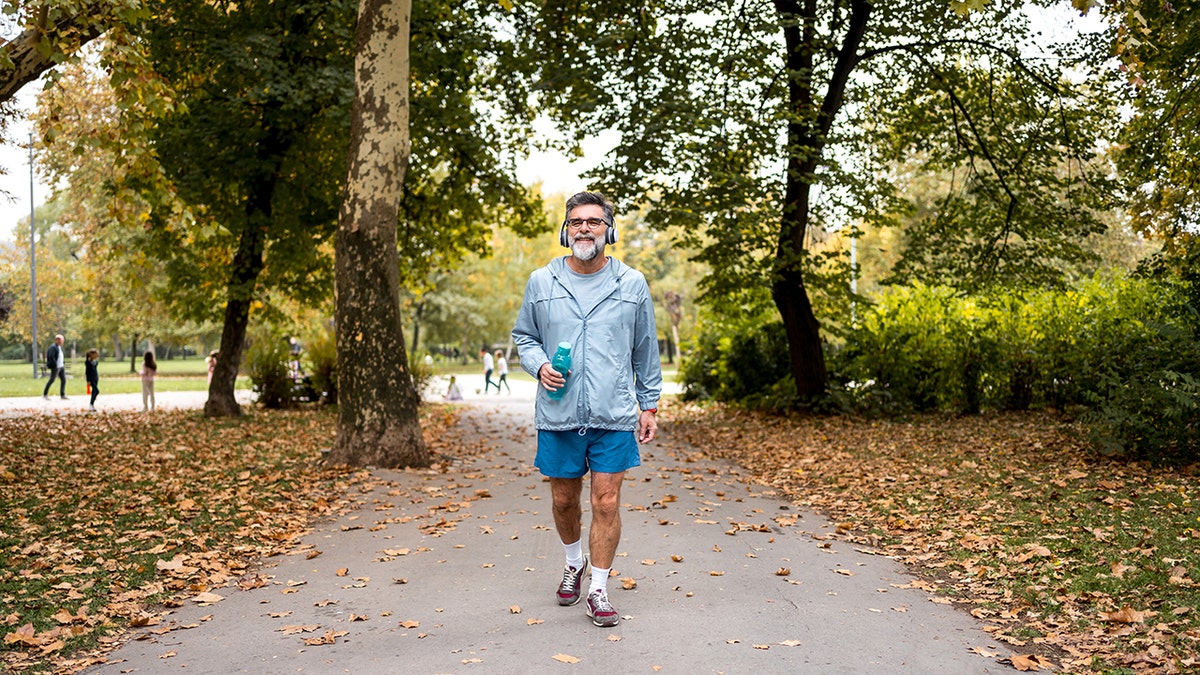
The study found that two of the compounds were detected in 95% of participants, and higher levels were linked to faster biological aging in men ages 50–64.(iStock)
Midlife may represent a more sensitive biological period, when the body becomes more vulnerable to age-related stressors, according to the researchers.
Lifestyle factors, such as smoking, may influence biological aging markers, potentially increasing vulnerability to environmental pollutants.
Meaningful reductions in PFAS exposure will likely depend on broaderregulatory actionand environmental cleanup efforts, Li added.

The researchers noted that midlife could be a particularly sensitive stage, when the body is more susceptible to stressors associated with aging.(iStock)
Study limitations
The researchers outlined several important limitations of the research, including that the findings show an association, but do not prove that PFAS directly causes accelerated aging.
“The study is cross-sectional, meaning exposure and aging markers were measured at the same time, so we cannot determine causality,�
The study was also relatively small, limited to 326 adultsage 50 or older, which means the findings may not apply to younger people or broader populations.
TEST YOURSELF WITH OUR LATEST LIFESTYLE QUIZ
Researchers measured PFAS levels using data collected between 1999 and 2000, and today’s exposure patterns may differ.
Li added that while PFAS is known to persist in the environment and the body, these results should be validated through larger, more recent studies that follow participants over time.

![[aggregator] downloaded image for imported item #22404](https://newsview.top/wp-content/uploads/2026/01/man-struggles-sleeping-1024x576.jpg "Missing sleep may take a hidden toll on your brain and longevity, research reveals")
![[aggregator] downloaded image for imported item #22964](https://newsview.top/wp-content/uploads/2026/01/masked-people-talking-hotel-lobby-flu-spread-1024x576.jpg "Researchers locked flu patients in a hotel with healthy adults — no one got sick")
![[aggregator] downloaded image for imported item #23201](https://newsview.top/wp-content/uploads/2026/01/sleep-study-1024x576.jpg "Sleep patterns could predict risk for dementia, cancer and stroke, study suggests")