
![[aggregator] downloaded image for imported item #83397](https://newsview.top/wp-content/uploads/2026/05/israel-kid-swapped-thumbnail-1024x576.jpg "Rare 1,700-year-old relic accidentally uncovered during child’s hunt stuns archaeologists")
This post was originally published on this site.
A child’s recentshow-and-tell findturned out to be something unusual: a 1,700-year-old Roman statuette fragment.
Dor Wolynitz, an 8-year-old from Rehovot, Israel, found the artifact during a visit to the Ramon Crater in the Negev Desert of southern Israel, according to a May 11 release from the Israel Antiquities Authority (IAA).
Wolynitz was at afamily weekendretreat organized by a paratrooper reserve unit when he stumbled across the fragment, which dates to the fourth century A.D.
ANCIENT CHRISTIAN FIGURINES DISCOVERED IN 1,500-YEAR-OLD DESERT GRAVES
The boy told the IAA he was “looking for special thingson the ground that I could show in class.”
“Suddenly, I noticed an interesting stone with stripes lying on the ground, and picked it up,” he said.
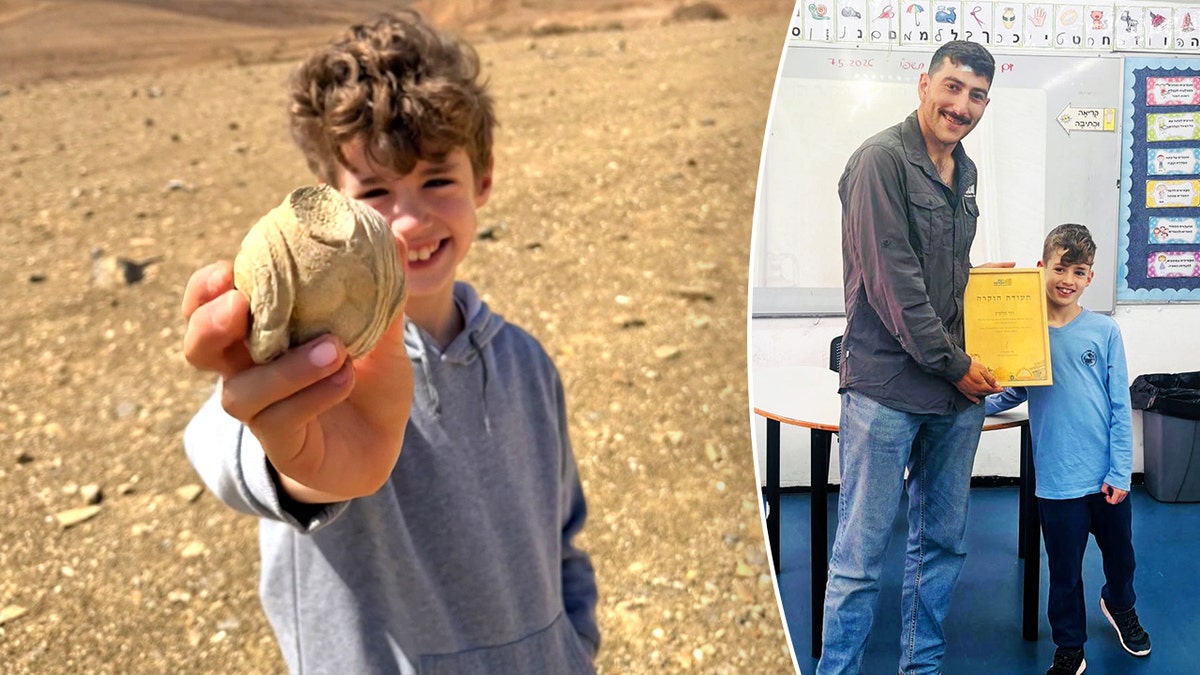
An 8-year-old boy in Israel discovered a rare Roman-era statuette fragment during a family trip — later turning it over to authorities.(Israel Antiquities Authority)
“It seemed like an unusual object to me, so I showed it to Akiva [Goldenhersh], an archaeologist and my dad’s friend, who was with us on our trip.”
The fragment measures six by six centimeters.It depicts “part of a human figure with carefully sculpted folds of fabric,” said Goldenhersh, a supervisor at the IAA’s Antiquities Theft Prevention Unit.
‘HERMETICALLY SEALED’ ROMAN SARCOPHAGUS FROZEN IN TIME FOR 1,700 YEARS FINALLY OPENED BY ARCHAEOLOGISTS
Goldenhersh told the IAA he “thought it was a fossil” at first glance.
“But then I noticed the sculpted folds of the garment — and I was very excited,” he said.
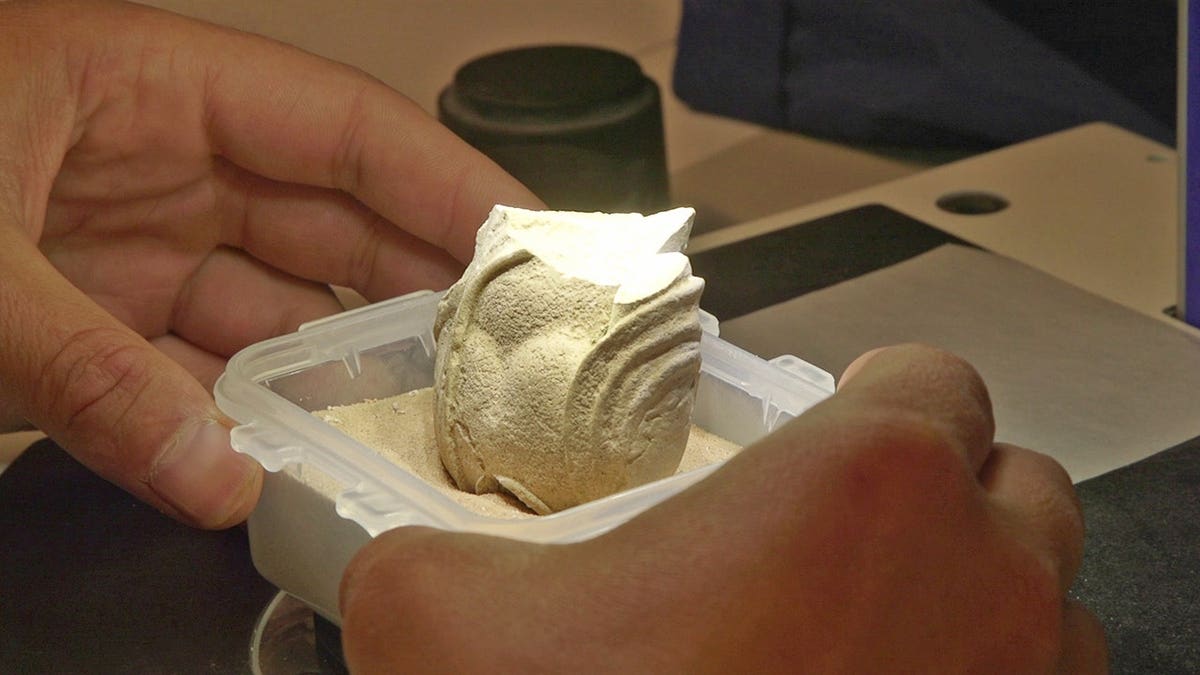
The artifact, discovered on the surface of the Negev Desert, is believed to date back to the fourth century A.D.(Israel Antiquities Authority)
The statuette was made from a phosphorite-type mineral native to the Negev, indicating it was likely produced locally rather than imported.
“The figure is depicted wearing a type of heavy mantle called a himation, with no visible chiton, or undergarment,” Goldenhersh noted.
“The manner of sculpting the folds and the choice of such a delicate material indicate a very high level of skill on the part of the artist.”
The statuette may depict theRoman god Jupiteror a Nabatean god called Zeus-Dushara.
“Discovering one as a surface find, rather than during a controlled excavation, is especially unusual.”
The Ramon Crater area sits along the ancient spice route that was once a major artery during the Roman and Nabatean periods, where multiple cultures intersected and exchanged goods.
“This tiny find thus reflects the combination of local traditions with influences from the classical world,” he said.
�relatively rare in general.”
“Discovering one as a surface find, rather than during a controlled excavation, is especially unusual,” he noted.
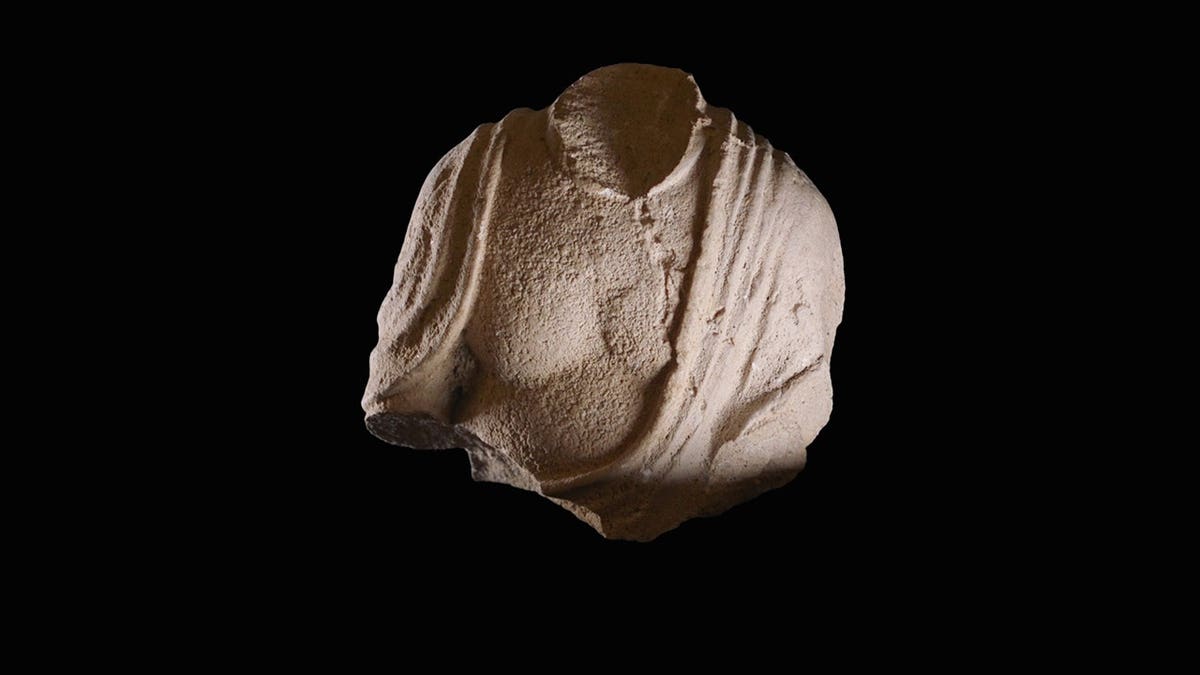
The small stone piece may depict the Roman god Jupiter or the Nabatean god Zeus-Dushara, according to researchers.(Israel Antiquities Authority)
Because only a fragment remains, the archaeologists suggested it moved from its original location due to erosion or natural shifts over time.
“At the same time, the desert conditions in the Negev canhelp preserve artifactsand occasionally expose them on the surface,” said Goldenhersh.
TEST YOURSELF WITH OUR LATEST LIFESTYLE QUIZ
Wolynitz, the 8-year-old, handed the find over to Israel’s National Treasures Department and received a certificate for his “good citizenship,” the IAA said.

After realizing the importance of the find, the boy and his family reported it to Israel’s National Treasures Department.(Israel Antiquities Authority)
“The responsible conduct of Dor and his family is an example of proper civic responsibility and the preservation of our country’s cultural assets,” Goldenhersh said in a statement.
onelink.me/xLDS?pid=AppArticleLink&af_web_dp=https%3A%2F%2Fwww.
“Dor is a role model for us all.”
![[aggregator] downloaded image for imported item #65365](https://newsview.top/wp-content/uploads/2026/04/skynest-air-new-zealand-1024x576.jpeg "Airline unveils stacked bunk bed 'pods' as backlash builds over pricey, cramped way to fly")
![[aggregator] downloaded image for imported item #65670](https://newsview.top/wp-content/uploads/2026/04/rick-harrison-las-vegas-summer-tourism-fox-news-1024x576.jpeg "Las Vegas ‘pricing problem' is scaring off tourists from 'greatest city in the world,' says Rick Harrison")
![[aggregator] downloaded image for imported item #65662](https://newsview.top/wp-content/uploads/2026/04/ALBANIA-TIRANA-TOURIST-TRAVEL-ADVISORY-IRAN-TENSIONS-BUDGET-FRIENDLY-BEACH-MOUNTAINS-1-1024x576.jpeg "American travelers warned about popular low-cost beach destination as global tensions rise")
![[aggregator] downloaded image for imported item #65909](https://newsview.top/wp-content/uploads/2026/04/galway-tourist-tax-1024x576.jpeg "Travelers may be slapped with 'ridiculous' new fees as popular city seeks millions per year")