
![[aggregator] downloaded image for imported item #68369](https://newsview.top/wp-content/uploads/2026/04/clarence-thomas-april-15-2026-1024x576.jpg "Supreme Court liberals side with Clarence Thomas on Taliban suicide bomber lawsuit, 3 others dissent")
This post was originally published on this site.
In a 6-3 decision, theSupreme Courton Wednesday allowed a lawsuit brought by a U.S.Army veteran injured in a Taliban suicide bombing to proceed, vacating a lower court ruling that had dismissed it.
Winston Tyler Hencely, a former U.S.Army specialist, suffered a fractured skull and brain injuries when a Taliban operative working for the military contractor Fluor Corporation blew up a suicide vest at Bagram Airfield inAfghanistanin 2016.
The U.S.District Courtfor the District of South Carolina made a summary judgment for Fluor, and the U.S.Court of Appeals for the Fourth Circuit affirmed, the opinion notes.
The majority opinion, written by Justice Clarence Thomas, rejected a broad “battlefield preemption” theory that would have blocked state-law claims tied to combat activities.Thomas — joined by Justices Sonia Sotomayor, Elena Kagan, Neil Gorsuch, Amy Coney Barrett and Ketanji Brown Jackson — wrote that military contractors are not automatically shielded from liability when their conduct was not authorized by the military — even in war zones.
JUSTICE THOMAS WARNS PROGRESSIVISM IS A THREAT TO AMERICA IN RARE PUBLIC REMARKS
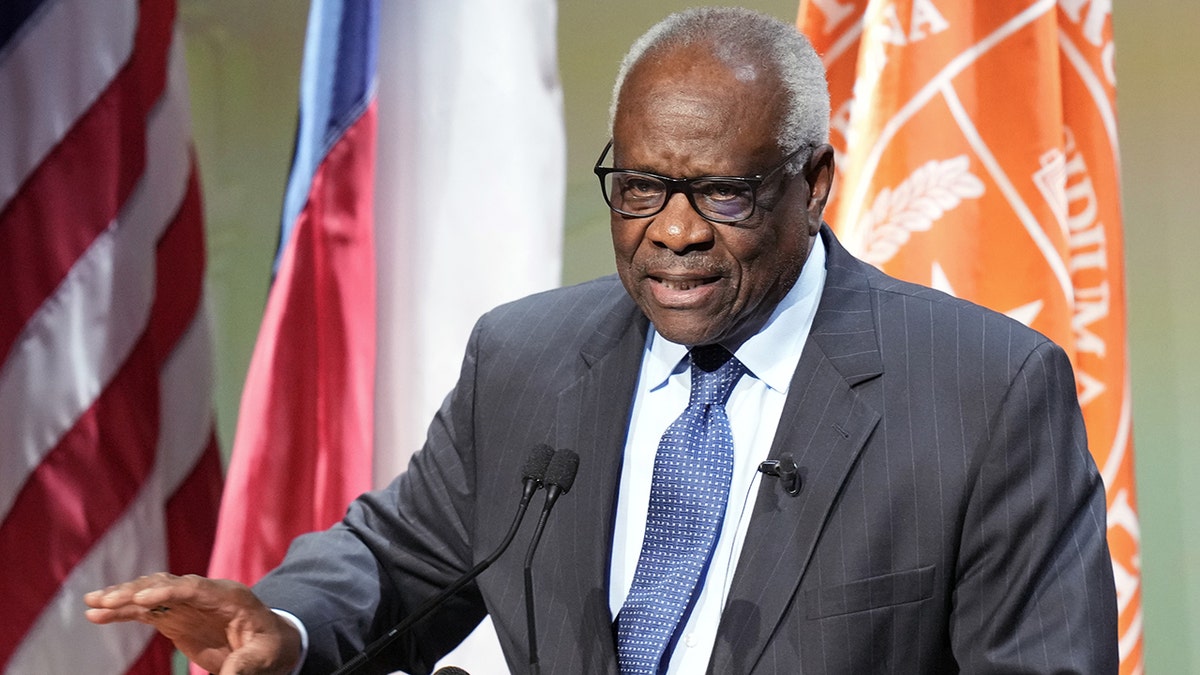
U.S.Supreme Court Justice Clarence Thomas speaks during a special lecture celebrating the 250th anniversary of the signing of the Declaration of Independence at Hogg Memorial Auditorium at the University of Texas on Wednesday, April 15, 2026.(Jay Janner/The Austin American-Statesman via Getty Images)
“The Fourth Circuit’s decision held Hencely’s claims preempted even though the conduct complained of was neither ordered nor authorized by the Federal Government.No provision of the Constitution and no federal statute justifies that preemption of the State’s ordinary authority over tort suits.Nor does any precedent of this Court command such a result.Therefore, we vacate the judgment of the Fourth Circuit and remand the case for further proceedings consistent with this opinion,” Wednesday’s decision declares.
“In 2016, a Taliban operative working for respondent Fluor Corporation, a military contractor, carried out a suicide-bomb attack at Bagram Airfield in Afghanistan.After then-Army Specialist Winston T.Hencely confronted him, the bomber detonated his suicide vest,” the opinion explains.“As a result of the injuries he received, Hencely is now permanently disabled.”
JACKSON SCOLDS COLLEAGUES IN SOLO DISSENT AFTER COURT JUMPS INTO ROUTINE POLICE-STOP CASE
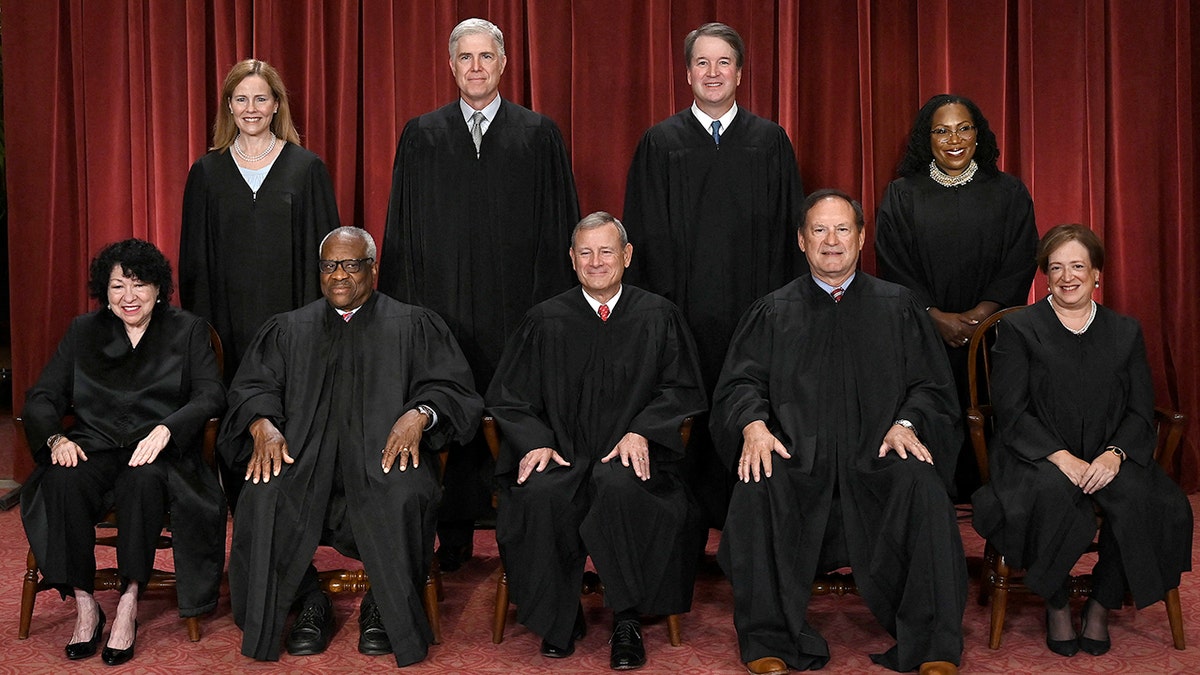
Justices of the U.S.Supreme Court pose for their official photo at the Supreme Court in Washington, D.C.on Oct.7, 2022. (OLIVIER DOULIERY/AFP via Getty Images)
“In an effort to recover damages for his injuries, Hencely sued Fluor, bringing state-law tort claims for negligently retaining and supervising the attacker.According to Hencely and the United States military, Fluor’s conduct was not authorized by the military and even violated instructions the military had given it as a condition of operating on the base,” the opinion notes.
Justice Samuel Alito, Chief Justice John Roberts and Justice Brett Kavanaugh dissented.
LEAKED MEMOS REVEAL HOW SUPREME COURT STEAMROLLED OBAMA CLIMATE PLAN IN 2016 SHOWDOWN
Flowers adorn a garden in front of the U.S.Supreme Court building on March 31, 2026 in Washington, D.C. (Roberto Schmidt/Getty Images)
onelink.me/xLDS?pid=AppArticleLink&af_web_dp=https%3A%2F%2Fwww.
“May a State regulate security arrangements on a military base in an active warzone?May state judges and juries pass judgment on questions that are inextricably tied to military decisions that balance war-related risks against long-term strategic objectives?In my judgment, the answer to these questions must be ‘no,’ and for that reason, this state-law tort case is preempted by the Constitution’s grant of war powers exclusively to the Federal Government,” Alito wrote in the dissent, in which Roberts and Kavanaugh joined.
“The Constitution divides authority between the Federal Government and the States in many areas, but not when it comes to war.War is the exclusive domain of the Federal Government, but the Court allows state (or foreign law) to encroach on that domain.The Constitution precludes that encroachment, and therefore petitioner’s suit is preempted.Because the Court holds otherwise, I respectfully dissent,” Alito noted.
![[aggregator] downloaded image for imported item #66247](https://newsview.top/wp-content/uploads/2026/04/gavin-newsom-laughing-1024x576.jpg "Newsom PAC bought thousands of memoir copies about his hardships, juicing sales")
![[aggregator] downloaded image for imported item #66240](https://newsview.top/wp-content/uploads/2026/04/Hank-Johnson-1024x576.png "Grieving mothers scorch Dem lawmaker after he pivots during hearing to attack 'MAGA Republicans'")
![[aggregator] downloaded image for imported item #66233](https://newsview.top/wp-content/uploads/2026/04/trump-politics-missing-scientists-fox-news-1024x576.jpeg "Trump says first releases from Pentagon UFO study will come out 'very, very soon' after Phoenix rally tease")
![[aggregator] downloaded image for imported item #66225](https://newsview.top/wp-content/uploads/2026/04/barnettandhooper-1024x576.jpg "Gold Star father says prior Afghanistan review smelled 'like a cover-up' as new look examines millions of docs")