
![[aggregator] downloaded image for imported item #63488](https://newsview.top/wp-content/uploads/2026/04/france-skeletons-found-at-french-school-gallic-ancient-gauls-discovery-archaeology-history-1-1024x576.jpg "Ancient 'seated' skeletons unearthed beneath modern school site, puzzling archaeologists")
This post was originally published on this site.
Archaeologists haveuncovered ancient skeletonsbeneath a school site in France — all buried in an unusual seated position.
The discovery was announced by Inrap, France’s national institution for preventive archaeology, in a press release in March.
The skeletons were found on the grounds of the Josephine Baker school complex in Dijon, roughly 195 miles southeast of Paris.The campus serves students from preschool through elementary school.
CONSTRUCTION CREW UNEARTHS SURPRISING 300-YEAR-OLD CANNON WHILE DIGGING IN HISTORIC CITY
The graves date to the Gallic period in France, a time when Celtic tribes known as the Gauls lived in the region.
The Gallic period lasted from the fifth century B.C.to 50 B.C., whenJulius Caesar conqueredthe area.
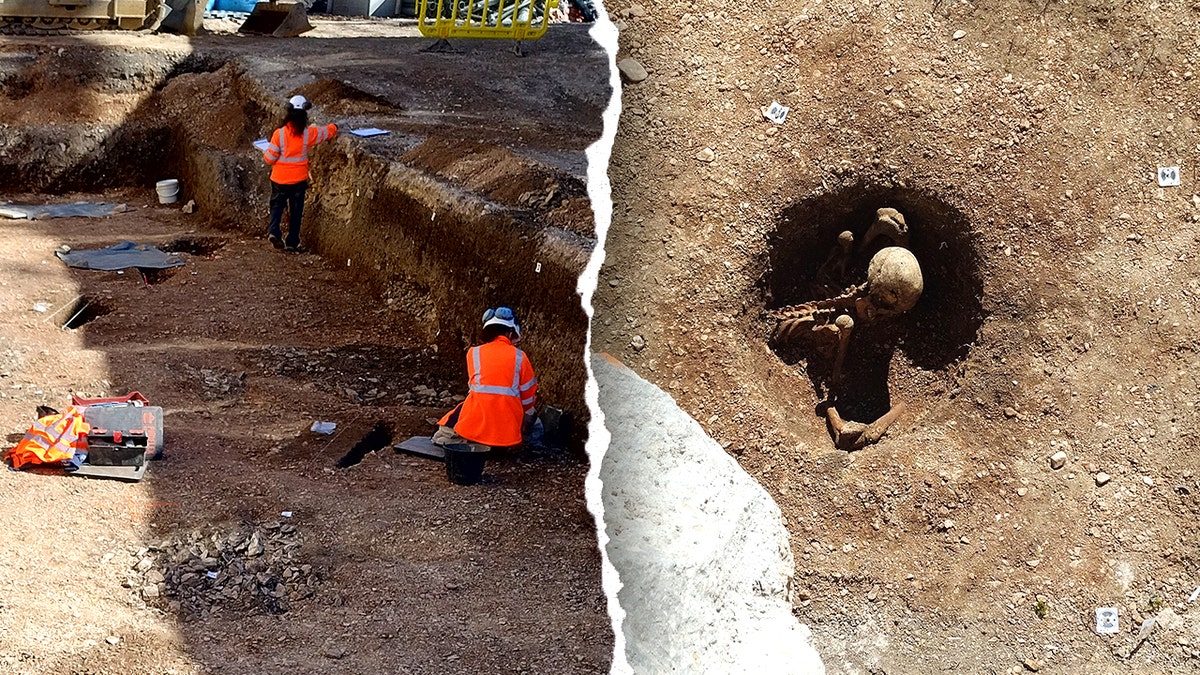
Archaeologists in France uncovered multiple ancient burials beneath a modern school site, with skeletons arranged in a rare seated position dating back to the Gallic period.(Frédéric Bourigault/AFP via Getty Images)
Inrap first found similar Gallic burials at the site in 2024.
While excavators found 13 graves two years ago, they discovered “five to six” new ones during the most recent excavation — three of which formed a second, parallel line.
STUDENT ‘ACCIDENTALLY’ FINDS ‘EXTREMELY RARE’ CRUSADER-ERA SWORD AFTER CHASING OFF SUSPECTED THIEVES
Pictures of the site show archaeologists working as sections of ground are carefully excavated into circular pits, with skeletons positioned inside.
Inrap said the new graves were “seated at the bottom of the pit, [their] backs against the eastern wall, facing west,” according to a translated release.
“Only about a dozen archaeological sites have yielded around 50 ‘seated’ burials.”
“Their arms rest along the torso, with hands near the pelvis or femurs,” the release described.
TEST YOURSELF WITH OUR LATEST LIFESTYLE QUIZ
“Their legs are tightly flexed, often asymmetrically.”
Adding to the mystery, archaeologists found no personal items orgrave offerings, other than a black stone armband dated to the third century B.C.
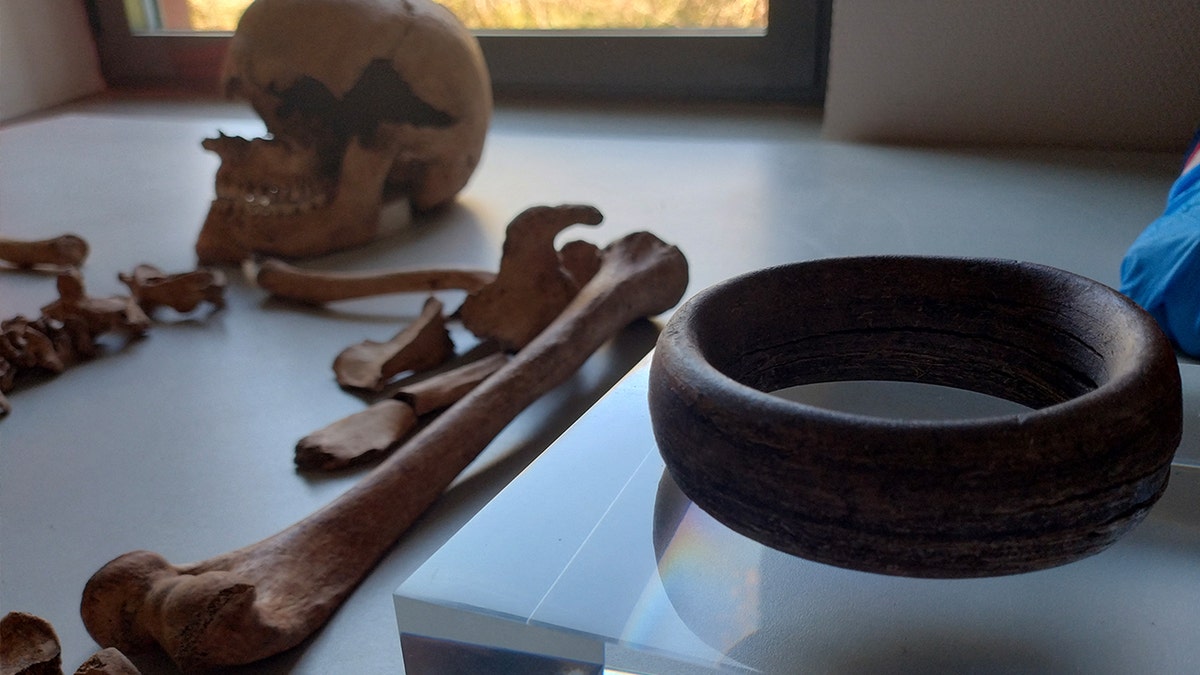
The skeletons were found without grave goods, aside from a single black stone armband dated to the third century B.C., deepening the mystery of the site.(Frédéric Bourigault/AFP via Getty Images)
Archaeologists have released few details about the site, but noted that the graves found in 2024 showed “signs ofunhealed violence.”
The injuries “likely indicate intentional killing,” Inrap said — and included cuts on an upper arm bone.
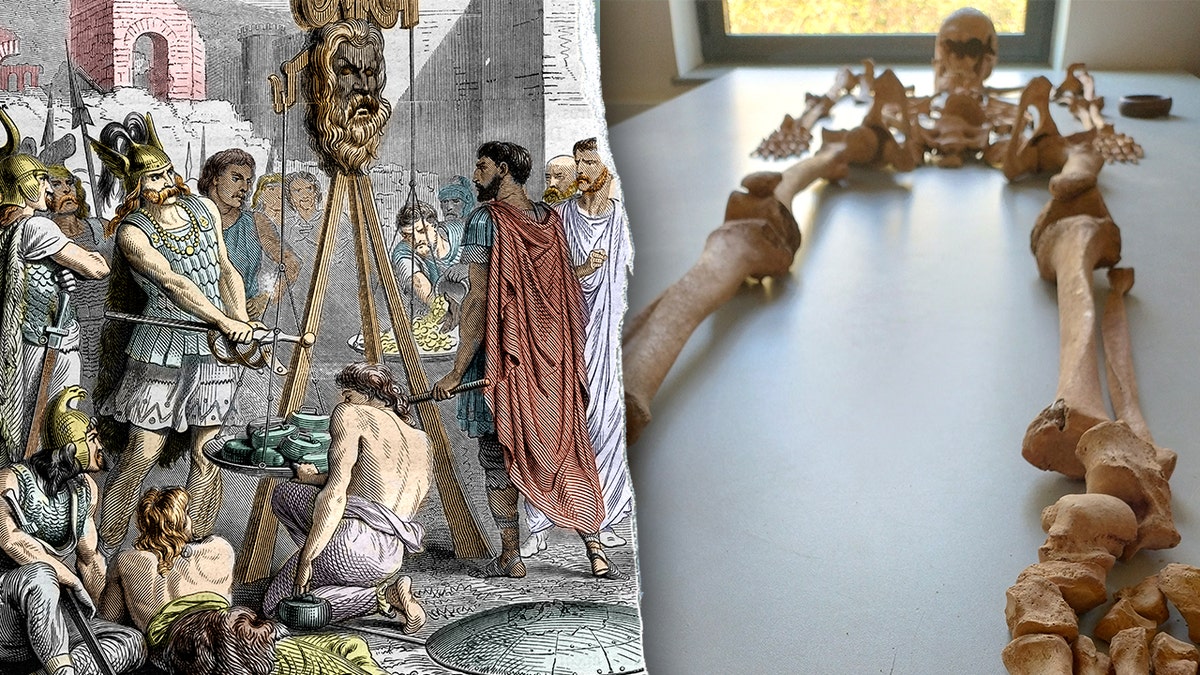
The skeletons date to the Gallic period, spanning from the fifth century B.C.to 50 B.C., when Julius Caesar conquered the region (shown at left).(Leemage/Corbis via Getty Images;Frédéric Bourigault/AFP via Getty Images)
“Examples of individuals buried in a seated position are known from as early as the Mesolithic and, although rare, throughout prehistory,” the statement said.
“Only about a dozen archaeological sites have yielded around 50 ‘seated’ burials, typically located near elite residences, sanctuaries or places of worship, and set apart from standard cemeteries.”
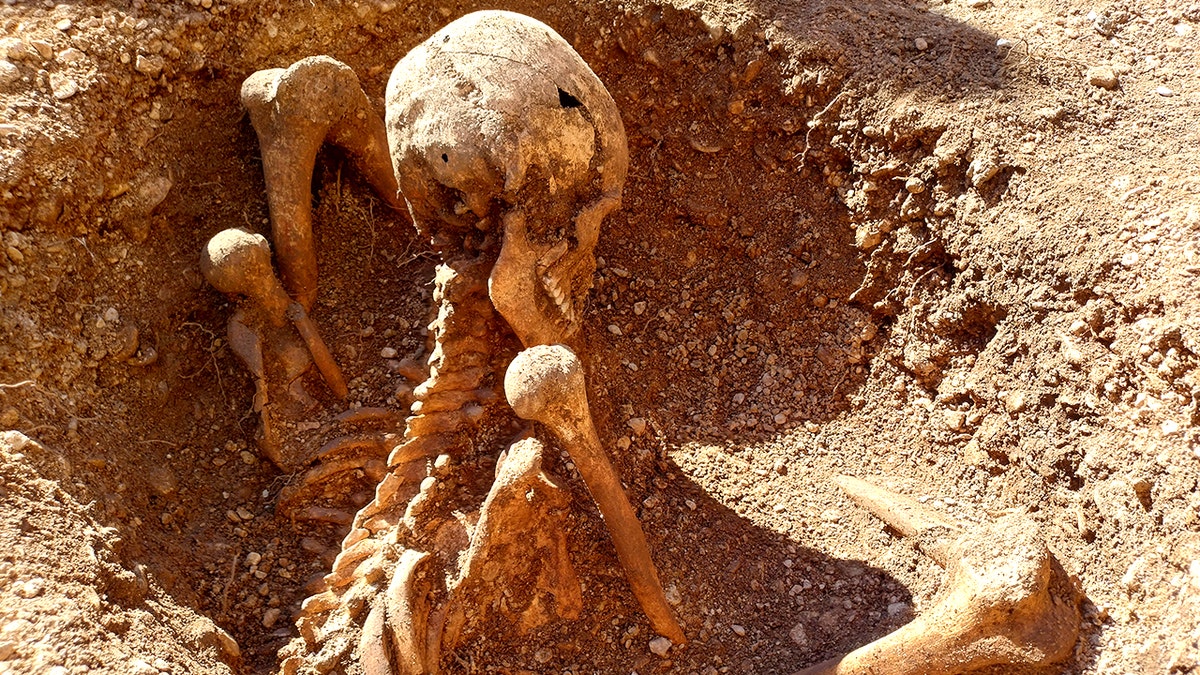
“Examples of individuals buried in a seated position are known from as early as the Mesolithic and, although rare, throughout prehistory,” said Inrap.(Frédéric Bourigault /AFP via Getty Images)
The latest find is one of many recent notable archaeological discoveries in France.
Last year, Inrap archaeologists uncovered a 16th-centurygallows,in which condemned prisoners were put on display during the Protestant Reformation.
onelink.me/xLDS?pid=AppArticleLink&af_web_dp=https%3A%2F%2Fwww.
Last summer, officials announced the discovery of a rare16th-century shipwreckin French waters, found at record depth.
![[aggregator] downloaded image for imported item #46952](https://newsview.top/wp-content/uploads/2026/03/middle-east-cruise-nightmare-escalates-1024x576.jpg "Middle East cruise nightmare deepens as Iran airstrikes leave passengers stranded")
![[aggregator] downloaded image for imported item #47335](https://newsview.top/wp-content/uploads/2026/03/young-woman-wearing-headphones-plane-1024x576.jpg "Passengers refusing to wear headphones on flights could be kicked off aircraft: 'It's about time'")
![[aggregator] downloaded image for imported item #47538](https://newsview.top/wp-content/uploads/2026/03/american-races-home-from-dubai-1024x576.jpg "American stuck in Middle East escapes in race to reach critically ill husband in California")
![[aggregator] downloaded image for imported item #47947](https://newsview.top/wp-content/uploads/2026/03/polio-virus-spain-alert-fox-news-1024x576.jpg "CDC warns of polio risk in over 30 countries as spring break travel ramps up")