
![[aggregator] downloaded image for imported item #22754](https://newsview.top/wp-content/uploads/2026/01/bulgaria-man-survives-lion-attack-ancient-archaeology-history-discovery-1-1024x576.jpg "Ancient man survived brutal lion attack, suffered lifelong damage: 'Extremely rare'")
This post was originally published on this site.
Archaeologists recently uncoveredthe remains of a young man who lived 6,000 years ago — and survived a brutal encounter with a lion.
A study published in the February 2026 edition of the peer-reviewed Journal of Archaeological Science: Reports focuses on a Late Eneolithic necropolis in the Thracian region of eastern Bulgaria.
The subject of the study is the skeleton of a man who died between the ages of 18 and 30.He was more than 5 feet, 7 inches tall and lived between 4600 and 4200 B.C., during the Late Eneolithic.
ARCHAEOLOGISTS UNEARTH CHILLING 16TH-CENTURY GALLOWS WHERE REBELS WERE HANGED AND DISPLAYED
The grave is near another archaeological site called Kozareva Mogila, or the Goat Mound, near the coast of the Black Sea.
Upon analyzing the skeleton, researchers identified severe cranial and limb injuries — including puncture wounds on the man’s skull.
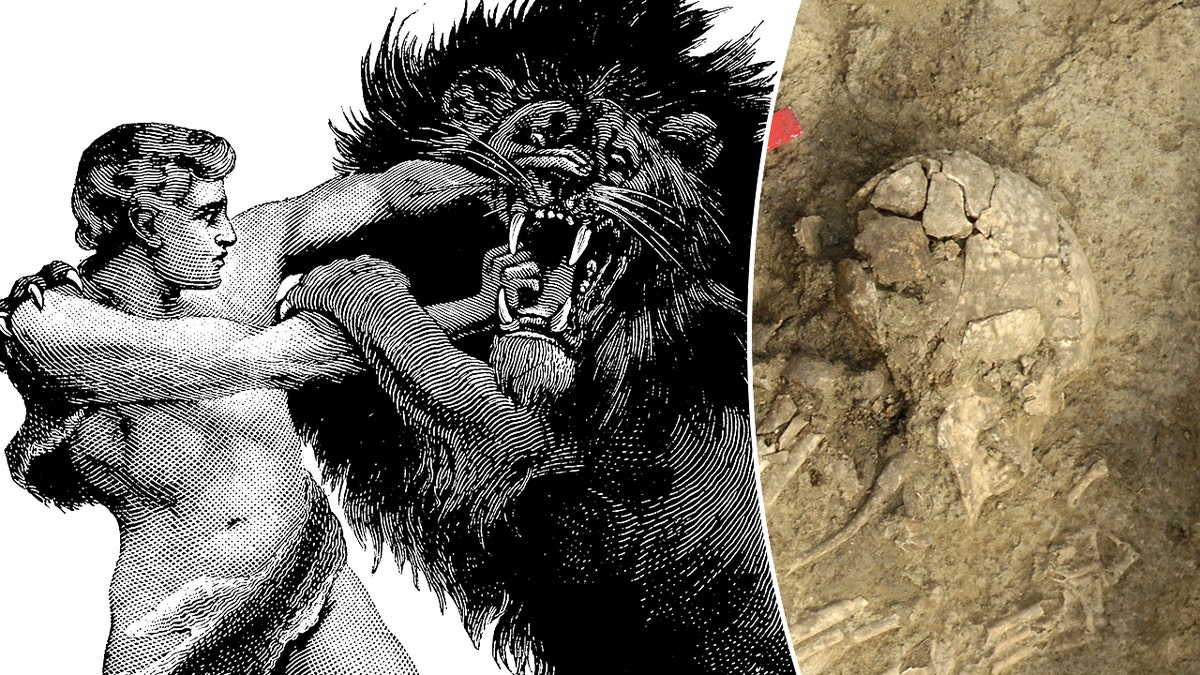
Archaeologists studying a Late Eneolithic burial in eastern Bulgaria uncovered skeletal evidence of a prehistoric lion attack that a young man survived thousands of years ago.(iStock;Veselin Danov)
Those wounds suggest an attack by a large carnivore — and interestingly, the wounds appeared to have healed, meaning he survived the encounter.
The study authors saidthe injury occurredduring adolescence, possibly between the ages of 10 and 18.
LONG-LOST ANCIENT VILLAGE WITH MYSTERIOUS PAST UNEARTHED AMID WIND FARM DIG: ‘EXCITING DISCOVERY’
Karastoyanova headed the zooarchaeological analysis and credited her colleagues Veselin Danov, Petya Petrova and Viktoria Ruseva with documenting, interpreting and analyzing the skeleton, respectively.
“There is direct archaeological evidence for interactions between humans and lions,” said Karastoyanova.“More than 15 lion remains have been identified atprehistoric sitesacross Bulgaria, some bearing cut marks that indicate hunting and dismemberment.”
“These injuries would have made independent survival impossible [and] strongly suggest prolonged care and support from the surrounding community.”
She added, “The highest concentration oflion remainscomes from sites along the Bulgarian Black Sea coast, such as Durankulak and the Sozopol area.Where this individual was buried lies within the same broader region, making encounters between humans and large predators a realistic possibility.”
She observed that such skeletal evidence of prehistoric animal attacks on humansis “extremely rare.”
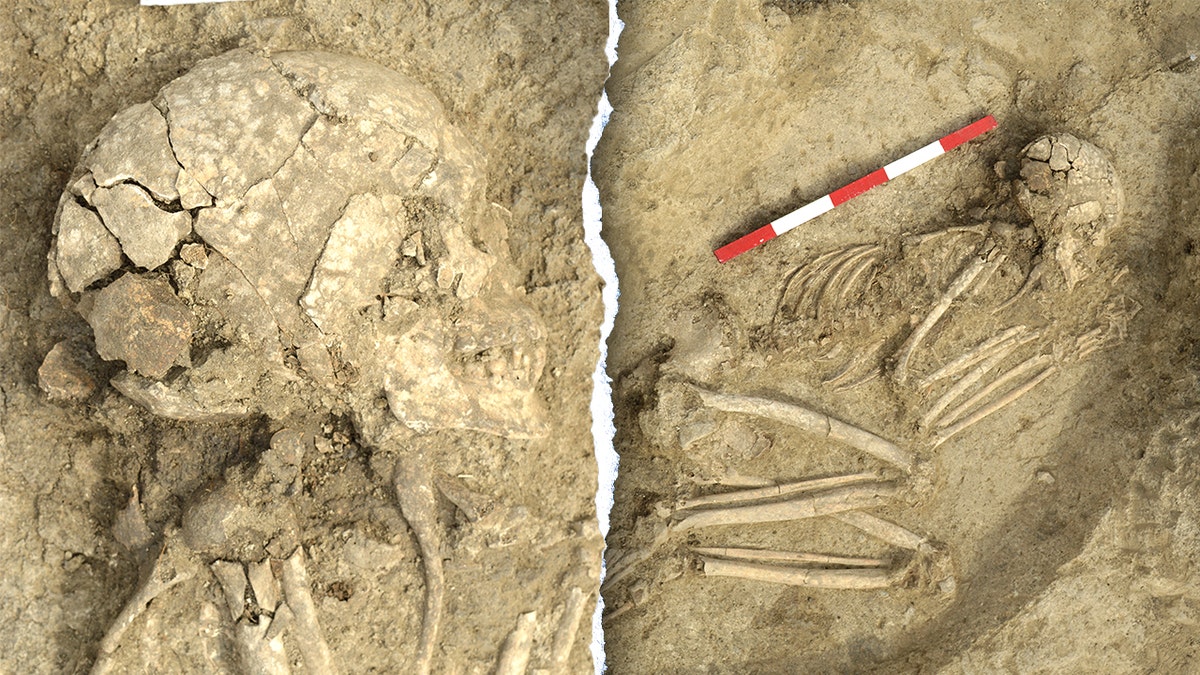
Researchers say puncture wounds found on a young man’s skull indicate an encounter with a large carnivore during Bulgaria’s Late Eneolithic period.(Veselin Danov)
“Combined with other impairments, these injuries would have made independent survival impossible [and] strongly suggest prolonged care and support from the surrounding community.”
Karastoyanova was struck by the fact that the man survived for months after the attack — which she said “provides rare insight into resilience and social caregiving in Eneolithic societies.”
TEST YOURSELF WITH OUR LATEST LIFESTYLE QUIZ
Interestingly, Karastoyanova noted thatthe man’s graveis among the poorest in the necropolis, with no grave goods.
“This contrasts sharply with the nearby Varna Eneolithic Necropolis, dating to the same period, which contains some of the world’s earliest and richest gold burials,” she said.
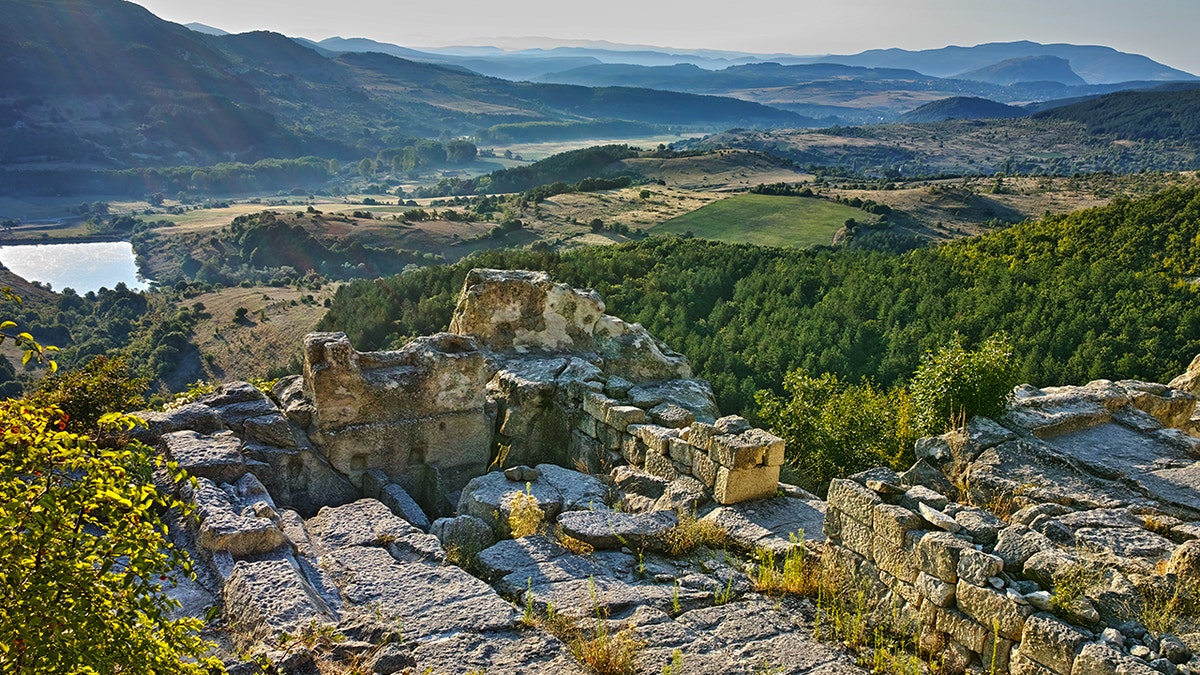
The necropolis was discovered in the Thracian region of eastern Bulgaria, which is seen here.(iStock)
“This juxtaposition highlights the strong social diversity of Eneolithic societies, where wealth inequality coexisted with evidence for care and support of vulnerable individuals.”
Roman cemeteryoutside of York, England, bore signs of a lion wound.
![[aggregator] downloaded image for imported item #23050](https://newsview.top/wp-content/uploads/2026/01/4961a4b7-3-1024x576.jpg "CDC reports first cruise norovirus outbreak this year, as nearly 90 people are infected")
![[aggregator] downloaded image for imported item #23045](https://newsview.top/wp-content/uploads/2026/01/grenada-travel-advisory-violent-crime-fox-news-1-1024x576.jpg "Vacation destination slapped with increased travel advisory due to 'violent crime'")
![[aggregator] downloaded image for imported item #23238](https://newsview.top/wp-content/uploads/2026/01/only-fans-tiktokers-us-visa-fox-news-1024x576.jpg "OnlyFans stars and TikTok influencers are 'dominating' visas for their 'extraordinary ability'")
![[aggregator] downloaded image for imported item #23232](https://newsview.top/wp-content/uploads/2026/01/iran-protest-unrest-1024x576.jpg "'Leave Iran now': US Embassy posts warning to Americans still in the country")