This post was originally published on this site.
Researchers examining ancient DNA have narrowed down the timeline of early human migration intoNorth America— shedding light on a question that’s puzzled scientists for decades.
The study, published online ahead of its appearance in the December 2026 issue of the journal Current Opinion in Genetics &Development, looked at previously published genetic andarchaeological evidenceto better understand when humans first arrived in the Americas.
Genetic evidence most strongly supports humans reaching the Americas between 14,000 and 20,000 years ago, the study suggests — with an arrival before 15,000 years ago considered likely.
CAVE DISCOVERY PUSHES BACK EVIDENCE OF HUMAN ANCESTORS USING FIRE TO 1.79M YEARS AGO
Previously, scientists thought the first humans arrived in North America roughly 13,500 years ago, a theory known as “Clovis First.”
Later archaeological discoveries have challenged that timeline, suggesting humans may have reached North America thousands of years earlier.
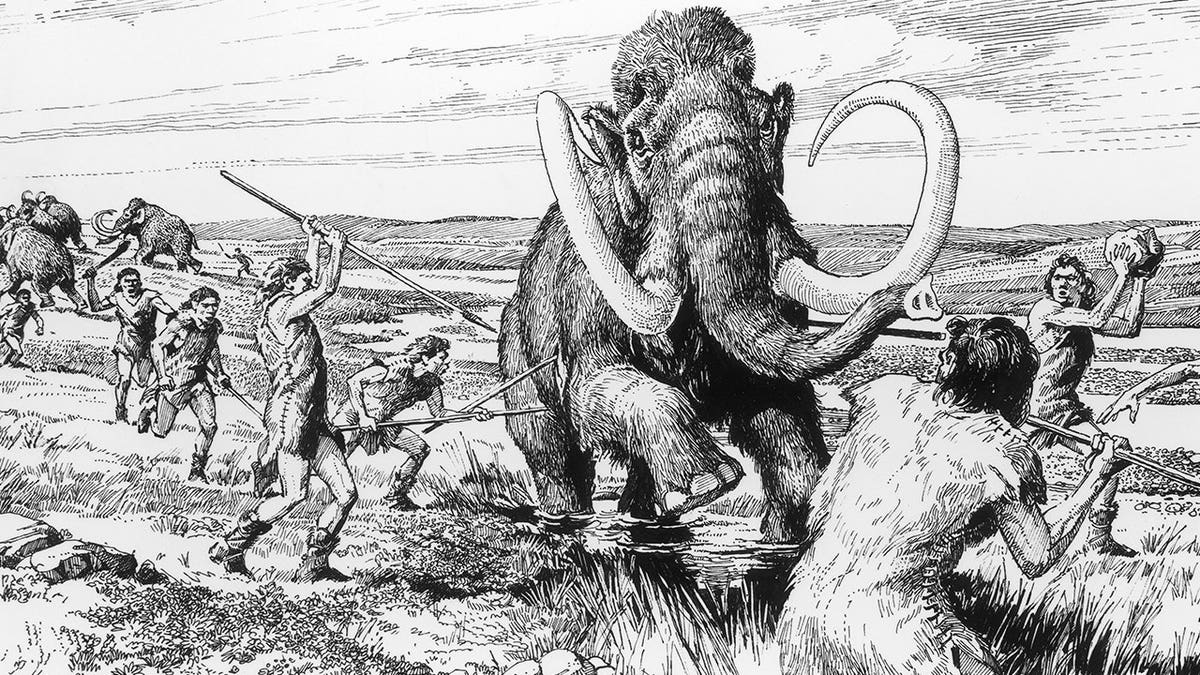
Researchers examining ancient DNA have narrowed the timeline of early human migration into North America — offering fresh insight into a decades-old scientific mystery.(Museum of London/Heritage Images/Getty Images)
The researchers, led by Bethany Potter and Savannah Hay of the University of Kansas, reviewed existing ancient DNA and archaeological evidence, including 23,000-year-oldhuman footprintsfound at White Sands National Park in New Mexico.
The footprints suggest humans may have inhabited North America earlier than the timeline supported by currently available genetic evidence.
DNA FROM THOMAS JEFFERSON’S HAIR DELIVERS COMPELLING NEW EVIDENCE IN CENTURIES-OLD PATERNITY MYSTERY
Such early populations could have belonged togenetic lineagesthat have not yet been sampled or that left no surviving descendants, the researchers said.
By comparing previously published genetic data from ancient human remains in Asia and the Americas, researchers examined shared ancestry to trace how early Indigenous populations split into distinct groups.
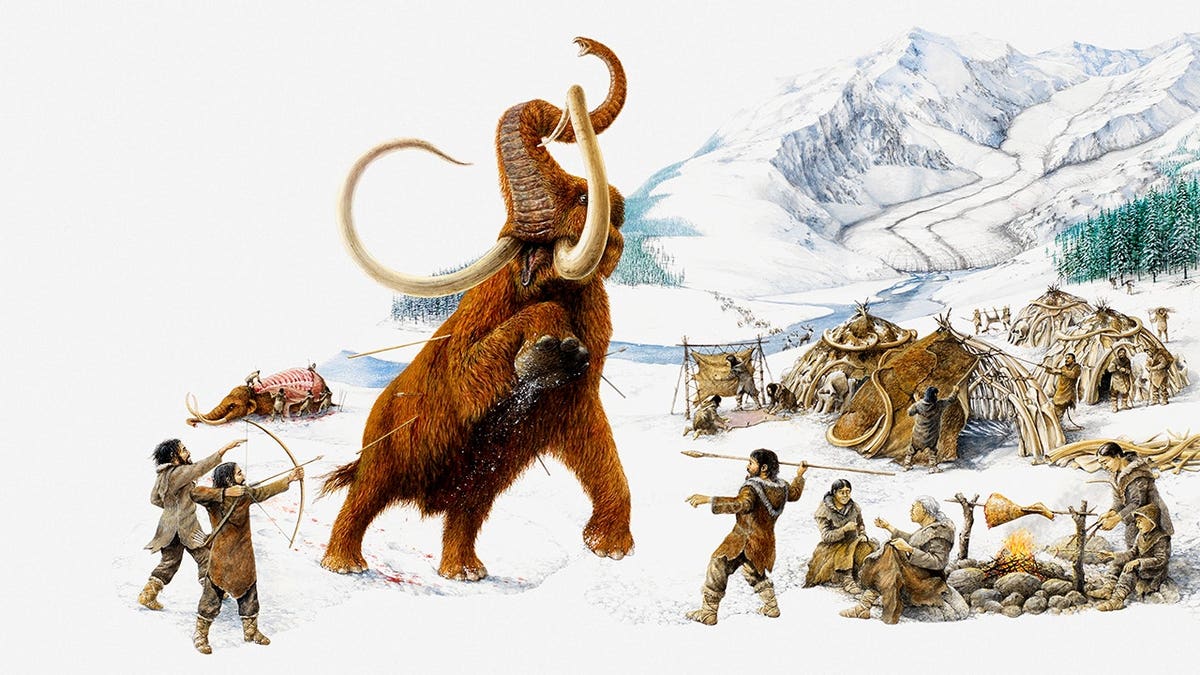
A new scientific review suggests humans may have reached the Americas between 14,000 and 20,000 years ago, earlier than some traditional theories proposed.Above, a depiction of Ice Age humans.(iStock)
Some ancestral lineages diverged roughly21,000 years ago, according to the review.
The researchers also highlighted evidence that ancestral Native American populations split into northern and southern groups roughly 15,500 years ago, likely south of the massive ice sheets that once covered much of North America.
That would mean their ancestors had already reached the continent before the split occurred.
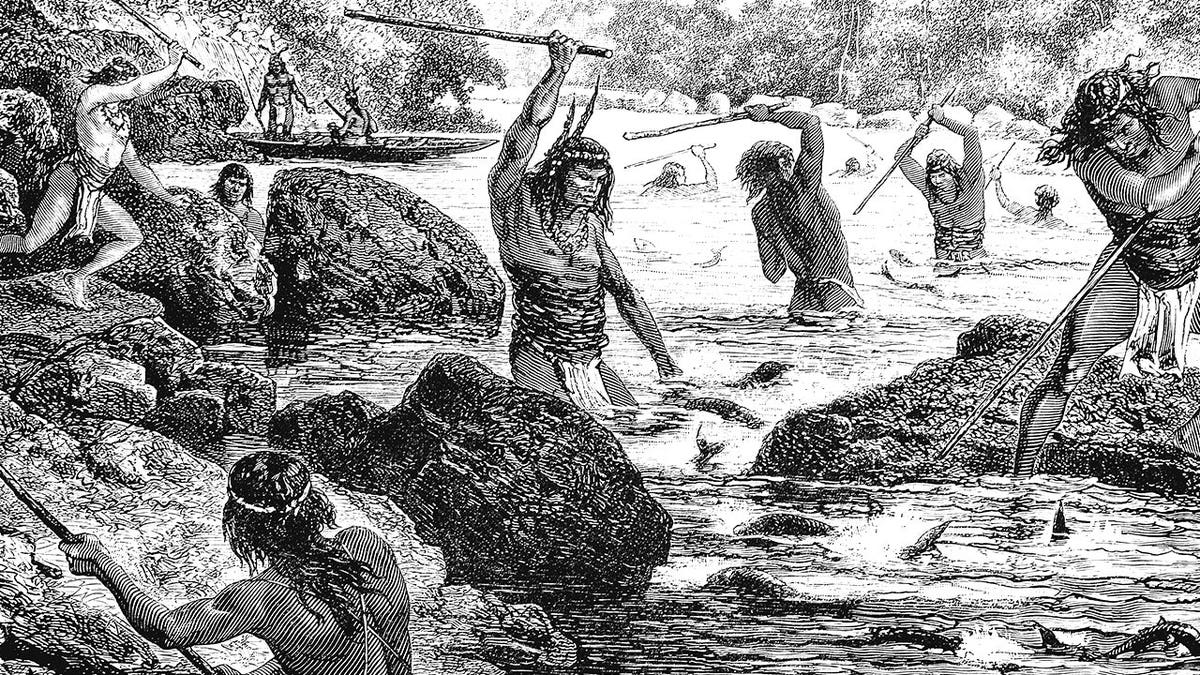
The long-standing “Clovis First” theory held that humans arrived in North America roughly 13,500 years ago, a timeline challenged by subsequent archaeological discoveries.(iStock)
“Genomic data show us that the dynamics of the peopling ofthe Americaswere quite different — at one point, a small group of people must have entered the American continents completely devoid of other humans,” the researchers wrote.
TEST YOURSELF WITH OUR LATEST LIFESTYLE QUIZ
Still, the researchers acknowledged that questions remain about exactly when and where early populations diverged.
“The timing and geographic location of key divergence events mentioned above remain uncertain,” the authors wrote.
Ancient DNA has also played a key role in other recent archaeological discoveries.
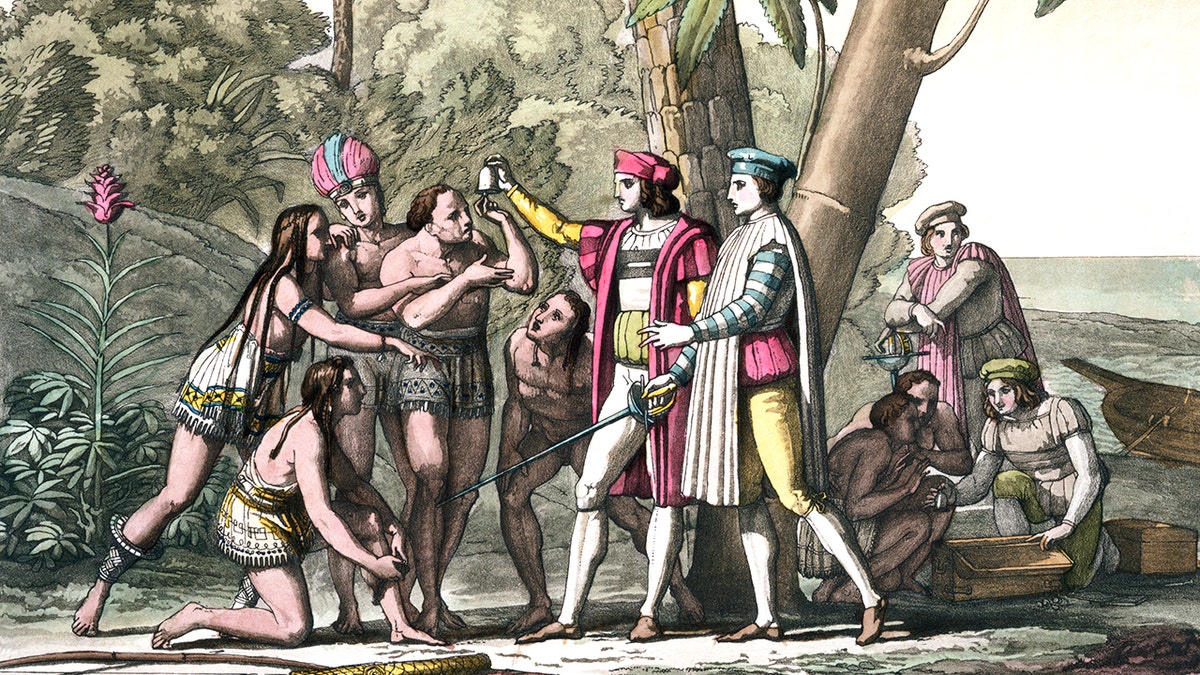
Ancient DNA suggests humans first reached North America thousands of years before Christopher Columbus arrived in the Americas in 1492 — shedding new light on the continent’s earliest inhabitants.(Historical Picture Archive/CORBIS/Corbis via Getty Images)
Earlier this summer, researchers announced the discovery ofancient sheep pox virus DNAin the York Gospels, a 1,000-year-old manuscript written in England.
onelink.me/xLDS?pid=AppArticleLink&af_web_dp=https%3A%2F%2Fwww.
In Chile, researchers recently discovered ancient smallpox DNA in twocenturies-old mummies, providing the first genetic evidence of the disease in that region of South America.