
This post was originally published on this site.
Pope Leo XIV has been diagnosed with lung cancer after a scheduled surgery, the Vatican announced Tuesday.
After undergoing thoracic surgery, where surgeons removed the lower lobe of the Pope’s right lung, examination of the tissue confirmed the diagnosis oflung adenocarcinoma.
The diagnosis had been suspected based on testing conducted before the procedure, according to the Holy See Press Office.
POPE LEO DIAGNOSED WITH LUNG CANCER AFTER SURGEONS REMOVE PART OF RIGHT LUNG, VATICAN SAYS
The Pope reportedlydoes not smokeand does not have a known history of smoking.The Centers for Disease Control and Prevention indicates that most lung cancer deaths (80%) are caused by smoking.
Lung adenocarcinoma is the most common type of lung cancer, representing about 40% of all lung cancers in the U.S., according to the Lung Cancer Foundation of America.It is also the most common type among non-smokers.
NEVER SMOKED A CIGARETTE?YOU COULD STILL BE AT HIGHER RISK FOR LUNG CANCER
D., an oncologist at Moffitt Cancer Center in Tampa, Florida, shared his surprise regarding the Pope’shealth status, as the lung nodule was “felt to be malignant.”
About 80% of lung cancers occur in people who smoke or have smoked, said Robinson, who has not treated the Pope.However, he noted that lung cancer also occurs among never-smokers — including an estimated 10% of male patients and 25% of female patients.

Newly elected Pope Leo XIV, Cardinal Robert F.Prevost of the U.S., appears on the balcony of St.Peter’s Basilica at the Vatican, on May 8, 2025.(Dylan Martinez/Reuters)
“But [the Pope] had surgery and had a lobectomy, so this is usually only done with people who have localized disease, and presumably he had localized disease.And hopefully that’s a stage 1 cancer,” the doctor added.
If the Pope’s cancer is stage 1, there is a “high chance” of cure — about 90%, depending on the size of the tumor, the oncologist said.The fact that he wentstraight to surgerysuggests there was likely no evidence that the cancer had spread.
HEALTHY DIETS SPARK LUNG CANCER RISK IN NON-SMOKERS AS PESTICIDES LOOM
“We’ll have to wait for the pathology to determine … whether he had a stage 1 cancer and whether he needs anyadditional treatmentafterward,” Robinson said.
“Size matters in lung nodules and lung cancer – the larger the cancer, the worse outlook it is, because it’s more likely to be advanced and have spread.”

Not all lung cancer cases are caused by smoking, according to experts.(iStock)
Risk factors for never-smokers
Not all lung cancer cases are caused by smoking.Other factors like family history andgenetic predispositioncan play a role, experts say.
Recent research discovered that a rare genetic mutation in the gene EGFR T790M increased lung cancer risk by 25 times compared with people who did not have the mutation, according to findings published in the journal Science.
onelink.me/xLDS?pid=AppArticleLink&af_web_dp=https%3A%2F%2Fwww.
Among people who had never smoked, carriers of the mutation had about 62 times the odds of lung cancer compared with never-smokers who were not carriers.
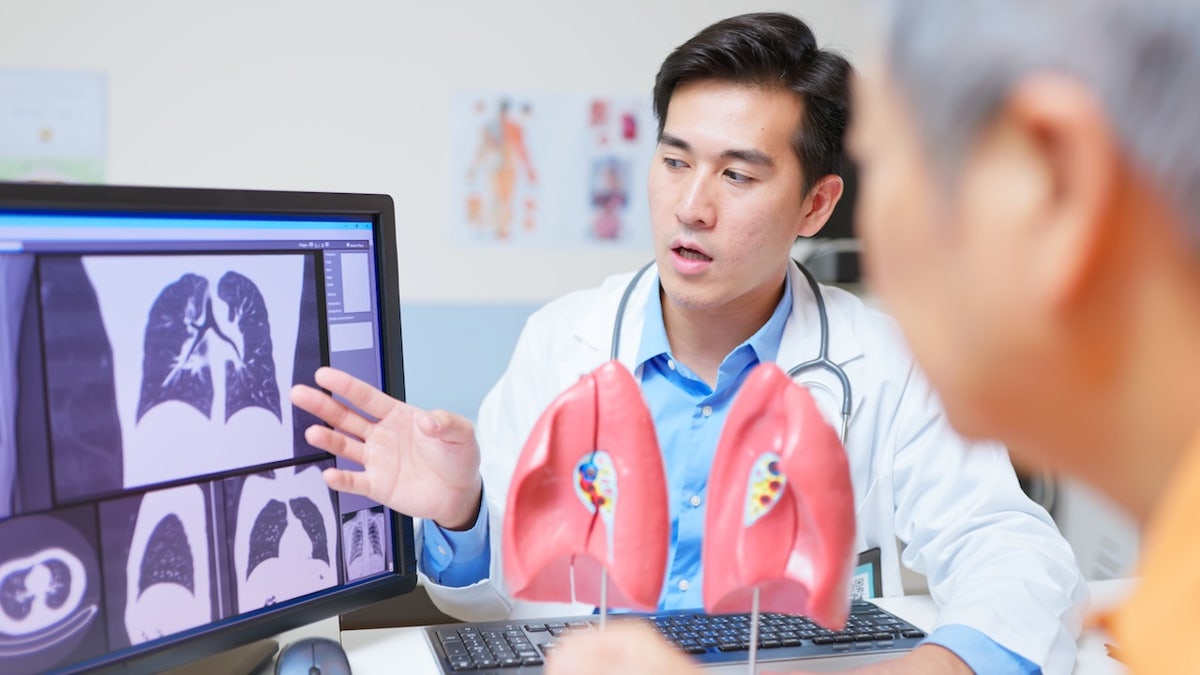
Family history and environmental exposures can increase lung cancer risk.(iStock)
Robinson added that other types of smoking, like pipes and cigars, can increase the risk of lung cancer, as well as heavyuse of marijuana.
Another risk factor is exposure toenvironmental toxins, such as diesel exhaust and radon, according to the oncologist.
“Unfortunately, probably over half of the people who are never-smokers with lung cancer come into stage 4 disease,” Robinson said.“And that’s higher than people who are smokers or former smokers, so they start out at a worse stage in general.”
Symptoms and screening
In most cases, early-stage lung cancer will not come with any symptoms, according to Robinson.In those who do have symptoms, however, the most common are related to the lungs, including apersistent cough, shortness of breath or coughing up blood.
Unexplained weight loss can result from any form of cancer, the oncologist noted.Neurological symptoms, likepersistent headaches, may also warrant seeing a doctor.

The most common symptoms are related to the lungs, including a persistent cough, shortness of breath or coughing up blood.(iStock)
Lung cancer is rare in younger adults, which is why annualCT screeningis generally recommended starting at age 50 for those at high risk, the doctor said.
People considered at high risk include current smokers with at least a 20 pack-year history, as well as former smokers who quit within the past 15 years.
TEST YOURSELF WITH OUR LATEST LIFESTYLE QUIZ
“Only about 15% of the people who are eligible get screened, unfortunately,” Robinson said.
“I’m hoping that within four or five years, a screening CT scan will only be confirmatory after they have a positive blood test done at your doctor’s office.” That approach could make screening easier and potentially help detect more lung cancers, according to the doctor.