
![[aggregator] downloaded image for imported item #120431](https://newsview.top/wp-content/uploads/2026/08/greece-ancient-vessel-found-shipwreck-artifacts-history-discovery-archaeology-2-1024x576.jpg "Divers uncover mysterious shipwreck loaded with ancient cargo lost for 2,400 years")
This post was originally published on this site.
Divers investigating waters off a Greek island have discovered a roughly2,400-year-old shipwreckcarrying hundreds of ancient amphorae.
The discovery was announced this summer by Greece’s Ministry of Culture.
In the translated press release, officials said a “private individual” tipped them off to the wreck, which was located in the waters off Andros, an island inGreece’s Cyclades.
‘SPECTACULAR’ SHIPWRECK FOUND WITH UNDERWATER TIME CAPSULE OF UNTOUCHED CARGO: ‘AMAZING FIND’
The shipwreck was found at a depth of between 128 and 144 feet underwater, officials said, and its cargo was made up of hundreds of “pointed-bottom commercial amphorae.”
An initial count placed the number of amphorae at roughly 600 to 650, according to officials.
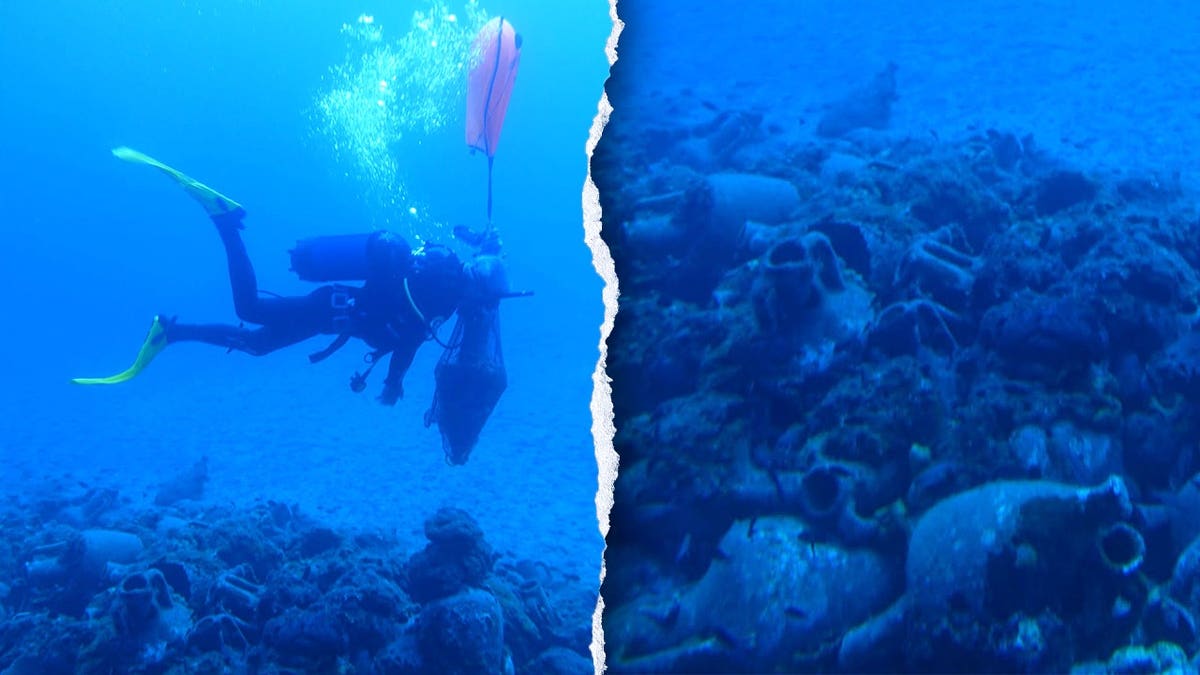
Divers investigating waters off the Greek island of Andros discovered a roughly 2,400-year-old shipwreck carrying hundreds of ancient amphorae.(Greek Ministry of Culture)
Underwater photos show the ancient artifacts encrusted with marine growth and scattered across the seafloor.
Amphorae, or ceramic storage jars, were widely used in theancient worldto transport goods ranging from wine and olive oil to grain and other foodstuffs.
Officials have not disclosed what the amphorae, which date to the late fifth and early fourth centuries B.C., may have contained.
Archaeologists identified three distinct types: Mende, Peparethos and Solokha 2.
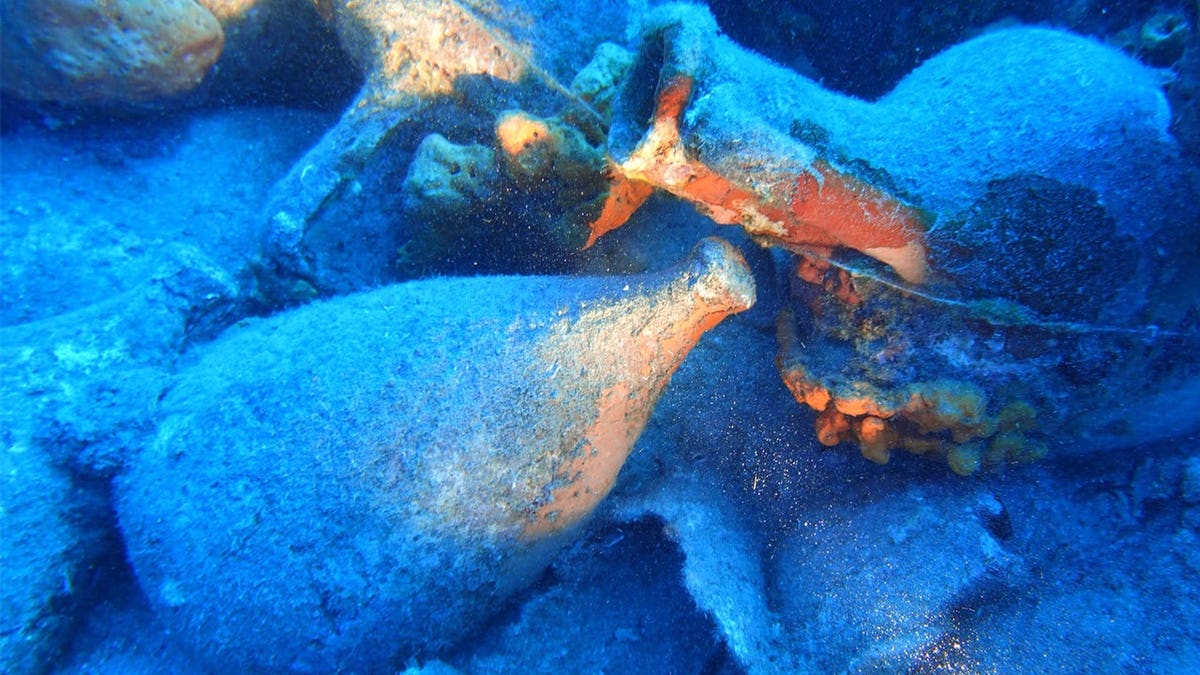
Underwater photos from the newly discovered shipwreck show ancient artifacts encrusted with marine growth and scattered across the seafloor.(Greek Ministry of Culture)
Archaeologists also discovered part of a lead anchor stock and several stones that may have been used as ballast to help stabilize the vessel.
Officials said the discovery “adds to our knowledge of trade and navigation during the Late Classical period.”
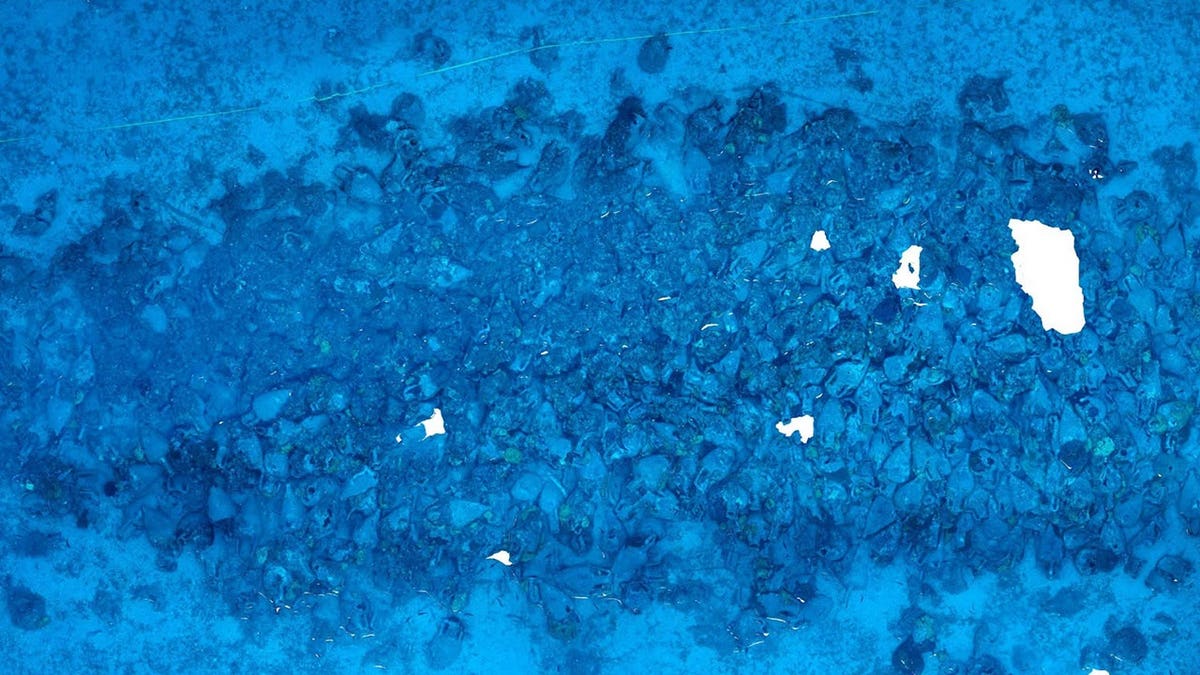
The ancient shipwreck was discovered between 128 and 144 feet underwater off Andros, an island in Greece’s Cyclades.(Greek Ministry of Culture)
“Further study of the discovery is expected to provide additional information about both the ship’s cargo and its origin.”
TEST YOURSELF WITH OUR LATEST LIFESTYLE QUIZ
The Mediterranean Sea, a crossroads of maritime trade for thousands of years, is home tocountless shipwrecks and archaeological sites.
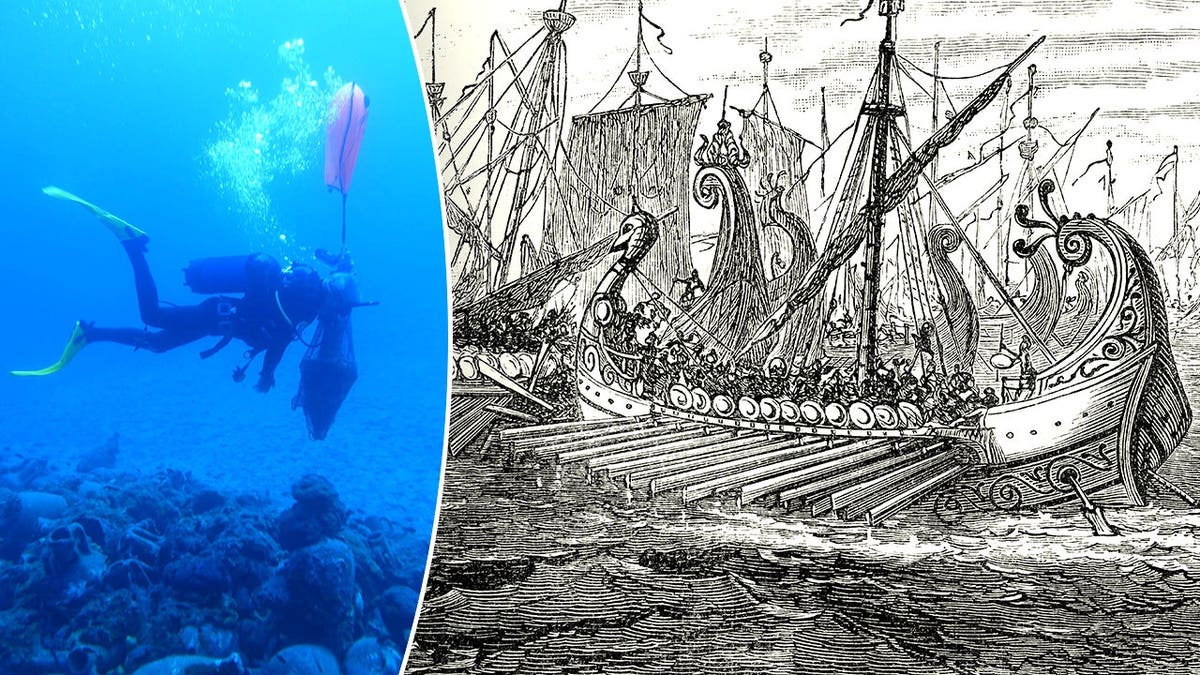
The shipwreck’s cargo included hundreds of pointed-bottom commercial amphorae dating to the late fifth and early fourth centuries B.C.Seen right, a depiction of a Greek ship during the same period.(Greek Ministry of Culture)
Earlier this summer, officials announced thediscovery of gold jewelryaboard a roughly 1,300-year-old shipwreck off the Croatian island of Mljet.
onelink.me/xLDS?pid=AppArticleLink&af_web_dp=https%3A%2F%2Fwww.
Last summer, officials announced the discovery of hundreds of well-preserved ceramics at a roughly2,000-year-old shipwreckoff the coast of Turkey.
![[aggregator] downloaded image for imported item #106609](https://newsview.top/wp-content/uploads/2026/07/san-diego-park-zoo-tourists-1024x576.jpg "Rabid bat found near zoo restaurant sparks urgent public health warning: 'Extremely serious'")
![[aggregator] downloaded image for imported item #106602](https://newsview.top/wp-content/uploads/2026/07/pan-am-1952-plane-crash-1024x576.png "Long-lost Pan Am crash wreckage found decades after deadly disaster that reshaped airline safety")
![[aggregator] downloaded image for imported item #106974](https://newsview.top/wp-content/uploads/2026/07/REV-WAR-BATTLE-OF-CAMDEN-JOHN-PUMPHREY-HISTORY-DISCOVERY-ARCHAEOLOGY-1-1024x576.jpg "Experts finally solve mystery of teenage Revolutionary War soldier 246 years after his death")
![[aggregator] downloaded image for imported item #106966](https://newsview.top/wp-content/uploads/2026/07/shark-sighting-ocean-1024x576.jpg "10-foot great white shark spotted swimming dangerously close to young people")