
![[aggregator] downloaded image for imported item #117512](https://newsview.top/wp-content/uploads/2026/08/notremors-1024x576.png "Parkinson’s patient’s yearslong tremor vanishes within minutes of new ultrasound treatment")
This post was originally published on this site.
Bud Leavell, 72, suffered from severe tremors for years after hisParkinson’s diagnosis, making it impossible for him to enjoy his favorite pastime of repairing radios in his garage.
But within minutes of receiving a newly approved ultrasound treatment, his tremor was completely gone.
Leavell, a retired salesman and Air Force veteran in Arlington, Texas, experienced the dramatic before-and-after result at UT Southwestern Medical Center.
CARLY SIMON REVEALS THE COMMON CONDITION THAT MASKED HER PARKINSON’S DIAGNOSIS
The focused ultrasound targeted precise areas deep in Leavell’s brain.Unlikedeep brain stimulation, which requires opening the skull, this new treatment is non-invasive.
At his latest follow-up, Leavell’s tremor remained as well-controlled as it was immediately after the procedure, according to his doctor.When asked how the tremor was doing, Leavell responded with, “What tremor?”
A non-invasive approach
Leavell was diagnosed with Parkinson’s in 2017, immediately following surgery forthyroid cancer.
“My voice was weak and gravelly, and within a few days, a tremor set into my right hand,�“Before this time, I was experiencing a slow loss of my sense of smell.”
The tremors made it “frustratingly difficult” for Leavell to perform certain functions, especially anything that required fine motor skills in his dominant hand, such as using his binoculars or clicking a computer mouse.
NEUROLOGIST REVEALS WHY PARKINSON’S SYMPTOMS ARE OFTEN MISTAKEN FOR OTHER CONDITIONS
Dr.Bhavya Shah, a neuroradiologist at UT Southwestern Medical Center, introduced Leavell to the option of afocused ultrasound treatmentthat was approved by the FDA in January 2026 to treat the primary motor symptoms of Parkinson’s disease, including stiffness and slowness.
“High-energy ultrasound waves are focused across the skull onto discrete brain targets,�“The ultrasound energy heats up these nuclei, ornerve bundles, and removes them.This stops the pathologic transmission of electrical activity causing tremors or other symptoms.”
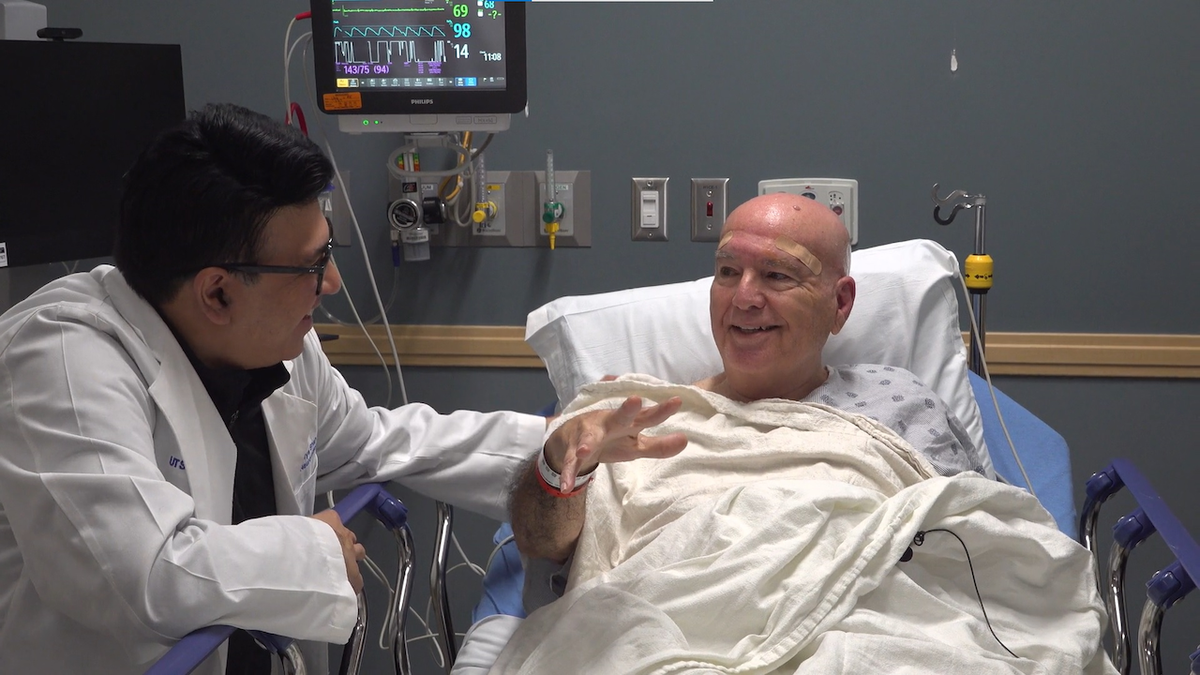
Parkinson’s patient Bud Leavell, right, shows Dr.Bhavya Shah that his hand no longer has tremors after undergoing focused ultrasound at UT Southwestern Medical Center.(UT Southwestern Medical Center)
Patients who have been diagnosed with Parkinson’s disease are typically treated with medications, the doctor noted.
“Interventional options are discussed when the medications become less effective or patients develop side effects,” he said.“These options includedeep brain stimulationand now, focused ultrasound.”
Parkinson’s disease can affect patients differently, Shah pointed out.
HOW EATING HABITS COULD INFLUENCE PARKINSON’S DISEASE RISK, ACCORDING TO EXPERTS
“The beauty of focused ultrasound is that before we permanently remove the tissue, we can use low-energy ultrasound waves to see if the patient’s symptoms respond to the particular target,” he said.“This is very important, as the optimal target may vary in patients.”
UT Southwestern also uses advanced imaging to map apatient’s brainbefore the procedure, which gives doctors a clearer picture of the ultrasound’s intended target, according to Shah.
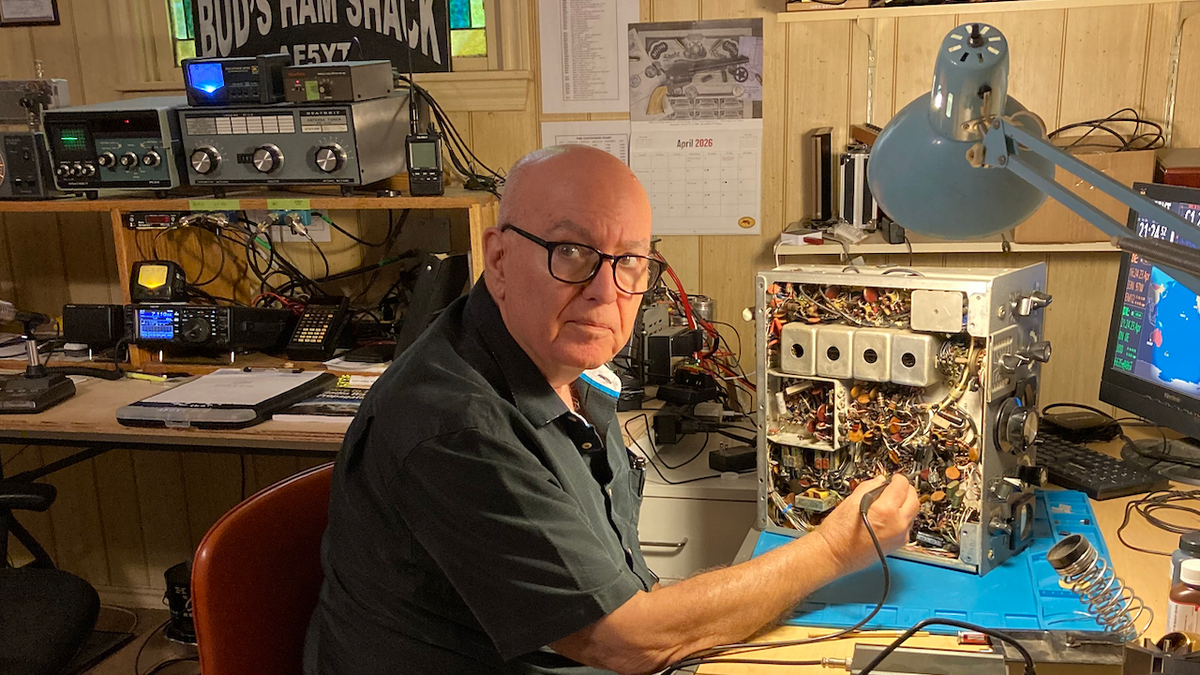
Parkinson’s patient Bud Leavell works on a radio at his Arlington, Texas, home.Leavell’s hand tremors have stopped since receiving focused ultrasound therapy at the UT Southwestern Medical Center.(Bud Leavell)
In Leavell’s case, his tremor responded strongly even to the initial low-energy ultrasound, giving the team confidence that they had identified the right target.
“Although the cardinal symptoms of Parkinson’s disease are slowness and stiffness, Bud’s most bothersome symptom was tremor, so getting rid of the shaking was our primary goal,” Shah added, noting that doctors can select different brain targets based on which symptoms are most troublesome.
TEST YOURSELF WITH OUR LATEST LIFESTYLE QUIZ
Leavell was eager to try the new therapy – but he did have some concerns about what the outcome would be.
“The entire team working this procedure was very professional and demonstrated considerable flexibility in making sure this was an easy process for me,�
Immediately after receiving theultrasound therapyon April 13, Leavell said his tremor was gone.
“I can hold my hand still with or without a tool in my hand or while working on a project,” he said.“I can also get a fork or spoon with food on it into my mouth with ease.But, this may turn into another problem, as I love to eat!”
Leavell has also been able to return to his hobby of repairing antique radios.
Potential risks and tradeoffs
There are some potential risks associated with the treatment, Shah noted.Those include numbness and tingling around the mouth and fingertips, trouble walking, talking or swallowing, sometimes weakness in the upper or lower extremity, balance issues or struggles withepisodic memory.
“Side effects occur approximately 20% to 30% of the time and generally improve over time,” the doctor added.
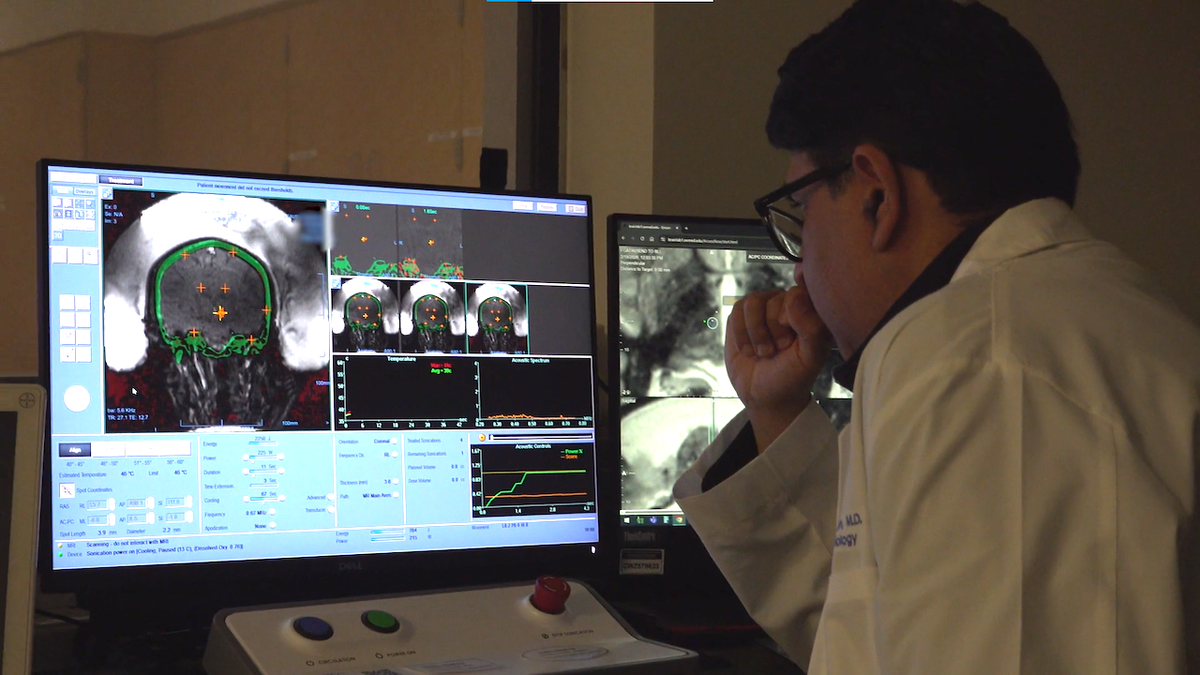
Dr.Bhavya Shah monitors brain activity of Parkinson’s patient Bud Leavell as he undergoes focused ultrasound treatment at UT Southwestern Medical Center.(UT Southwestern Medical Center)
There is also one key tradeoff compared with deep brain stimulation, he noted – DBS can be adjusted if symptoms return or worsen, but with focused ultrasound, there is no device that can be reprogrammed.
That means if symptoms return after the focused ultrasound, the patient could potentially require another treatment.
Although the therapy has shown short-term effectiveness, because it is a newer technology, there is not yetlong-term dataavailable.
“For patients seeking an alternative to an implantable device, focused ultrasound represents a promising alternative,” Shah said.“A patient considering these options should have a thorough discussion with their movement disorder neurologist to really understand the pros and cons of each treatment.”
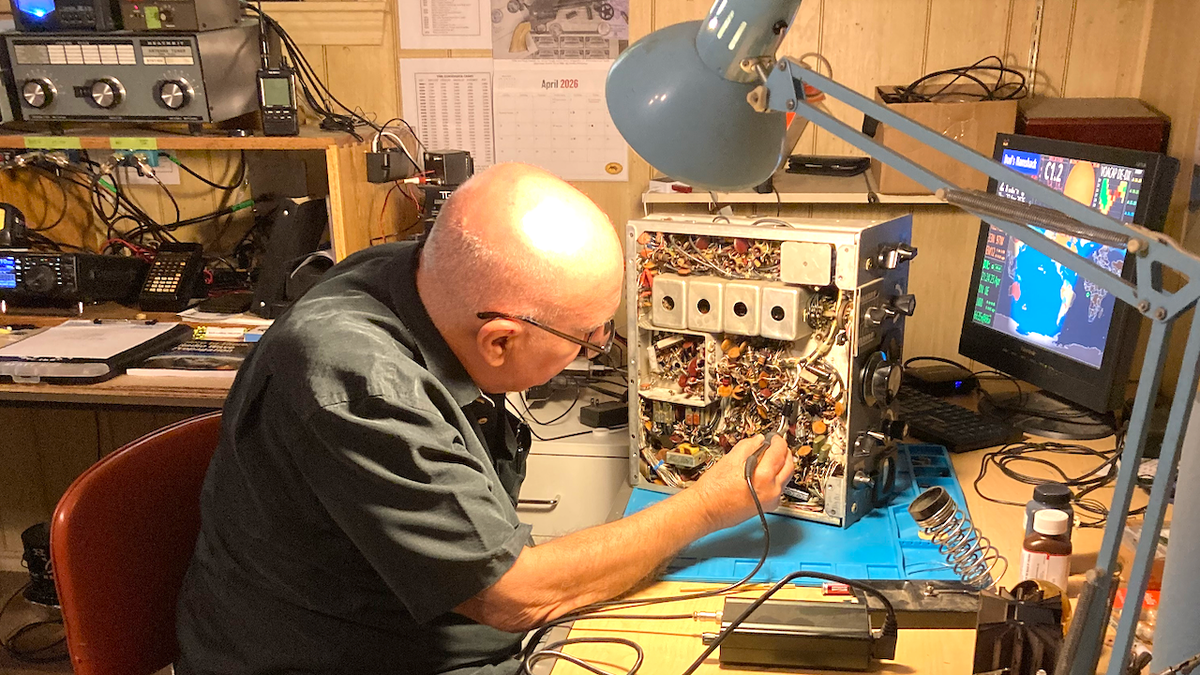
Parkinson’s patient Bud Leavell works on a radio at his Arlington, Texas, home.Leavell’s hand tremors have stopped since receiving focused ultrasound therapy at UT Southwestern Medical Center.(Bud Leavell)
Shah expressed optimism for the future of Parkinson’s disease therapies, with the potential for other applications of focused ultrasound.
“While this is not a panacea for Parkinson’s, it is a dramatic and life-changing procedure.”
While he expressed appreciation for the procedure, Leavell emphasized that “God is in controlof the circumstances in my life and will continue to be.”
“However, anytime an opportunity comes along like this one, I will jump on it to see if I can experience an improvement in my circumstances.”
onelink.me/xLDS?pid=AppArticleLink&af_web_dp=https%3A%2F%2Fwww.
To anyone who may be a candidate for the focused ultrasound, Leavell recommends getting an appointment with a specialist.
“Don’t let any grass grow under your feet,” he advised.“While this is not a panacea for Parkinson’s, it is a dramatic and life-changing procedure.”
![[aggregator] downloaded image for imported item #96412](https://newsview.top/wp-content/uploads/2026/06/gettyimages-2166352700-1024x576.jpg "New blood test detects 90% of aggressive prostate cancer cases, beating current screenings")
![[aggregator] downloaded image for imported item #96405](https://newsview.top/wp-content/uploads/2026/06/broccoli-1024x576.jpeg "These leafy greens could help protect your lungs, study suggests")